The art of luxury kitchen lighting: Atmosphere, function and character
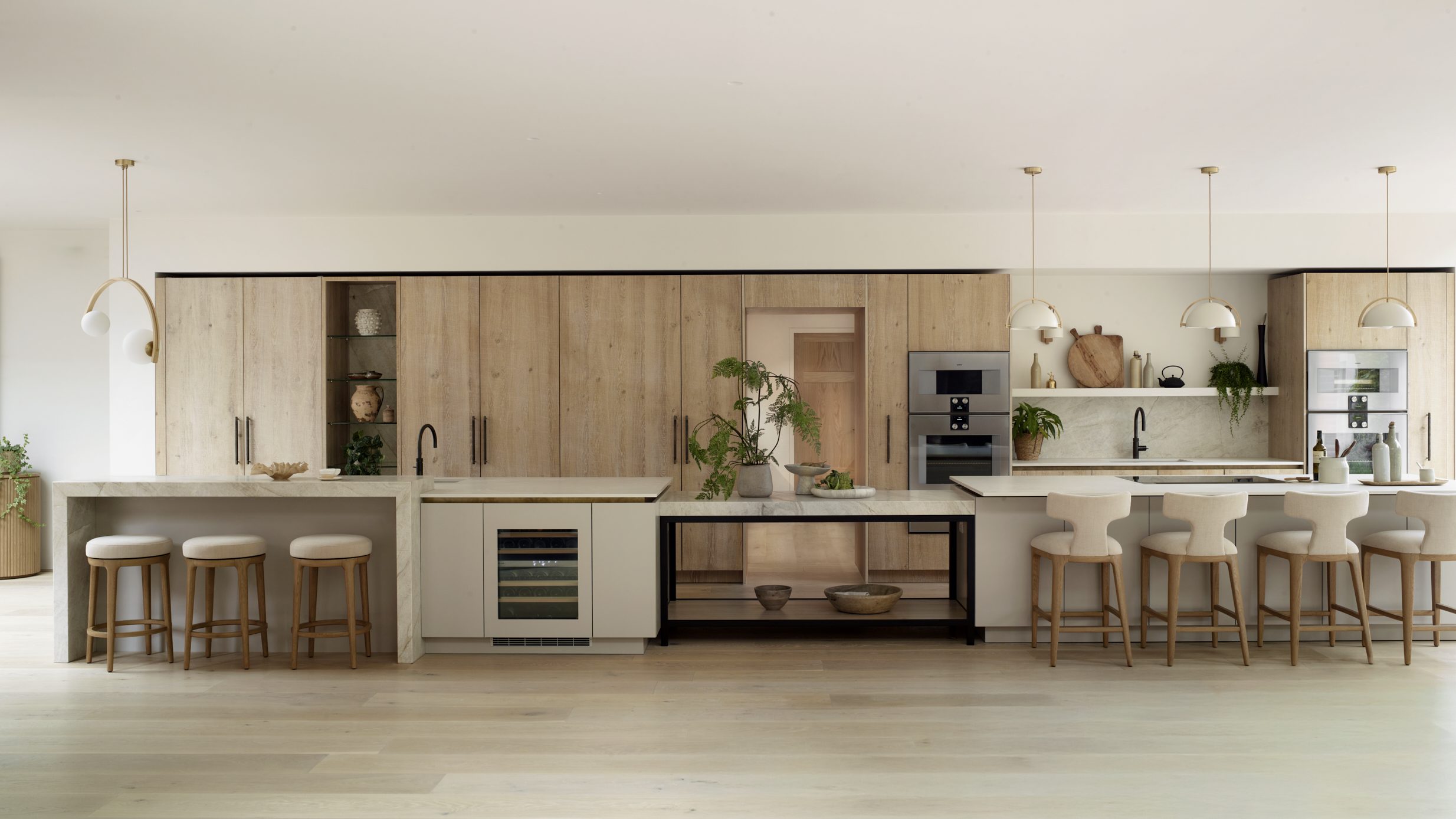
As the days become shorter, our kitchens begin to rely less on natural daylight and more on the lighting within them. Getting the balance right can completely transform how a space looks and feels, bringing warmth and atmosphere to darker evenings while providing the practical illumination needed for everyday life.
The best kitchen lighting does far more than illuminate a room. It can define architecture, reveal the natural character of materials and allow the same space to transition from a bright, practical workspace to an intimate setting for dining and entertaining.
Our Founder and CEO, Craig Matson, recently shared his thoughts on kitchen design and lighting with British lighting brand Tom Raffield as part of its Ten with Tom interview series. Inspired by the conversation, we explore how thoughtful lighting can transform the way a kitchen looks, feels and functions, drawing on examples from across our bespoke kitchen projects.
One of the recurring themes in Craig’s Ten with Tom interview is that good kitchen lighting begins with understanding how a room will be experienced, rather than simply deciding where lights should go.
Tom Raffield: Clients often think lighting is decoration. What is the one thing you wish people understood about kitchen lighting design before they start?
Craig Matson: “Lighting is not just decoration or just functional. It is the difference between a kitchen that works and one that merely looks good in photographs.
The challenge is that most clients come to us not really knowing what makes good lighting. They can point to a harsh overhead light that makes everything feel clinical, or a room that feels gloomy and flat. But ask them to describe what they do want, and it becomes surprisingly difficult. Lighting is one of those things people experience emotionally without necessarily having the language to articulate.
So we approach it through scenarios. Because we design so many open-plan kitchen and dining spaces, we talk about how those rooms actually live throughout the week.
A dinner party demands atmosphere and intimacy. A family dinner is warmer, more relaxed, perhaps brighter. A Sunday morning breakfast is something else entirely: soft, unhurried, the kind of light that makes you want to linger over a second cup of coffee.
The same space. The same fittings. Entirely different experiences, if the lighting has been planned with enough flexibility to allow it.”
Across our bespoke kitchen projects, lighting is approached differently depending on the architecture, materials and individual needs of each space. From decorative pendants to discreet integrated illumination, each element contributes to the overall design.
Start with layers, not fixtures
Craig’s approach touches on one of the most important principles of successful kitchen lighting design: rather than starting with individual fittings, consider how different layers of light work together.
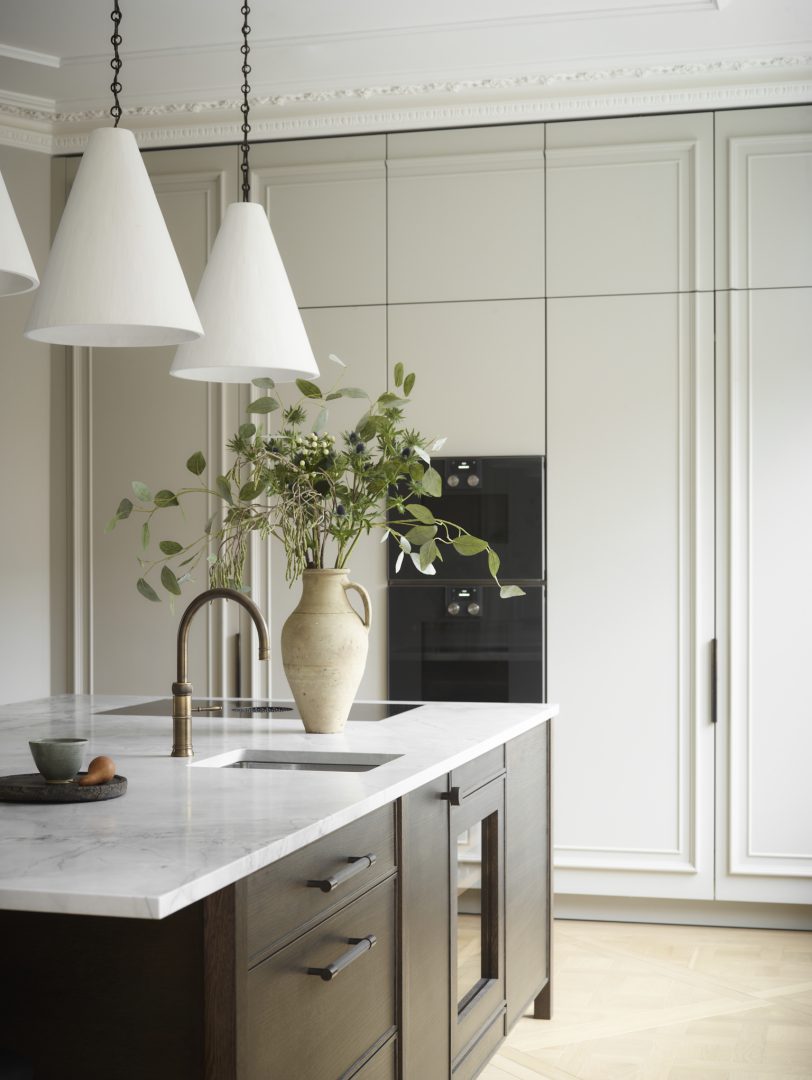
Task lighting provides focused illumination around preparation, cooking and sink areas, while ambient lighting creates comfortable overall illumination. Accent lighting can highlight cabinetry, shelving, artwork or natural materials, while decorative lighting introduces another opportunity for personal expression.
The key is being able to control these layers independently. A kitchen that needs to feel bright and purposeful while preparing breakfast may require an entirely different atmosphere when friends gather around the island that evening.
This becomes particularly important in open-plan kitchens, where cooking, dining, entertaining and relaxing increasingly take place within one connected space.
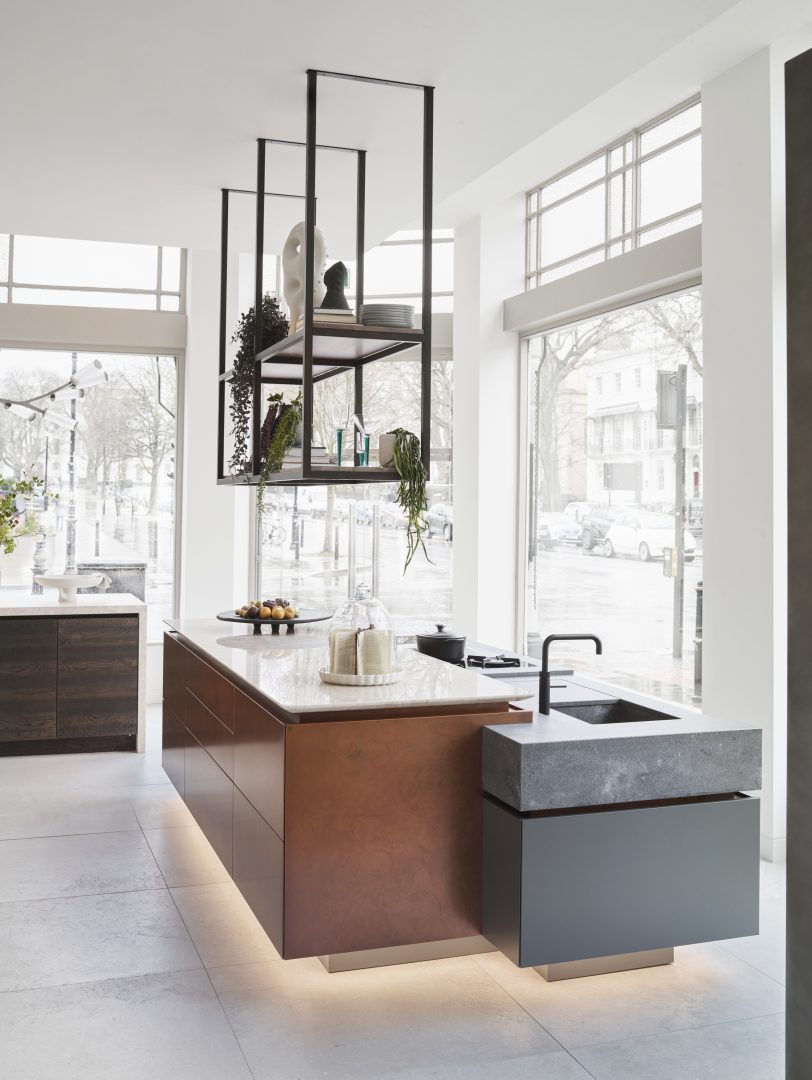
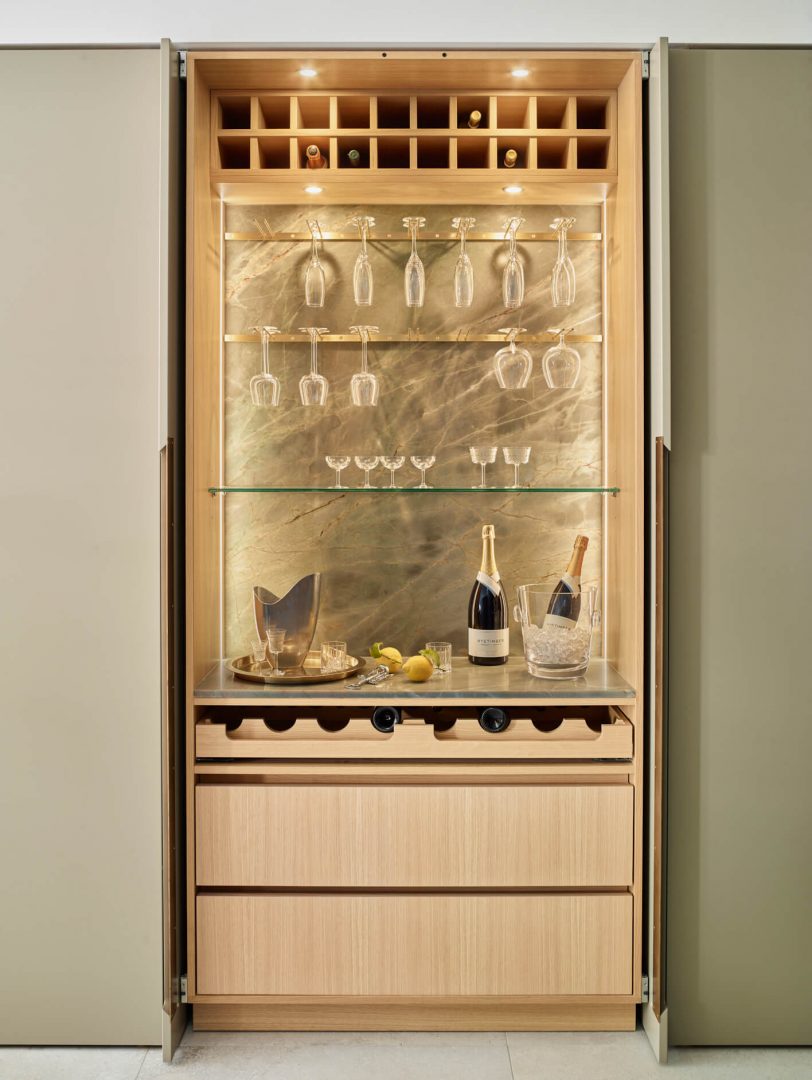
Design for the whole day
Natural light can transform a kitchen, bringing warmth, depth and an ever-changing quality to its materials. However, as daylight fades, the lighting scheme needs to work equally hard to maintain the character and functionality of the space.
Tom Raffield: What would you tell someone planning their lighting layout to get it right?
Craig Matson: “The starting point is always understanding how a space is actually used throughout an entire day, not just a single moment. This is where lighting plans can fall short. People think about brightness and forget about flexibility.
Natural light is generous during the day but disappears entirely at night. A room that feels beautifully lit at midday can feel completely wrong at eight in the evening if the artificial lighting has not been thought through with the same care. One question we would ask is: how does this space work after dark?
Another consideration is multi-functionality. A kitchen that is a busy, purposeful working environment at seven in the morning needs to feel entirely different at a dinner party that same evening. The ability to switch between task lighting and softer mood lighting is not a luxury, it is essential.
Get the flexibility right from the outset, and lighting becomes one of the most powerful tools you have.”
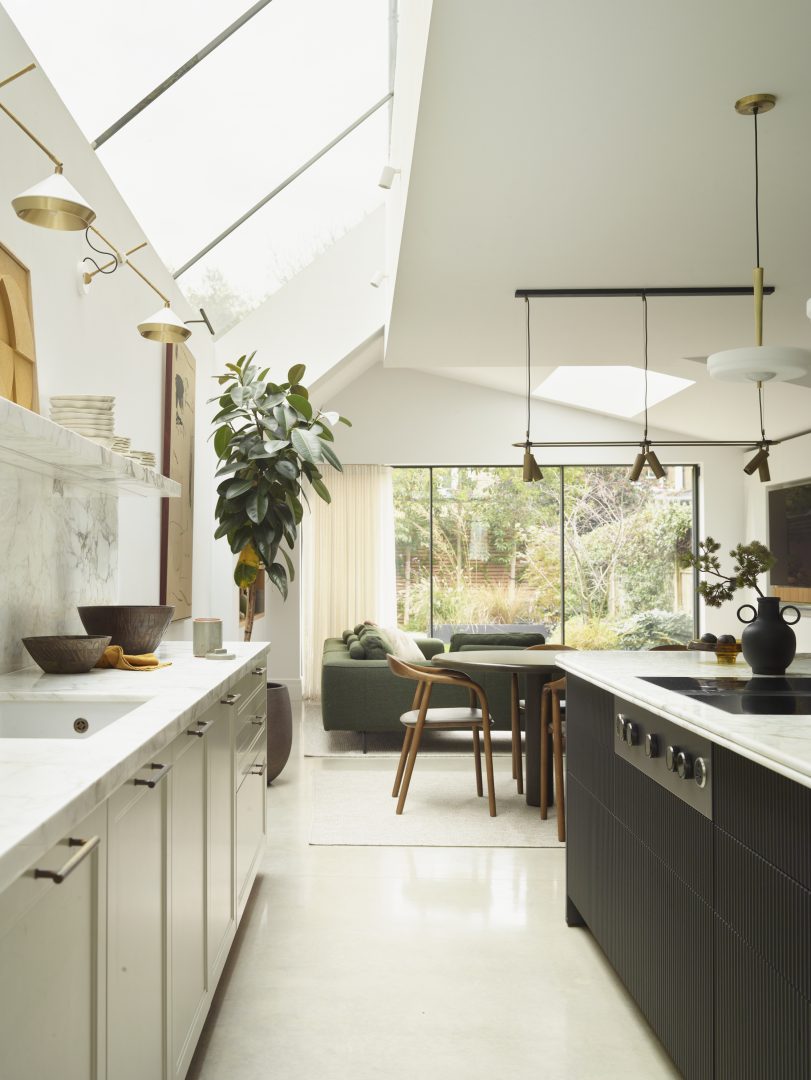
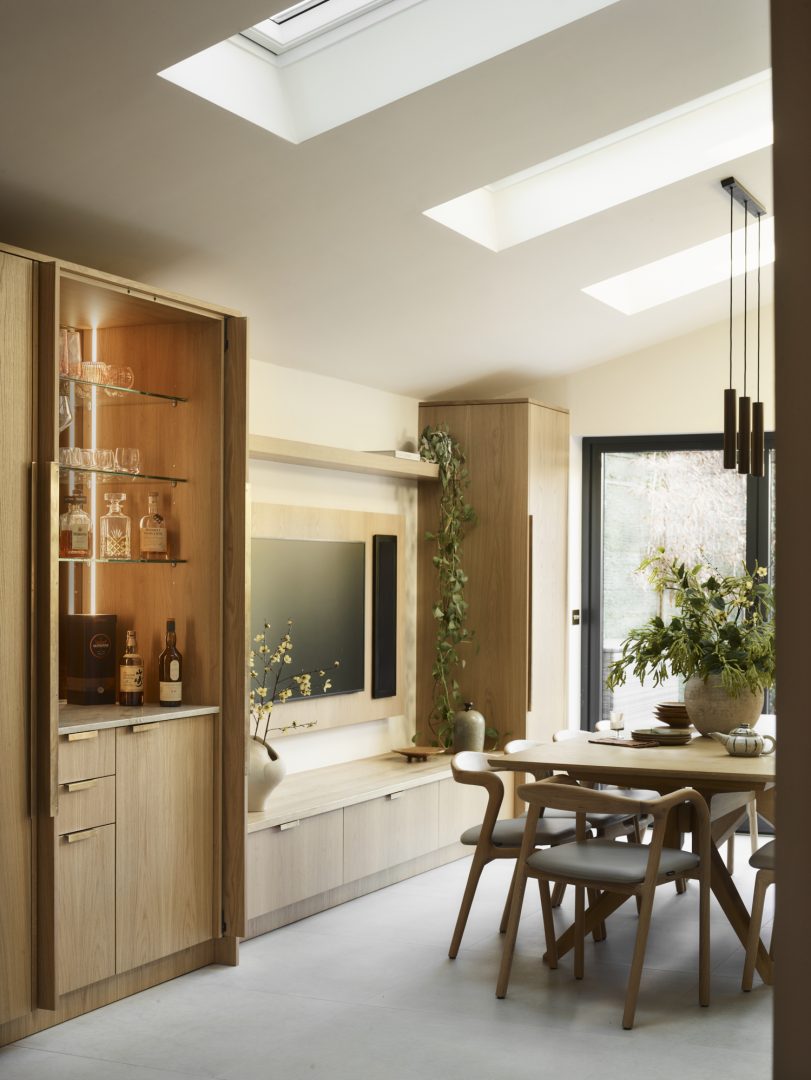
This is particularly relevant in kitchens with generous glazing, rooflights or large windows. A space flooded with natural light during the day can feel entirely different after dark, making artificial lighting an important part of the overall design rather than simply a finishing touch.
When lighting becomes sculptural
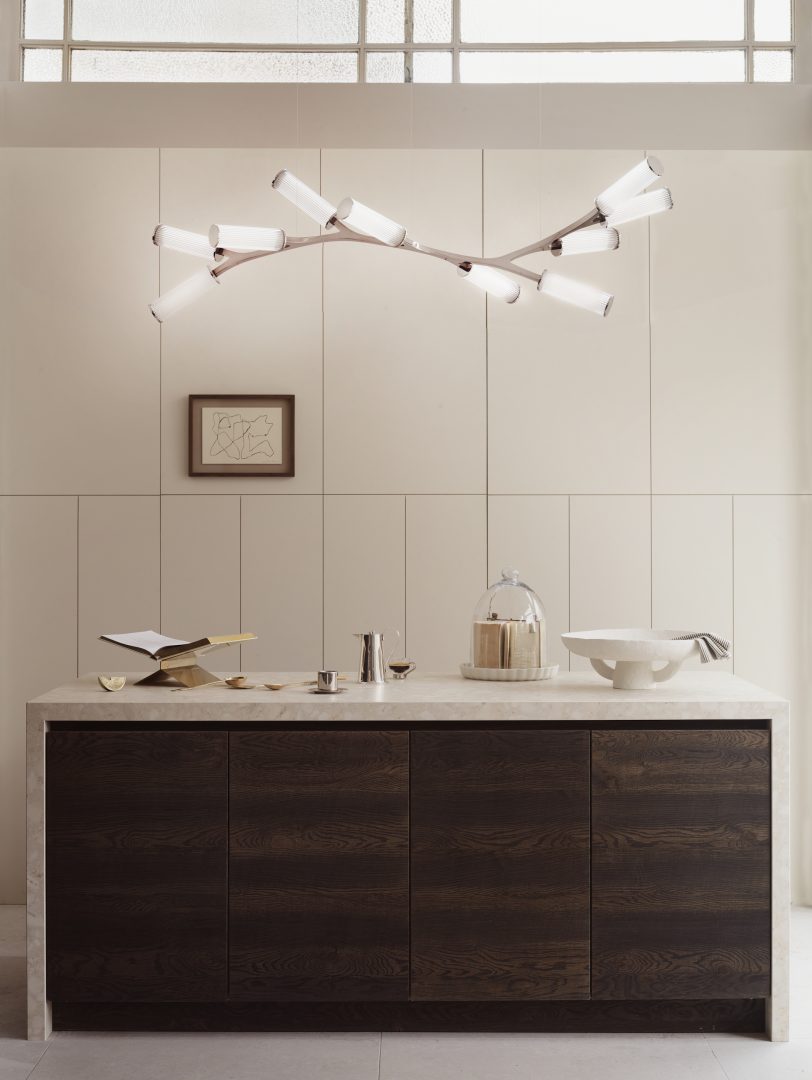
Lighting does not always need to disappear into the architecture. A beautifully designed pendant can become an important part of the material palette in its own right.
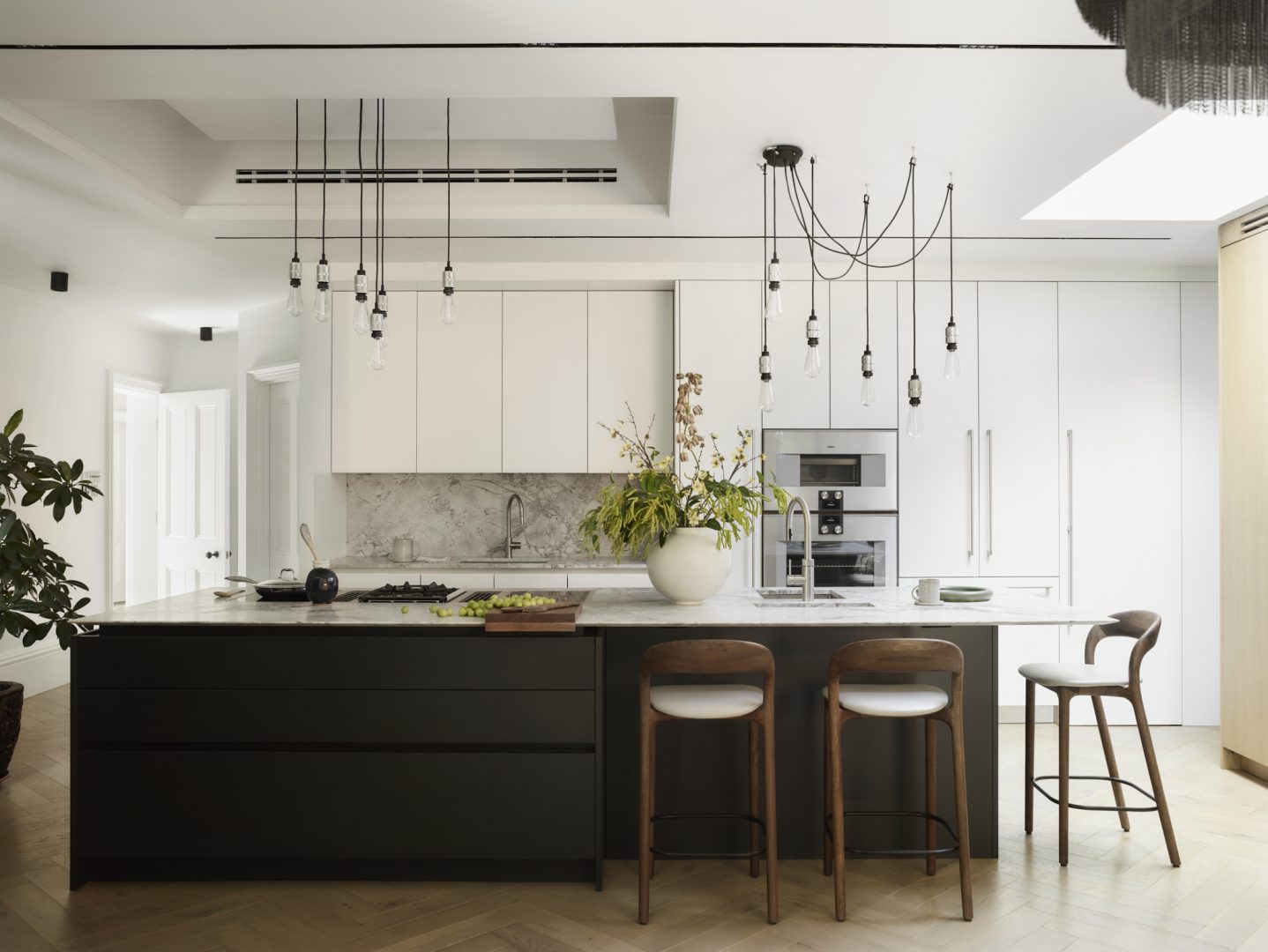
Above a kitchen island or dining table, sculptural lighting can anchor the space, drawing the eye and creating a focal point within a larger open-plan room. One elongated fitting might emphasise the proportions of a long island, while a collection of pendants can introduce rhythm and movement overhead.
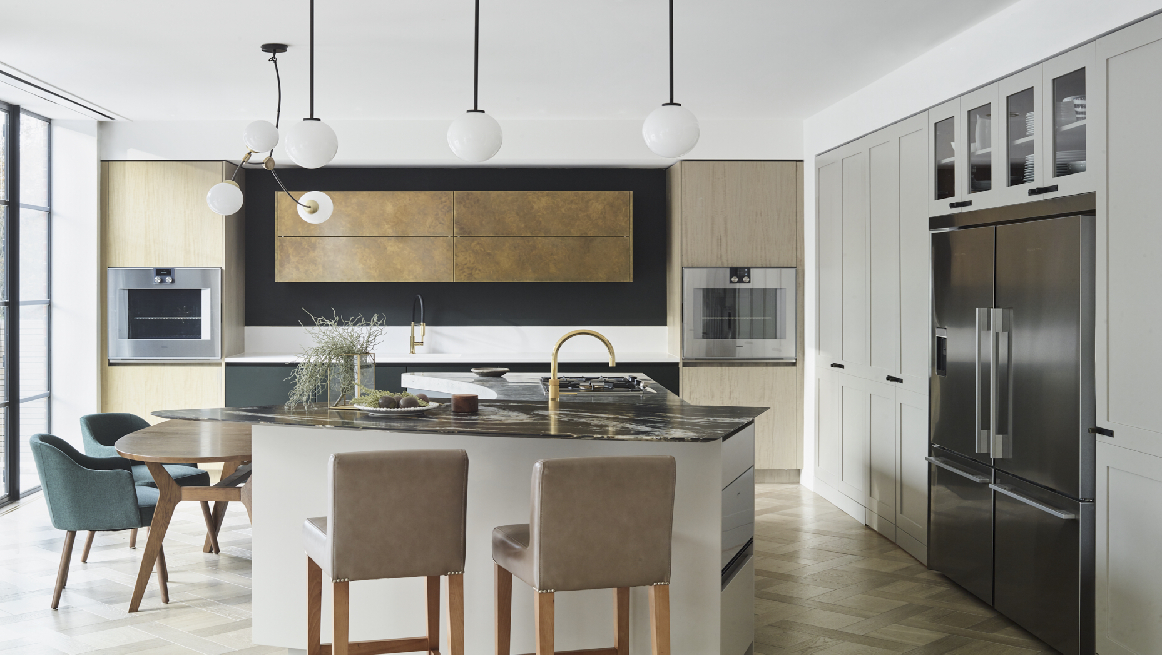
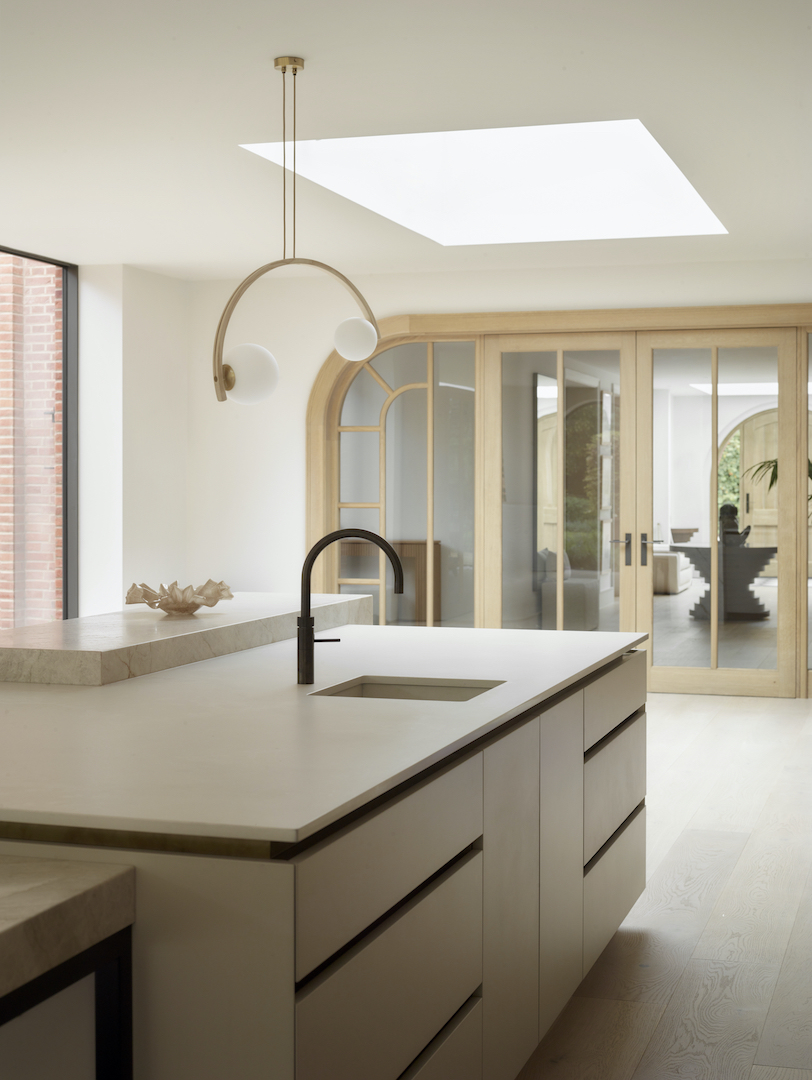
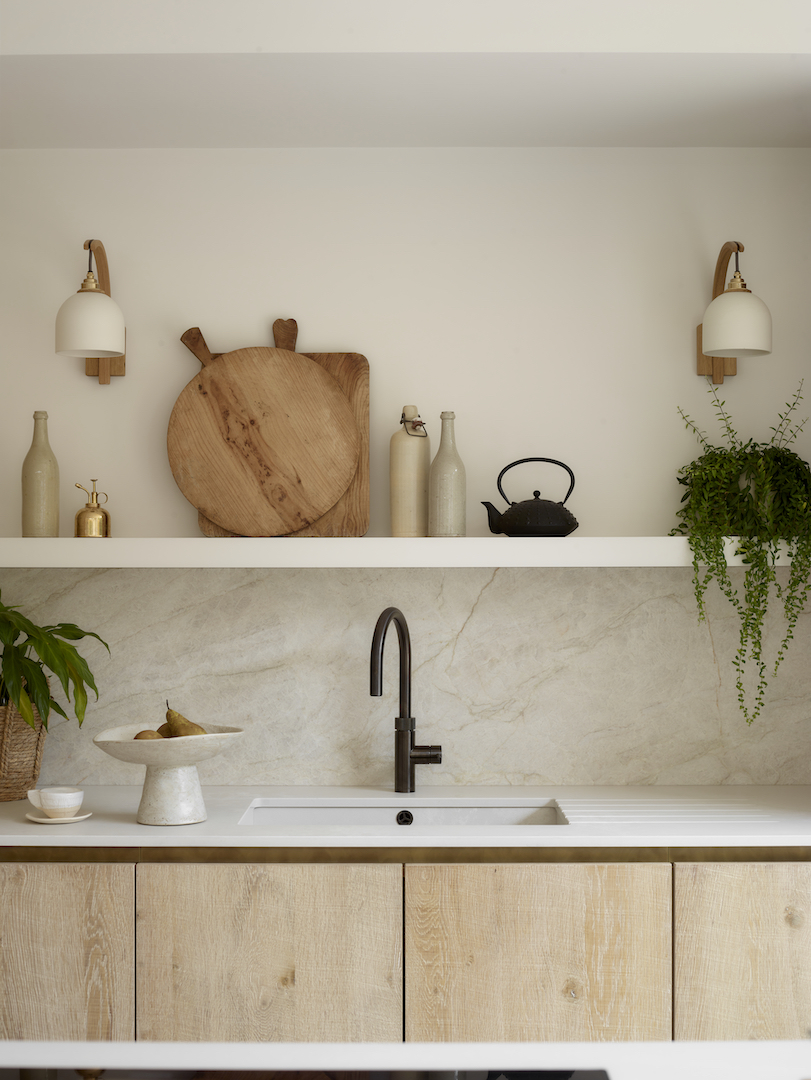
Our Ashbury project offers a beautiful example of this relationship. Suspended above the breakfast bar, Tom Raffield’s Loer Crescent Pendant introduces a sculptural focal point, its flowing curves creating a striking contrast with the architectural lines of the kitchen. While the Stem wall sconces introduce a softer, more understated layer of lighting, complementing the natural materials and bringing warmth and balance to the space.
The natural form of the pendant complements the surrounding timber, stone and warm metallic finishes, demonstrating how statement lighting can become an integral part of a considered material palette.
Craftsmanship with purpose
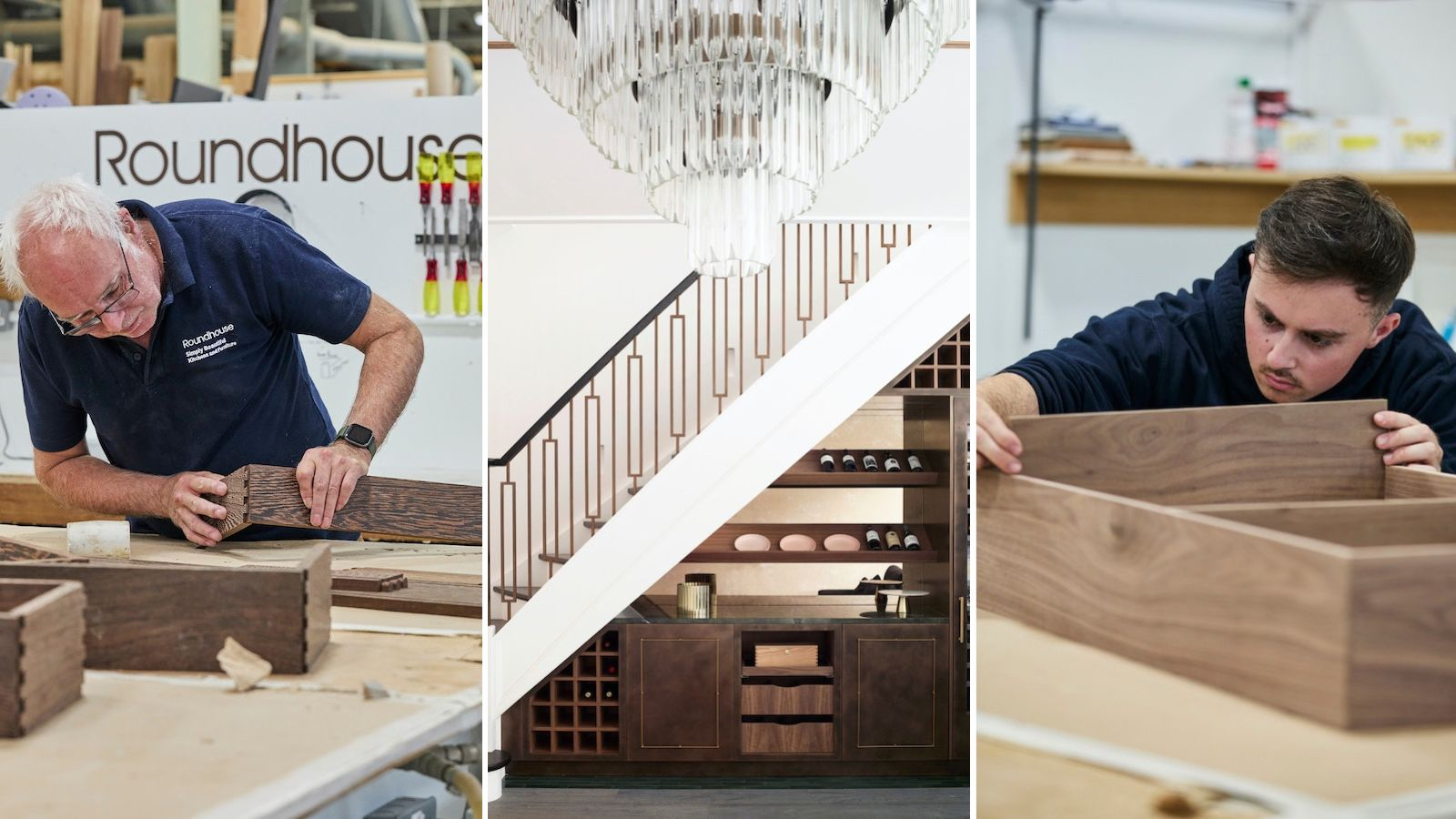
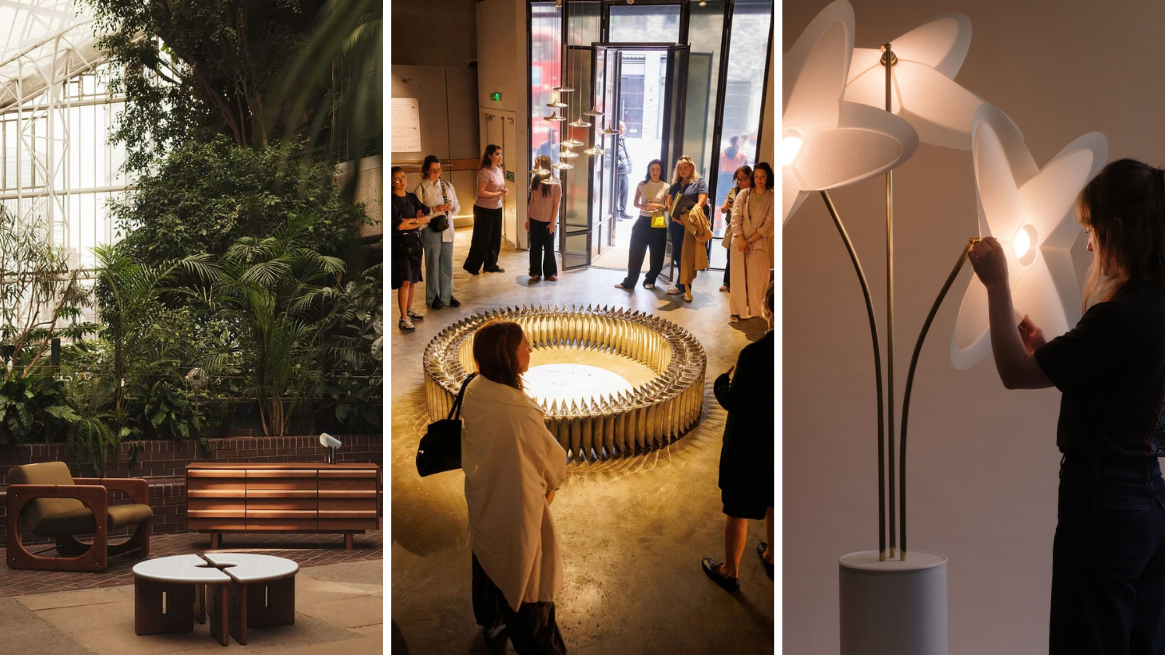
The relationship between Roundhouse and Tom Raffield feels particularly natural when it comes to craftsmanship. Both brands share an appreciation for considered design, natural materials and making techniques that combine beauty with practical purpose.
It is a philosophy Craig reflects on when discussing his own favourite Tom Raffield pieces.
Tom Raffield: We would love to know what your favourite Tom Raffield design is, and why?
Craig Matson: “I have a secret Tom does not yet know. In our living room we have a pair of Skipper pendants and matching Neap wall lights and they are, quite simply, beautiful.
When we recently refurbished our house, I loved the design aesthetic of these exquisitely crafted pieces. They sit so naturally alongside our Roundhouse furniture, the two feel made for each other.
What I love about Tom’s work is the way natural materials are sculpted into forms of genuine beauty, and then made to serve a real purpose. Great design that also works is not as easy as it sounds.
It makes me enormously proud of what British craft and manufacturing can produce.”
Across our projects, lighting takes many forms, responding to the architecture, materials and individual character of each kitchen. From sculptural pendants that make a statement to discreet integrated lighting, each approach plays a different role in shaping the space.
The point is not that every kitchen needs statement lighting. It is about finding the right relationship between the fitting, the architecture and everything around it.
Think beyond the pendant
Some of the most effective kitchen lighting ideas are much quieter.
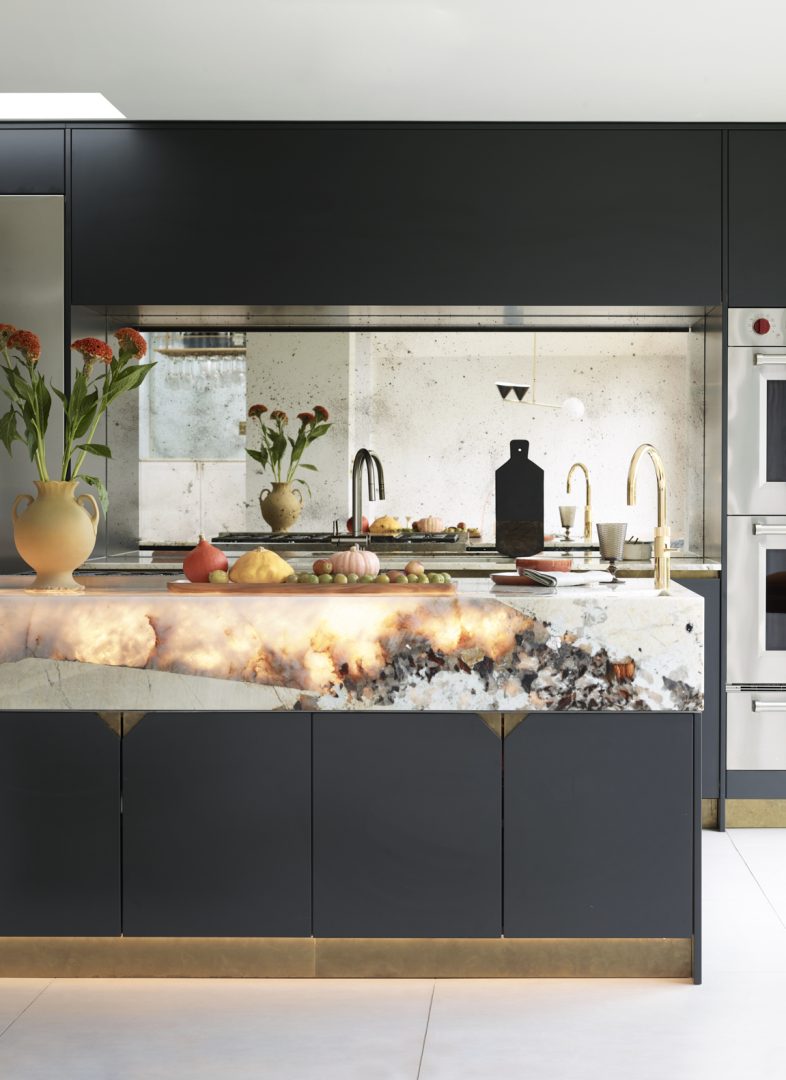
Integrated lighting can reveal the character of materials and joinery without competing with them. Concealed illumination within shelving or glazed cabinetry introduces depth, while carefully positioned wall lights can illuminate working surfaces and provide another decorative layer.
Lighting can also emphasise the architectural details of a bespoke kitchen, from the movement within natural stone and the texture of timber cabinetry to open display shelving and the depth created by recessed joinery.
Considering lighting from the beginning of the kitchen design process allows wiring, switching and integrated illumination to be resolved alongside the cabinetry, rather than treated as additions once the wider design has been established.

Designing with light
Craig’s Ten with Tom interview captures something fundamental to our approach at Roundhouse: lighting should never be an afterthought.
The most successful kitchen lighting schemes are considered alongside the architecture, cabinetry and materials from the beginning. They respond not only to how a space looks, but to how it will be experienced throughout the day.
Whether it is a sculptural Tom Raffield pendant introducing warmth above an island, integrated lighting revealing the character of natural stone or subtle layers that allow a kitchen to transition from cooking to entertaining, every detail contributes to how the room feels.
Ultimately, great kitchen lighting is not simply about illuminating a beautiful space. It is about creating the right atmosphere to live in it.
For further inspiration, the Tom Raffield journal explores how different types of lighting can respond to everything from early morning coffees to cooking and evening entertaining in How to: Light Your Kitchen.
Bring your kitchen ideas to life
From the first conversations about layout and materials to the finer details of cabinetry and lighting, every Roundhouse kitchen is designed around the way you live.
Visit one of our showrooms to explore our bespoke kitchens, discover inspiring material combinations and discuss how considered design can bring your ideas to life. For more inspiration for your kitchen and beyond, download your brochure and discover a collection of beautifully considered spaces, bespoke design details and ideas for your own project.
FREQUENTLY ASKED QUESTIONS:
KITCHEN LIGHTING
The best kitchen lighting combines several layers rather than relying on one source. Ambient lighting provides comfortable overall illumination, task lighting focuses light around preparation and cooking areas, and accent or decorative lighting introduces depth and atmosphere. Independent controls and dimmers allow these layers to adapt throughout the day.
Start by considering the different activities that take place within the room. Combine ambient ceiling lighting with focused task lighting around worktops, sinks and cooking areas, then introduce accent and decorative lighting to highlight furniture, materials and architectural features. Layered lighting is particularly effective in open-plan kitchens that transition between cooking, dining and entertaining.
The right kitchen island lighting depends on the island’s size, proportion and purpose. Pendant or linear lighting can provide both practical illumination and a decorative focal point, while supplementary task lighting ensures the work surface remains functional. Dimmable, independently controlled fittings offer greater flexibility when the island is also used for dining and entertaining.
As a general guide, pendant lights are often positioned around 75–90cm above the kitchen worktop, although the ideal height will depend on the scale of the fitting, ceiling height, sightlines and proportions of the room. Bespoke kitchen design allows these elements to be considered together rather than applying one measurement universally.
Warm to warm-neutral light is generally well suited to residential kitchens, with around 2700K–3000K commonly recommended for creating a welcoming atmosphere while complementing materials such as timber, stone and brass. The wider interior palette, natural daylight and adjoining rooms should also inform the final specification.