Edge detailing trends: the worktop edge profiles shaping modern kitchens
When selecting the perfect worktops, it’s so easy to focus on materials and overlook the edge profile, yet it has a surprisingly strong influence on the finished kitchen. The shape you choose affects how light catches the surface, how weighty or refined the room feels, and whether the scheme reads crisp and contemporary or softer and more decorative.
At Roundhouse, our design team have long understood the impact of these details, and increasingly, our clients are looking beyond the standard square edge to explore what else is possible. The answer is: plenty. From sleek sharknose lines to classic ogee curves, the right profile can elevate kitchen worktops from practical surfaces to a defining design feature.
Shaping the mood
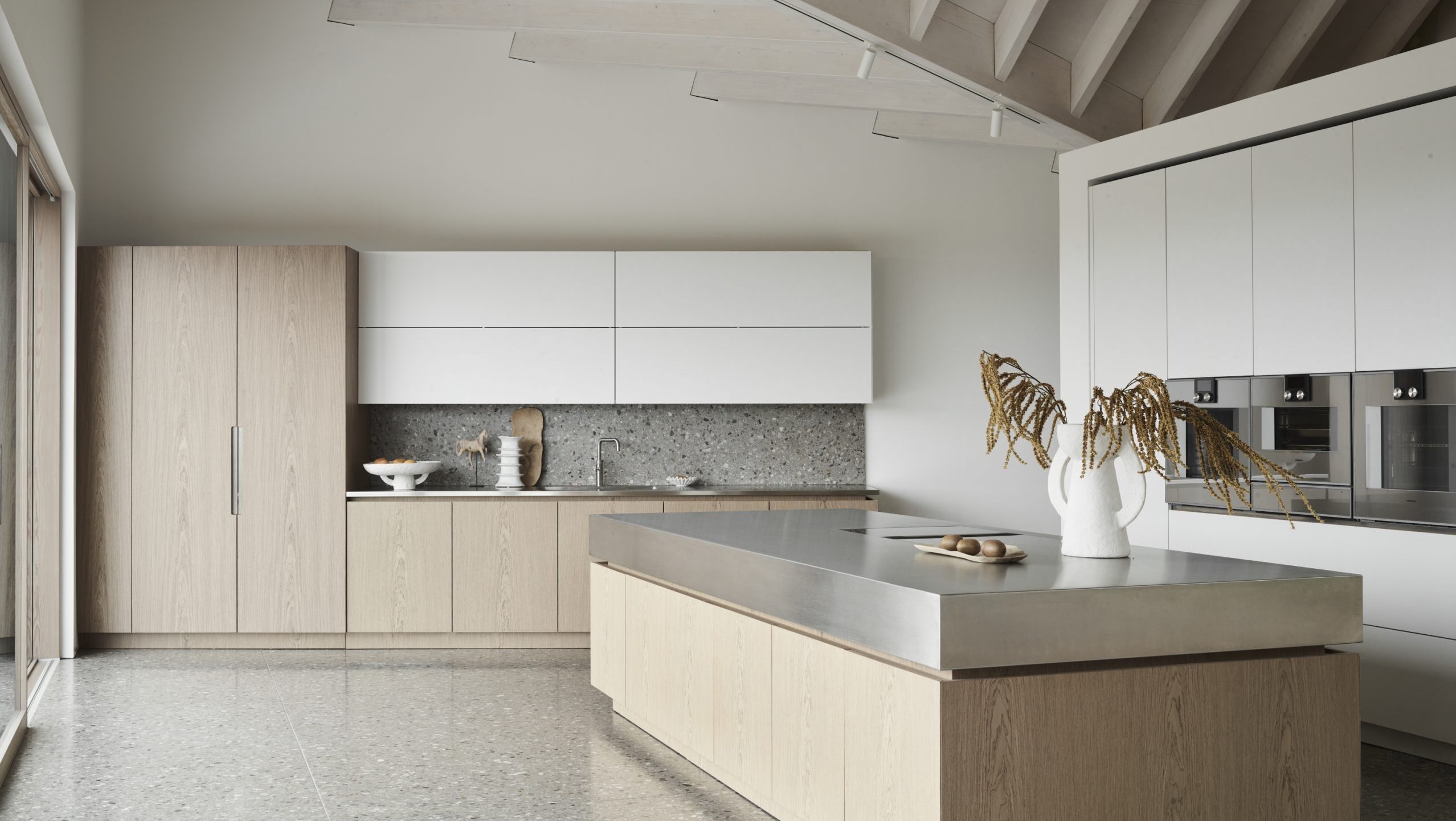
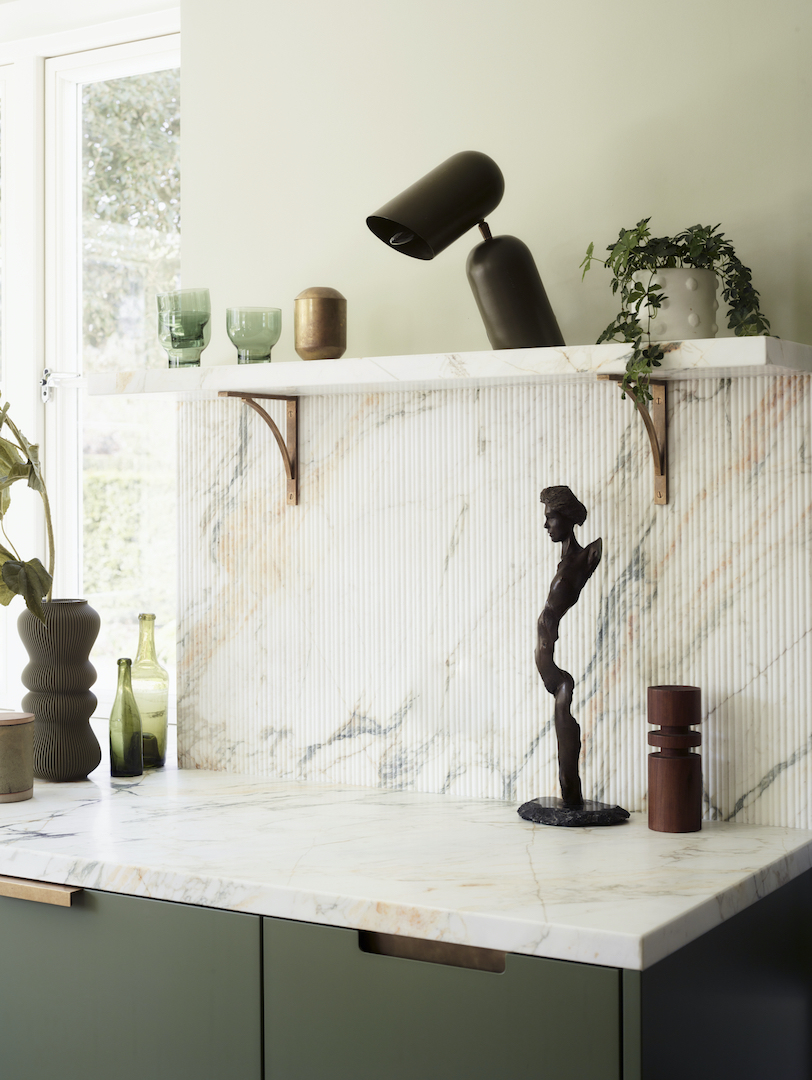
Edge profiles play an important role in setting the tone of your kitchen design. One of the most popular profiles in the simple pencil edge. It is subtle and architectural, with just enough softness to feel properly crafted without drawing attention to themselves. In our Kinsey project, a pencil edge keeps the look crisp and contemporary but avoids the severity of a completely square arris. It is a small move, yet one that makes the whole kitchen feel more polished.
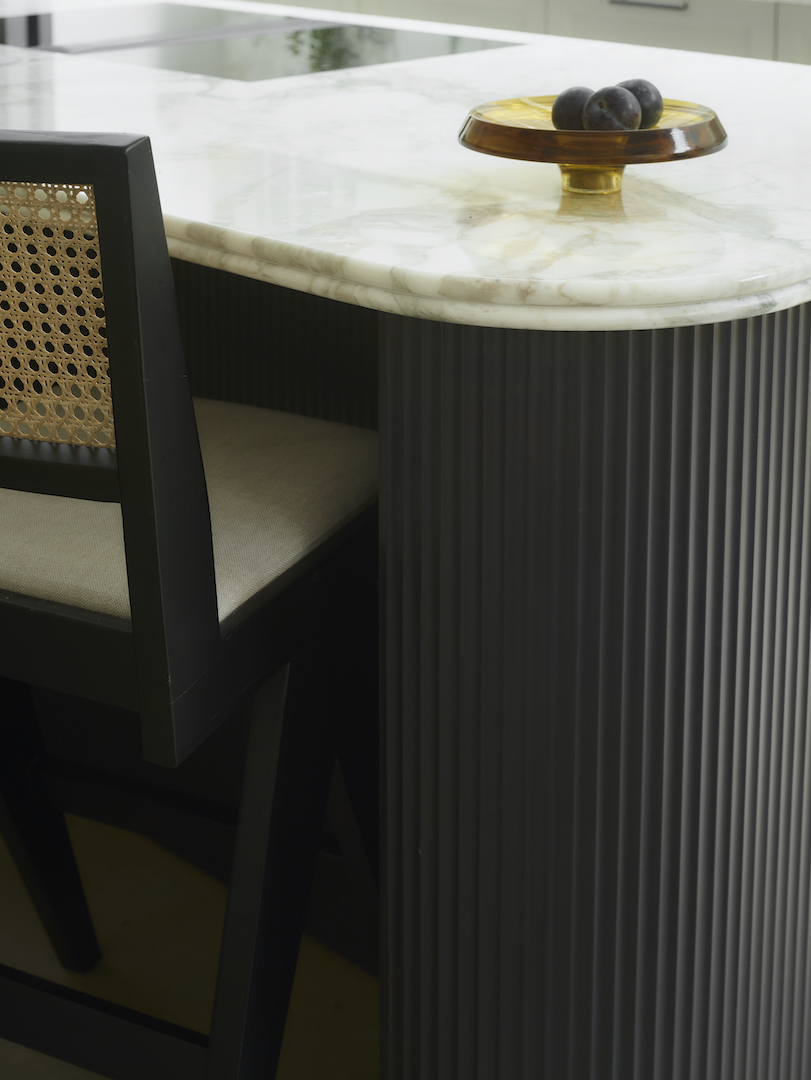
At the other end of the spectrum are more decorative profiles such as bullnose and ogee. A single bullnose introduces softness; a double or triple bullnose becomes much more impactful. In our Alden project, a double bullnose edge gives the kitchen island worktop a sense of generosity and craftsmanship. It feels classic, but not fussy. Ogee profiles have a similar ability to add elegance, though they are usually more overtly traditional and need a confident hand. Used in the right setting, they bring charm and depth. In a very contemporary kitchen, they can feel disconnected from the cabinetry below.
Where to use them
One of the most effective ways to use a more interesting edge profile is selectively – there’s no need to go OTT. In fact, concentrating it on a kitchen island is often the smarter move, especially if you want to create a focal point without overwhelming the room. On a large island, an ornate or sculptural edge can add personality and help define the centre of the space, while the perimeter surfaces remain simpler.
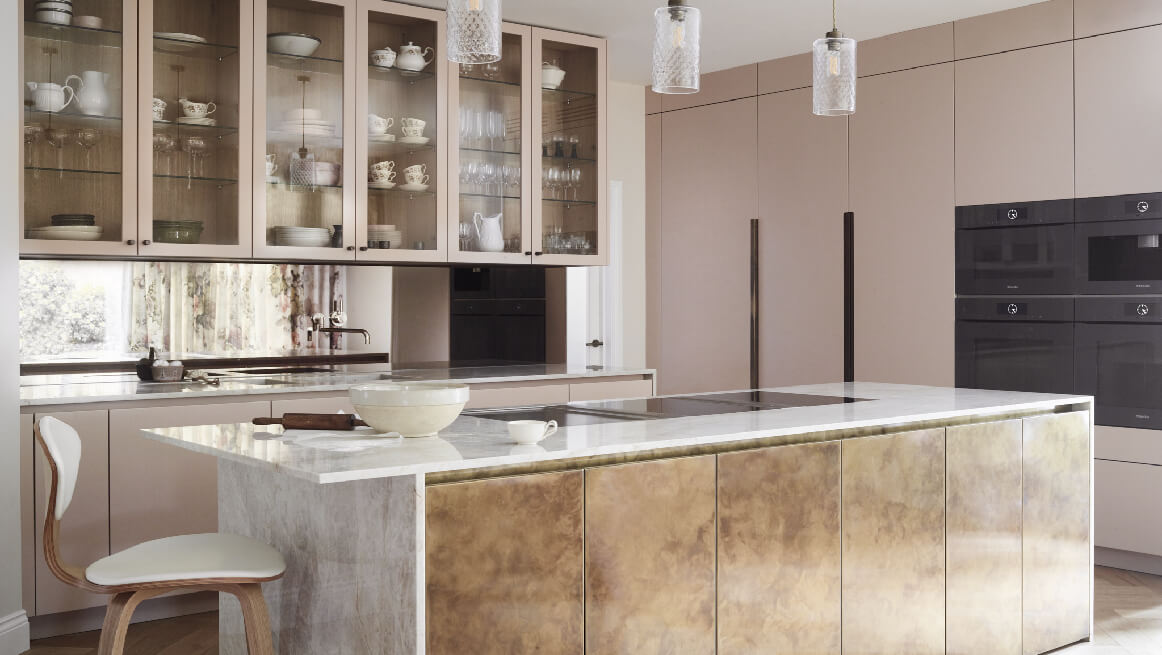
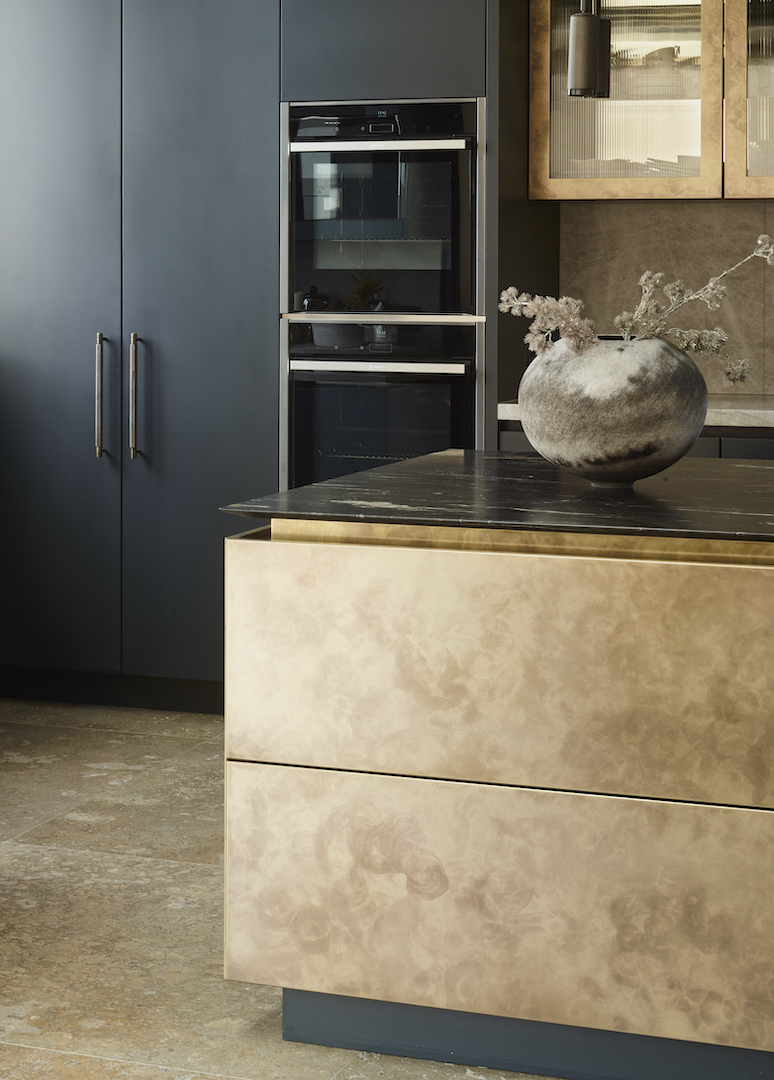
Sharknose edge profiles come into their own on islands, where the sleek, angular cut can be appreciated from every angle. In our Robinson project, antique burnished brass shadowlines beneath the edge highlight the profile and give it extra definition. This is a signature Roundhouse design move and a gorgeous example of how detailing can make a contemporary kitchen feel more tailored.
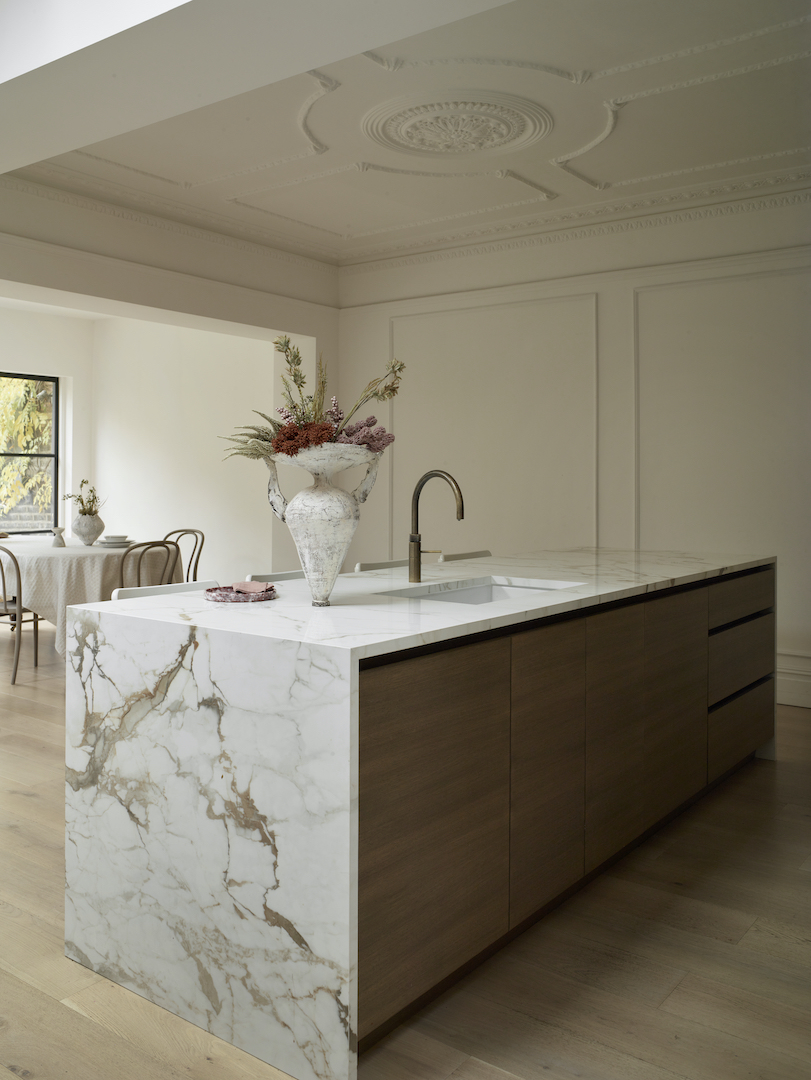
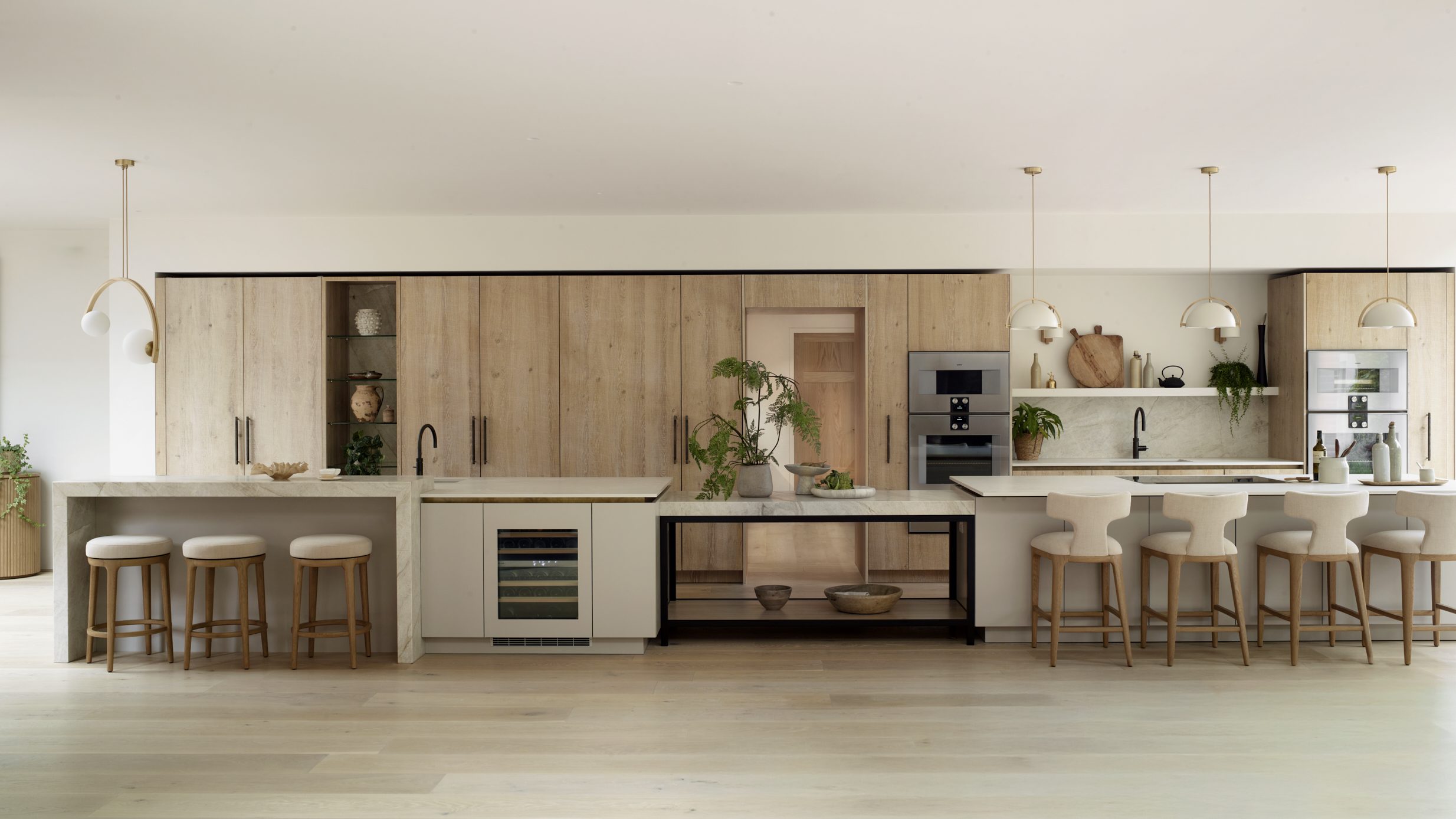
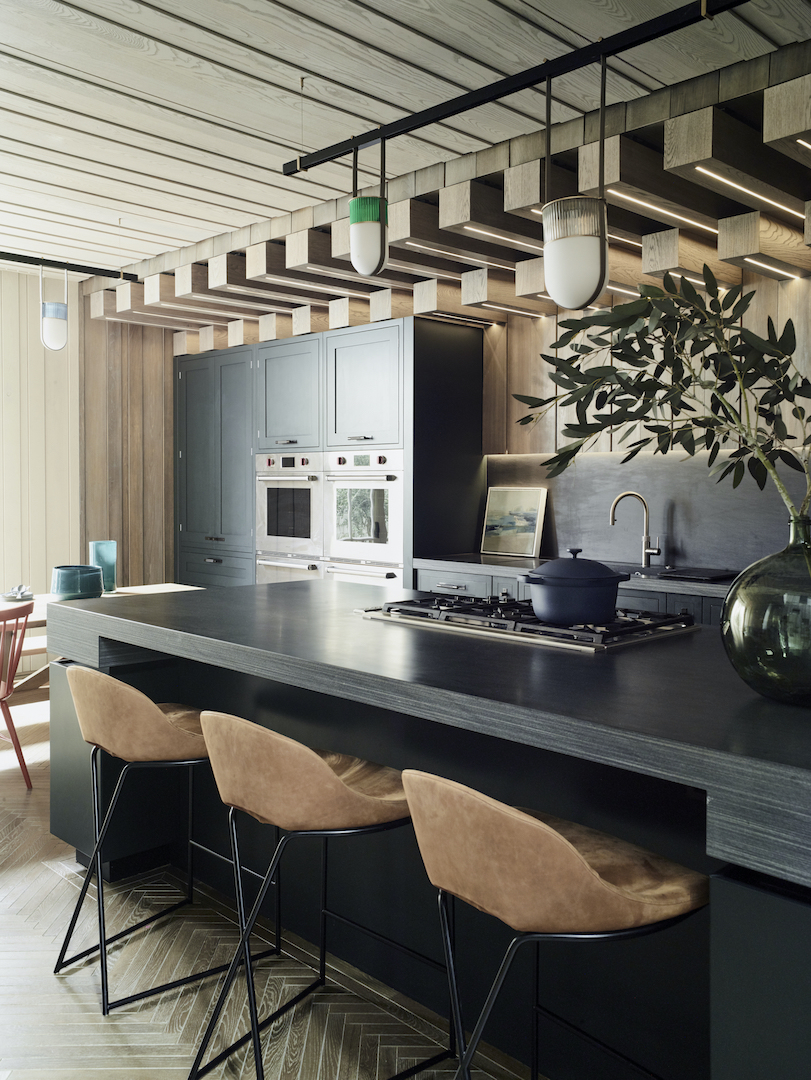
Waterfall edges work differently again. Rather than shaping the horizontal line, they extend the worktop material vertically down the side of the island for a seamless, monolithic effect. Best paired with a boldly veined worktop, the waterfall edge delivers instant drama, wrapping the island in one continuous, sculptural form. In minimalist schemes or a dark kitchen, this uninterrupted surface feels particularly rich and cocooning.
Practicalities that matter
It’s worth noting that more elaborate profiles usually cost more, as they require additional machining, greater fabrication skill and, in some cases, more material. This can be another good reason to focus them in one area rather than across every surface.
They can also add time to production, so it’s worth bearing this in mind if you’re considering something more complex than a standard edge. Not dramatically so, but enough that it should be factored in early rather than introduced later in the design process.
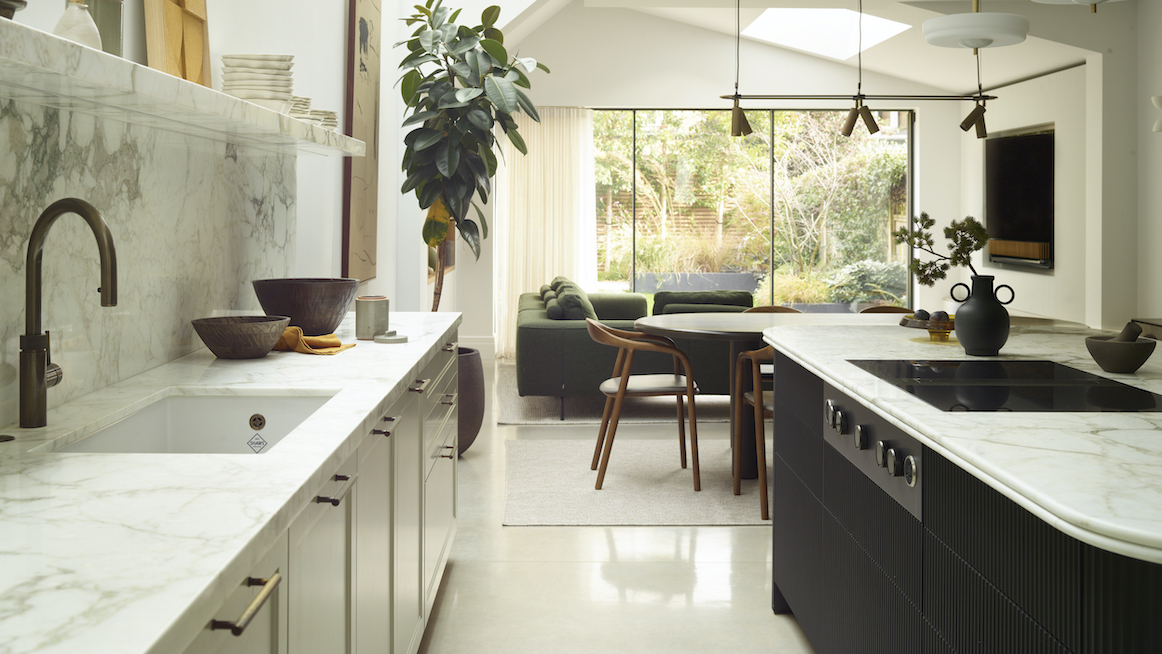
Durability is another consideration. Softer, rounded profiles can be more forgiving in busy family kitchens, as they reduce sharp corners. The chunky edge profile on our Morriss project is especially robust, while its smart ribbed edge adds texture and helps disguise everyday wear. Thin, crisp edges in brittle stones can be more susceptible to chipping, while heavily built-up profiles need careful planning. A triple bullnose or double ogee, for example, may increase the apparent thickness of the worktop, which can affect drawer proportions, appliance clearances and the finished working height.
These are not reasons to avoid them – just factors our designers can help you navigate to ensure your new kitchen works as beautifully as it looks.
When simpler is better
Elaborate edge profiles may be trending, but they don’t suit every kitchen. If the cabinetry is already heavily detailed, if the room is compact, or if the overall look is deliberately pared-back, an ornate edge can feel like one detail too many. Equally, trends move on. Very decorative or unusual profiles can date a kitchen faster than subtler ones, which is why balance matters. The aim is not to choose the fanciest option, but the one that best supports the architecture, materials and overall mood of the space.
Why not visit your nearest Roundhouse showroom, or our sister company Day True’s Wimbledon studio, to see and touch the most popular edge profiles in person, and discover how different styles can transform your next kitchen?
Frequently Asked Questions – Worktop edge profiles
What is a worktop edge profile?
A worktop edge profile refers to the shape and finish applied to the edge of a worktop. While a simple square edge is the most common, there are many alternatives, including bullnose (rounded), pencil (slightly softened), sharknose (angled) and ogee (more decorative).
Which worktop edge profile is best for a modern kitchen?
For a modern kitchen, cleaner, more architectural edge profiles tend to work best. Pencil edges and sharknose profiles are popular choices, as they create a crisp, streamlined look without feeling harsh. Sharknose edges, in particular, add a subtle design detail with their angled cut, often enhanced with shadowlines for a more defined, contemporary finish.
Are decorative edge profiles going out of style?
Decorative edge profiles are not going out of style, but they are being used more selectively. Rather than applying ornate profiles like ogee or double bullnose throughout the kitchen, they are often focused on key areas such as a kitchen island. This creates a focal point while keeping the overall design balanced and current.
Do different edge profiles affect durability?
Yes, the edge profile can influence how durable a worktop is in everyday use. Softer, rounded edges such as bullnose can be more forgiving in busy kitchens, as they reduce sharp corners. In contrast, very thin or sharp profiles may be more prone to chipping, particularly in more brittle materials like certain natural stones.
Do bespoke edge profiles cost more?
More complex edge profiles typically cost more than standard square or pencil edges. This is because they require additional machining, skilled fabrication and sometimes more material. They can also add slightly to production time. For this reason, many designers recommend using more intricate profiles selectively, such as on an island, to maximise impact while managing budget and lead times.