Designing from the inside out: the importance of internal kitchen storage
Beautiful cabinetry may be what first catches your eye, but it is what happens behind the scenes that really determines whether a kitchen is effortless to use. Internal storage is the hidden workhorse of good kitchen design, shaping how easily you cook, tidy, host and move through the room every single day. When everything has a proper place, surfaces stay clearer, ingredients are easier to find, and mundane tasks feel smoother and faster.
This is also where bespoke design comes into its own. Too often, off-the-shelf storage asks you to adapt to it, rather than the other way around. Tailored interiors change that, responding to your routines, habits and priorities. From oils beside the hob to custom-sized spice drawers and hard-working pantries, personalised internal storage creates a kitchen that feels intuitive, organised and entirely in tune with how you live.
The art of organised spice storage
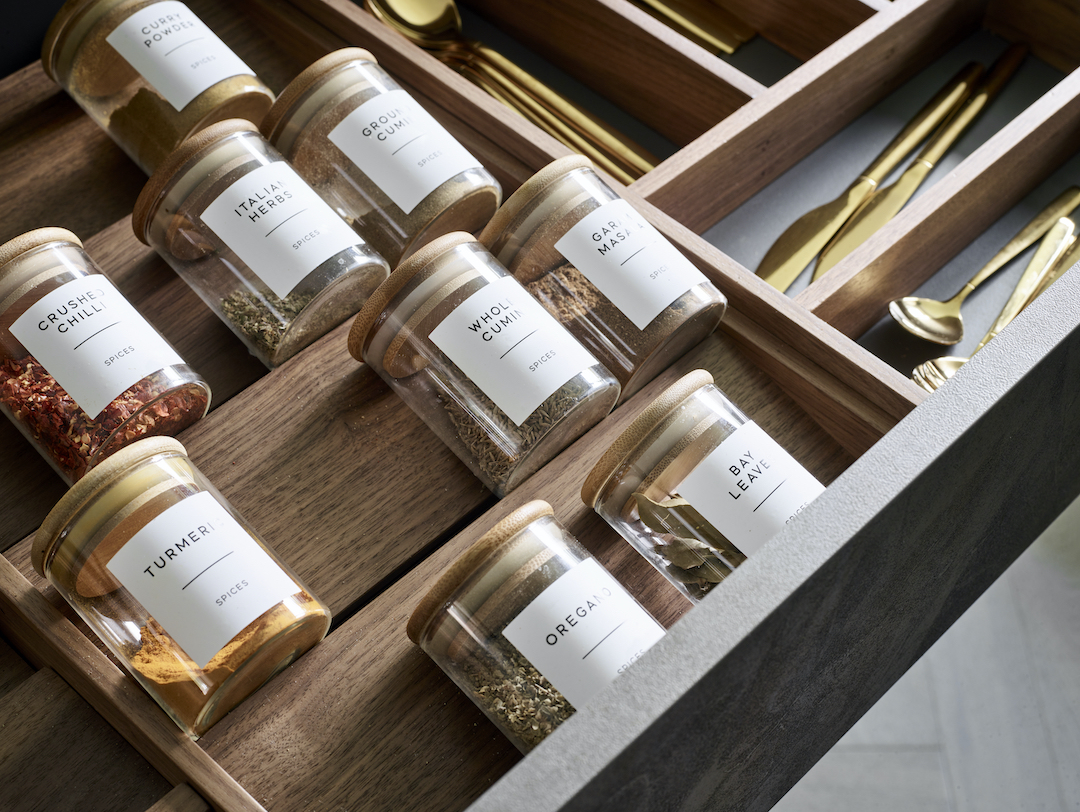
A well-considered spice rack is a small detail that delivers a disproportionately large impact on how smoothly your kitchen functions. The starting point is deciding how you want to see and access your collection; whether that is a horizontal layout within a drawer, where every label is visible at a glance, or a vertical arrangement that keeps jars within easy reach at eye level. It’s also worth being realistic about how curated you want the look to be. Decanted spices in uniform jars with discreet labelling create a calm, cohesive aesthetic and make it far quicker to find what you need mid-cook. But if you know you won’t keep up the decanting, opt for spice storage that can comfortably accommodate a mix of packet sizes and pots, so it still looks considered without demanding too much effort.
In our Mangat project, the aesthetic is prioritised with a dedicated spice drawer, complete with finely crafted angled inserts that keep every jar visible, ordered and beautifully aligned. Each jar is gently tilted for instant visibility and effortless retrieval, transforming what could be a cluttered zone into something precise and luxurious. It is a solution that not only looks considered but genuinely improves the cooking experience, eliminating the need to sift through overcrowded cupboards.
For those who prefer spices closer to the action, a spice rack cabinet or slim shelf at splashback level can work beautifully, keeping everyday essentials within arm’s reach of the hob. The key here is restraint and structure; without it, even the most elegant shelf can quickly feel chaotic. Equally, back-of-door storage should be approached with care. Poorly specified racks can lead to constant clatter and movement, but well-designed bespoke systems with secure dividers, tailored compartments and adjustable heights ensure everything stays perfectly in place. As with all internal storage, it is these finer details that raise the experience from simply functional to genuinely refined.
Where slim pull-outs make a difference
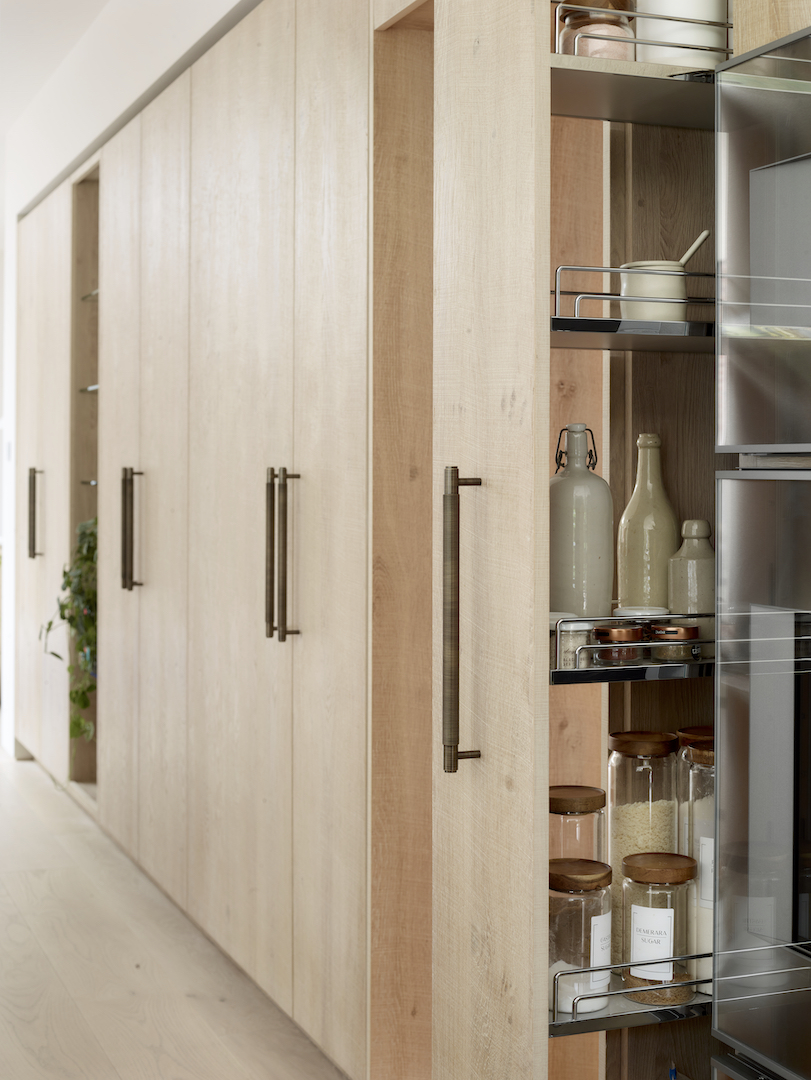
Slim pull-outs are one of the most efficient storage solutions in a bespoke kitchen, turning even the narrowest spaces into highly functional, easy-to-access zones. Rather than filling gaps, the best examples are deliberately designed in, creating dedicated storage exactly where it’s needed. Positioned beside the hob, they’re ideal for oils, vinegars, spices and chopping boards, keeping everyday essentials within immediate reach. Taller versions work just as hard near the fridge or prep area, offering generous storage for dry goods, tins and larder items.
In our Ashbury project, a full-height pull-out sits neatly alongside the fridge, delivering impressive capacity within a compact footprint. The real advantage is visibility; because contents can be accessed from both sides, nothing gets pushed to the back or forgotten. You can see everything at a glance, and you’ll be surprised how much these slim formats can hold.
For internal storage with moving parts, robust construction and precision engineering are essential. Smooth, high-quality runners, strong load capacity and well-considered internal divisions ensure the unit feels stable, quiet and effortless to use.
Resolving the corner conundrum
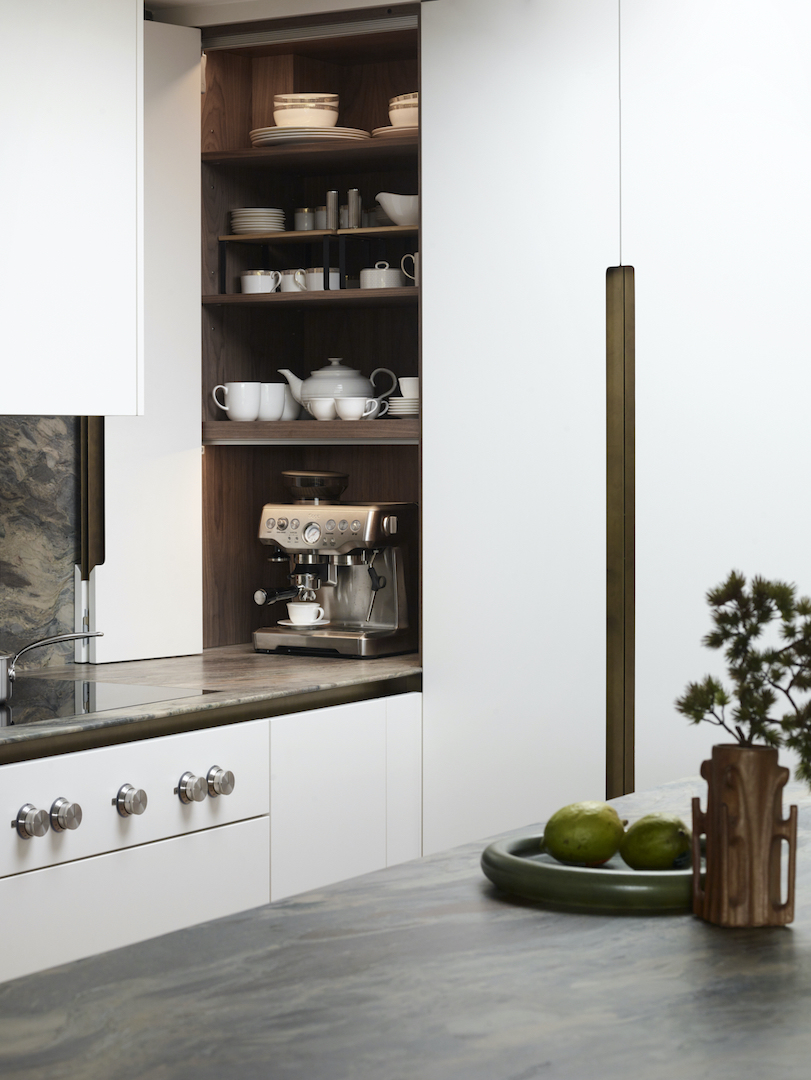
Corners are notoriously awkward in kitchens, especially those with L-shape and U-shape layouts. They are deep, dark and often difficult to access, which means they can quickly become dead space or a graveyard for rarely used gadgets. The solution is not simply making the cupboard bigger but making it easier to access. Above worktop level, bi-fold or pocket doors can open the space fully, while below, mechanisms such as Le Mans pull-outs and carousels allow contents to glide out into view, ensuring nothing is lost or out of reach.
In our Vauxhall project, the corner features smart shelves hidden by bi-fold doors that fold neatly out of the way, allowing the contents to be easily reached. This kind of solution is especially useful for breakfast station-style storage or for keeping worktop appliances tucked away but still accessible. In a modern kitchen design, corners should never feel like an afterthought, they need just as much planning as any showpiece island.
The anatomy of a hard-working pantry
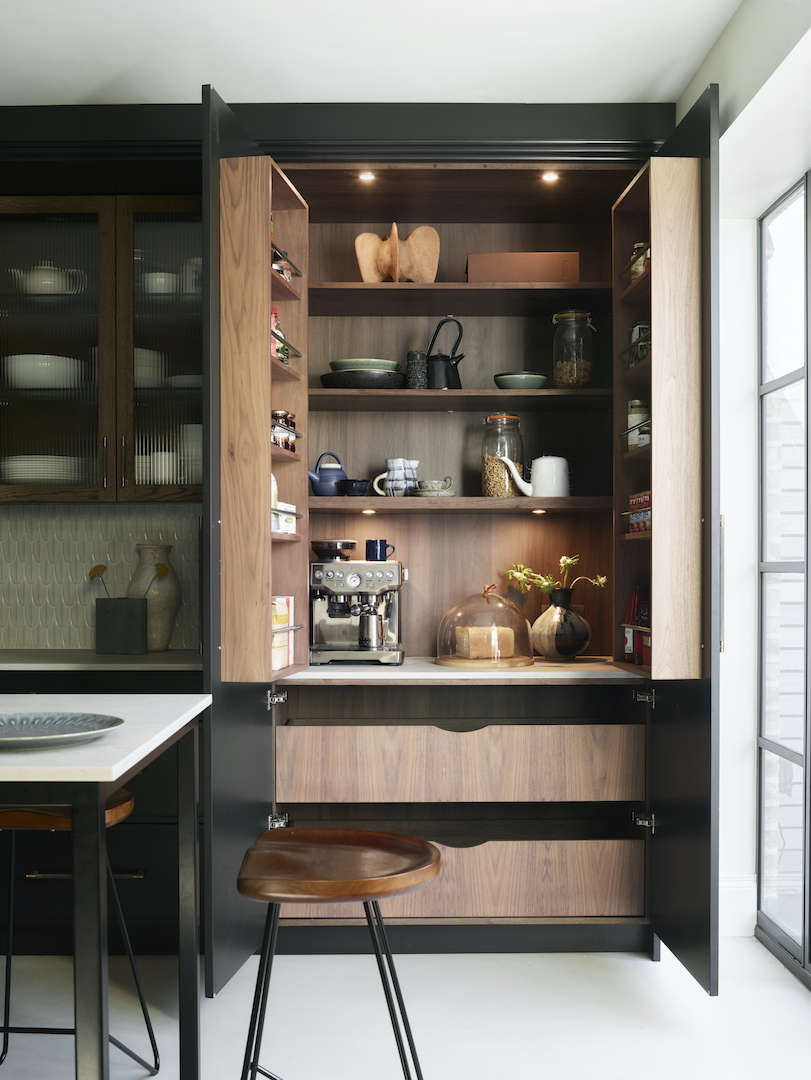
A well-designed pantry is highly desirable, but it comes at the cost of valuable floor space, so every internal detail needs to be carefully considered to maximise its usefulness. The best ones combine different types of storage to suit different foods and uses. In our Munro project, large airy drawers are perfect for ambient foods such as root vegetables and bread, which need airflow and should not be shut into an airtight plastic box or banished to the fridge.
Door racks are where a pantry really starts to earn its keep, bringing smaller items forward so nothing gets lost behind jars and packets. Introduce integrated sockets and the space shifts from simple storage to a fully functioning prep zone, ideal for coffee machines, toasters or mixers. Layer in considered details such as a cool marble shelf for ingredients that benefit from a lower temperature, like butter, alongside well-placed lightingthat illuminates every crevice, and the pantry becomes far more than a cupboard.
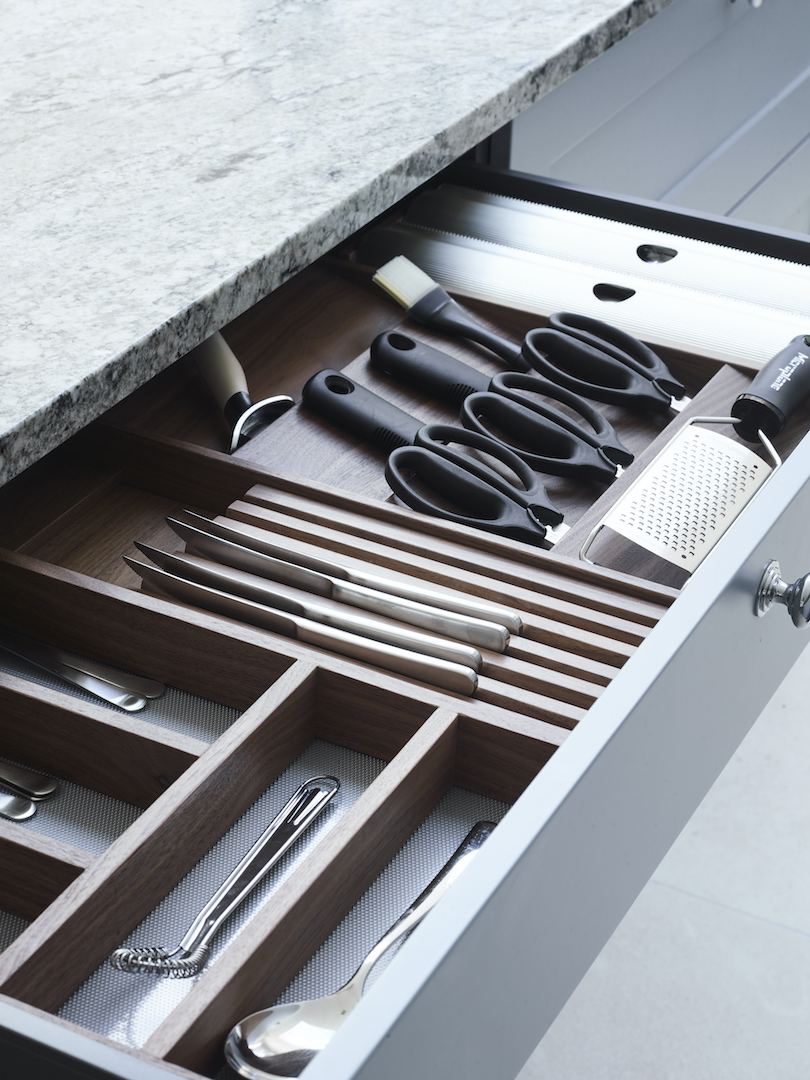
Drawer interiors that work harder
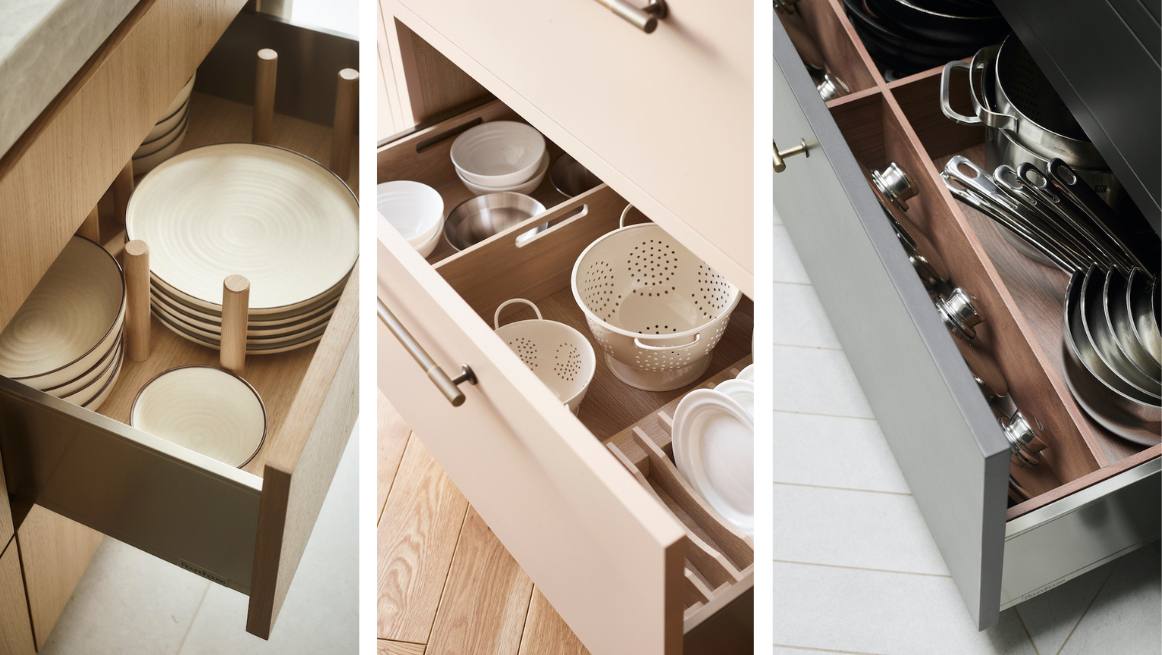
Drawers are where some of the smartest bespoke storage happens, bringing order, visibility and ease to everyday tasks. Internal fittings such as pan-lid separators, plate racks and peg systems keep contents neatly in place, reducing movement and making everything easier to access.
Each drawer should be carefully considered in relation to its location. Beside a prep area, for example, a drawer might include tailored compartments for knives, scissors, foil, clingfilm and utensils, ensuring everything you need is close by. Thoughtful details such as protective liners help dampen noise, safeguard the drawer base and can be lifted out for easy cleaning. Fully adjustable internal dividers add another layer of longevity, allowing the layout to evolve as your needs change over time.
Secret internal drawers, whereby shallower drawers are tucked inside larger ones, bring an added level of refinement, offering discreet organisation without disrupting the clean lines of the cabinetry exterior. Ideal for smaller tools, valuables or less frequently used items, they allow the main drawer below to remain calm, spacious and highly functional.
To discover more internal storage ideas that are tailored around real life rather than standard sizes, visit a Roundhouse showroom. Seeing these solutions in person is the best way to understand the difference bespoke detailing can make.
Frequently Asked Questions – Internal Storage
What is the best way to organise internal kitchen storage?
The most effective approach is to design storage around how you actually use your kitchen. Group items by task and location. For example, keep knives, utensils and prep tools together near your main preparation area, and store oils, spatulas and spices close to the hob. Well-planned internal storage should feel intuitive, with everything easy to see and reach.
Are bespoke internal storage solutions worth it?
Bespoke internal storage allows every cabinet and drawer to be tailored to your routines, rather than forcing you to adapt to standard sizes. This results in a kitchen that is easier to use, better organised and more enjoyable day to day. It also helps maximise every inch of space, particularly in areas like corners, drawers and pantries.
What is the best spice rack for a modern kitchen design?
What is the best spice rack for a modern kitchen design?
A well-designed spice rack depends on your preferences. Drawer-based spice storage with angled inserts offers excellent visibility and a clean, streamlined look, while a spice rack cabinet or shelf near the hob keeps essentials within easy reach. The key is ensuring jars are clearly visible, securely stored and easy to access.
How do you make the most of corner kitchen cabinets?
Corner cabinets work best when fitted with mechanisms that improve access, such as Le Mans-style pull-outs or rotating systems that bring contents forward. Above the worktop, bi-fold or pocket doors can open up the space fully. Thoughtful design ensures corners are no longer wasted but become practical, usable storage.
What should be included in a well-designed kitchen pantry?
A well-designed pantry should combine different types of storage to suit a variety of items. This might include deep drawers for ambient foods, door racks for smaller items, integrated sockets for appliances, and features such as marble shelves and good lighting. The goal is to create a space that is not only organised but genuinely useful for everyday kitchen tasks.