Kitchen island surface trends 2026
While the shape, size and layout of kitchen islands get plenty of attention, it’s the surface that really defines how an island looks, feels and performs day to day. Beyond the familiar manmade vs natural worktop debate, the conversation is shifting towards how materials are detailed, combined and crafted to work harder, bringing both function and personality to your space.
Trends-wise in 2026, we’re seeing a confident move towards creative approaches that celebrate pattern, tactility and craftsmanship, alongside practical choices that support real life. Whether you’re planning a sociable kitchen island with seating, designing a moody dark kitchen, or simply refining your scheme, the focus is on making whatever material you choose do more – visually, practically and architecturally.
Using surfaces to bring the pattern
If you want your island to do the talking, richly patterned surfaces are hard to beat but the way they are fabricated and installed can boost their impact even further. Details such as shark nose edges, drop edges and extending the same material into splashbacks all help emphasise movement and create a more cohesive, considered look.
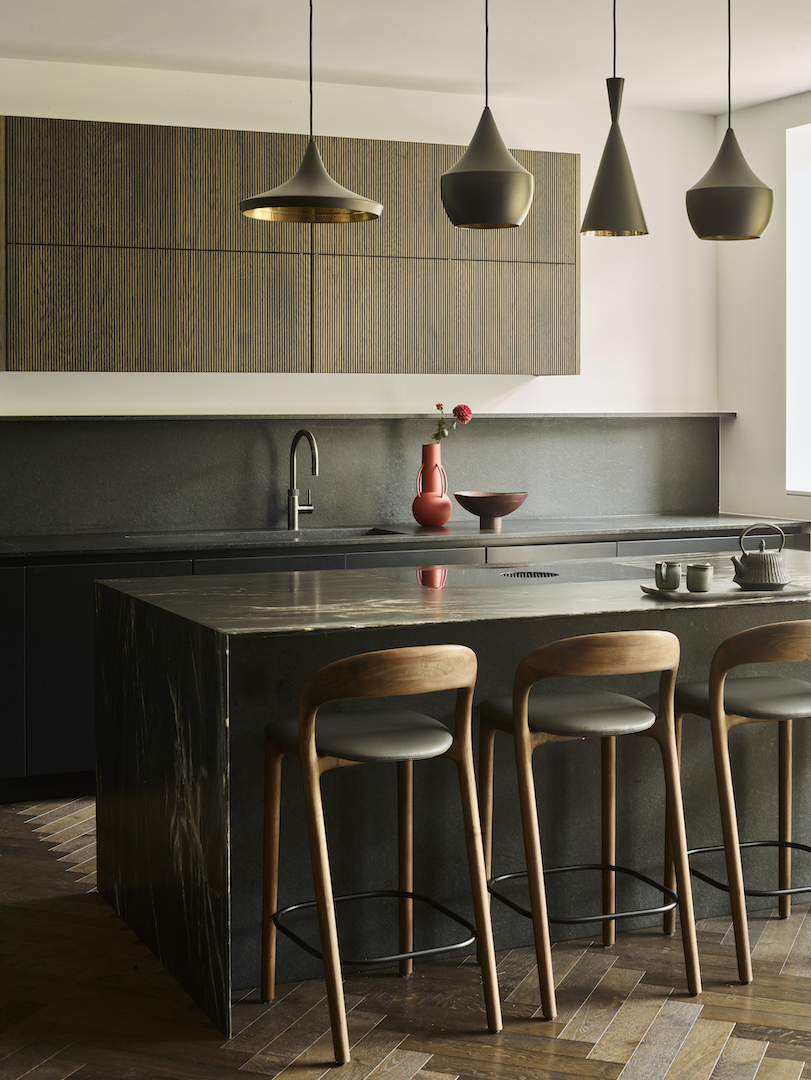
In our Raine project, African Fusion Leathered quartzite delivers organic movement and depth without feeling overly polished thanks to its softly textured finish. The waterfall edge – where the stone continues vertically down one or more sides – creates a seamless, monolithic look that feels architectural and grounding. This technique is particularly effective in open-plan spaces or darker schemes where you want a focal point that anchors the room, allowing the natural pattern to read as a continuous feature rather than just a work surface.
That said, full waterfalls aren’t always the right move – in smaller kitchens or lighter schemes they can feel visually heavy, so a half waterfall or refined edge detail can often achieve a similar sense of continuity with a lighter touch.
Sculptural surfaces
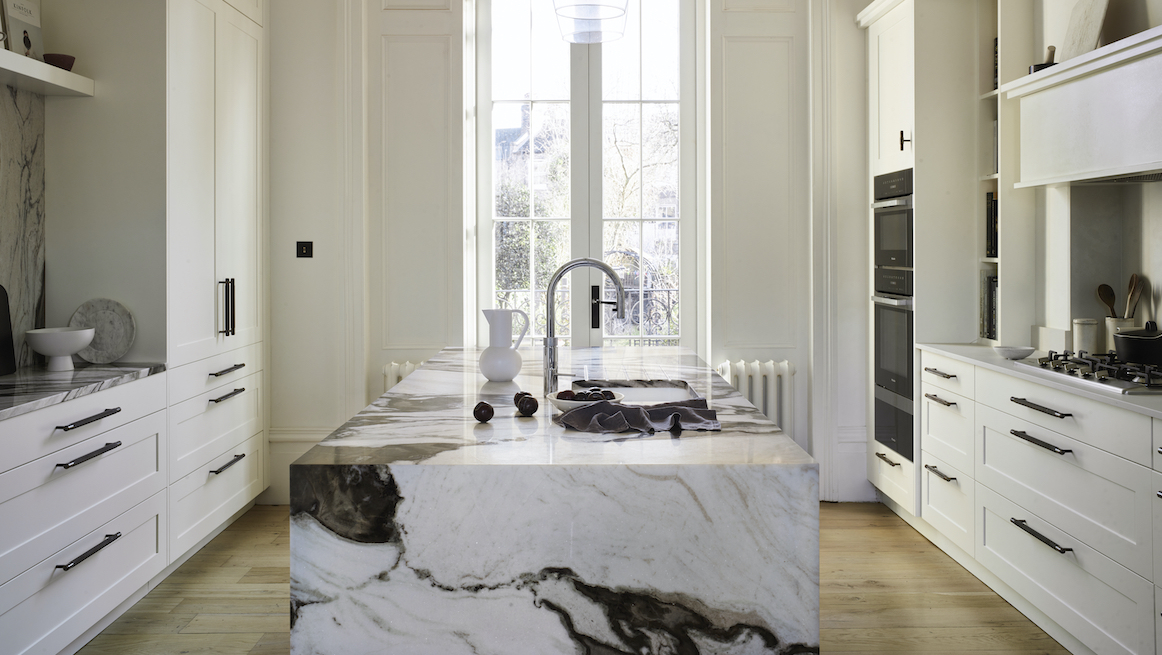
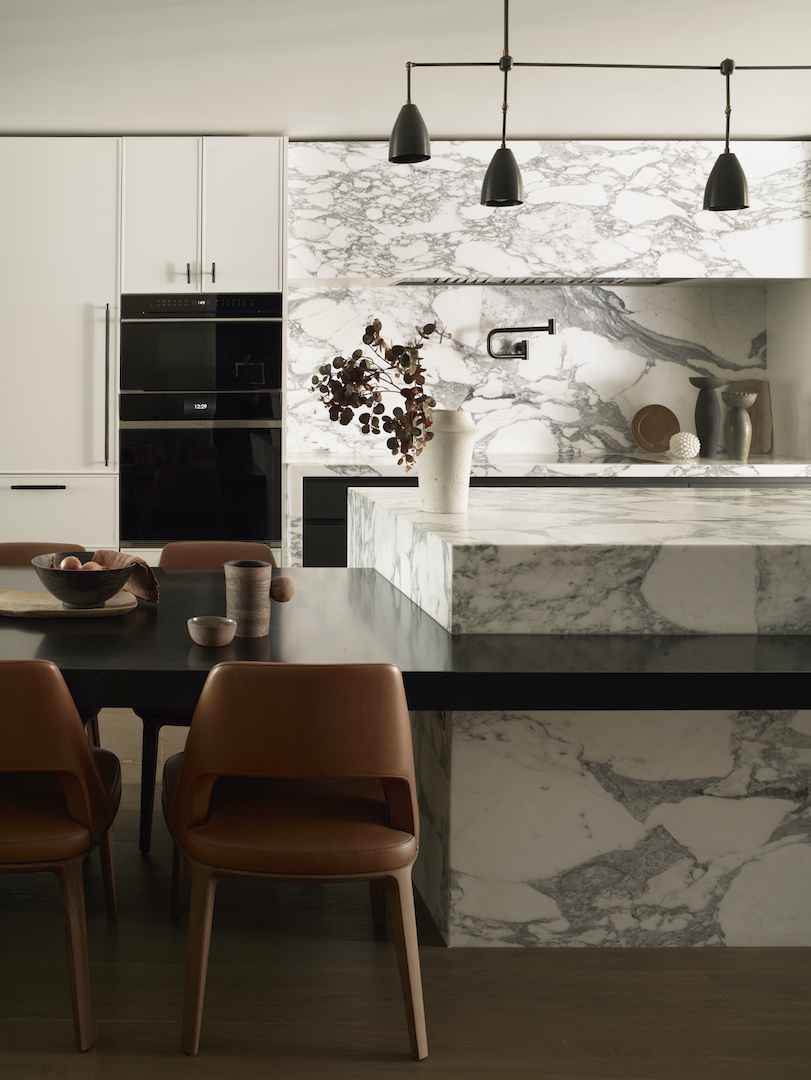
One of the most elegant ways to elevate bespoke kitchen islands is to think about them as a piece of architecture rather than simply cabinetry topped with a worktop. Sculptural surface treatments focus on precision fabrication, such as mitred edges, wrapped veining, framed volumes and intersecting planes, to create forms with interesting silhouettes. These techniques allow natural materials to read as solid blocks rather than applied layers, bringing a sense of permanence and craftsmanship to the room.
In our Kensington project, Light Arabescato Corchia marble was fabricated with 45-degree mitres so the veining wraps continuously around corners, giving the island a modular, sculptural presence. Intersecting the island with a dining table in dark custom-stained Nero Assoluto granite adds contrast and visual rhythm while cleverly zoning surfaces.
Mixing materials
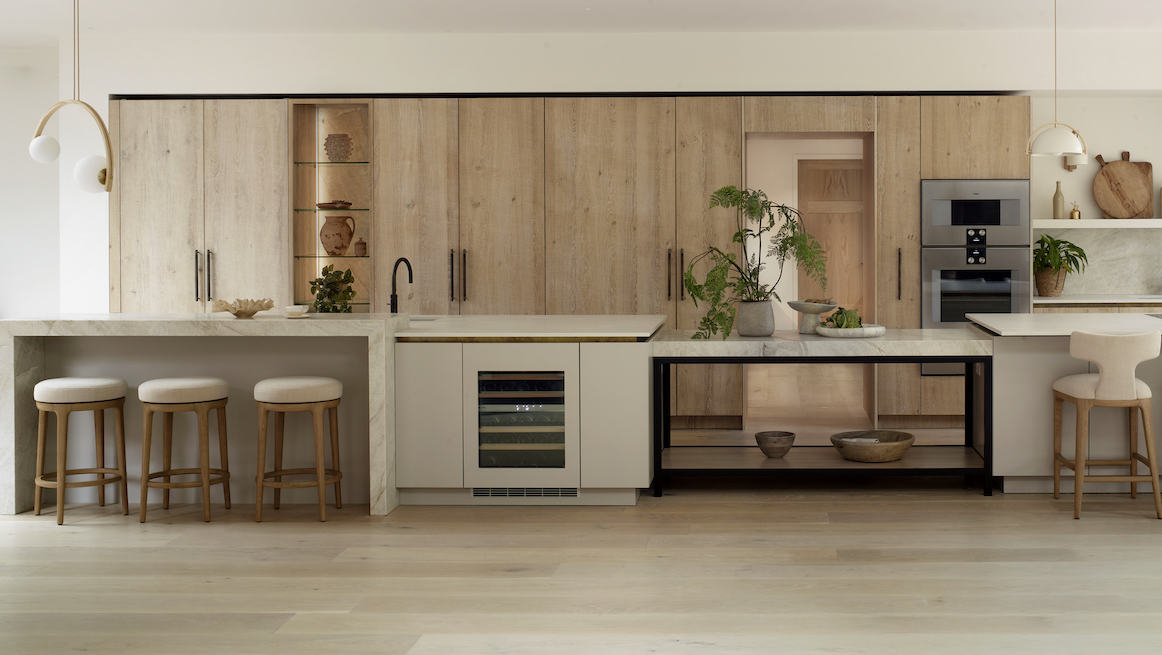
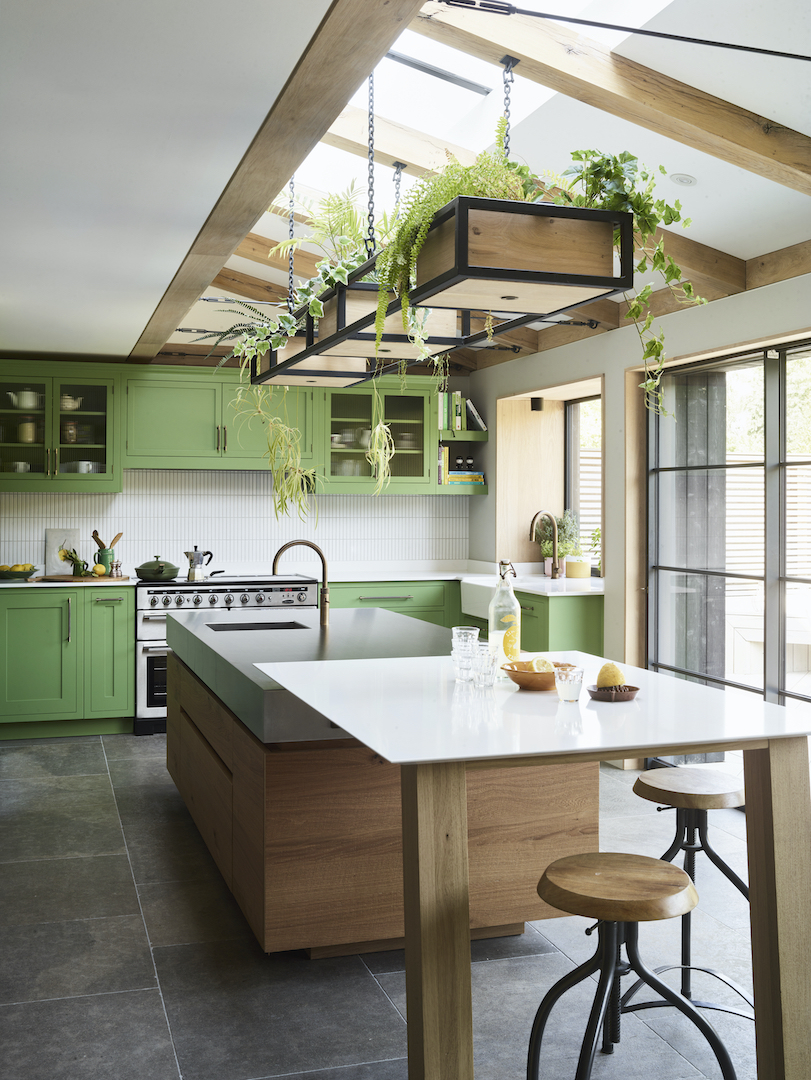
Combining surface materials is one of the most effective ways to make a kitchen island work harder while adding visual interest. Rather than relying on a single finish, designers are increasingly layering materials to create zones that reflect how the island is actually used, from heavy prep and cooking to casual dining and gathering. It’s a more nuanced approach that balances practicality with warmth, allowing the island to feel less like a block and more like a piece of furniture tailored to daily life. We’re also seeing more combinations such as stone paired with timber, leathered finishes alongside polished slabs, and even stone with metal accents, all adding contrast and tactility without overwhelming the scheme.
One of the biggest practical trends we’re seeing is pairing two surface materials to support different tasks. In our Oliver project, stainless steel on the main island offers a professional, heavy-duty prep zone that’s hygienic and incredibly hard wearing. Adding a wholestave timber breakfast bar softens the look and brings warmth under hand – it’s kinder on crockery, quieter in use and warmer on your arms.
Bespoke solutions
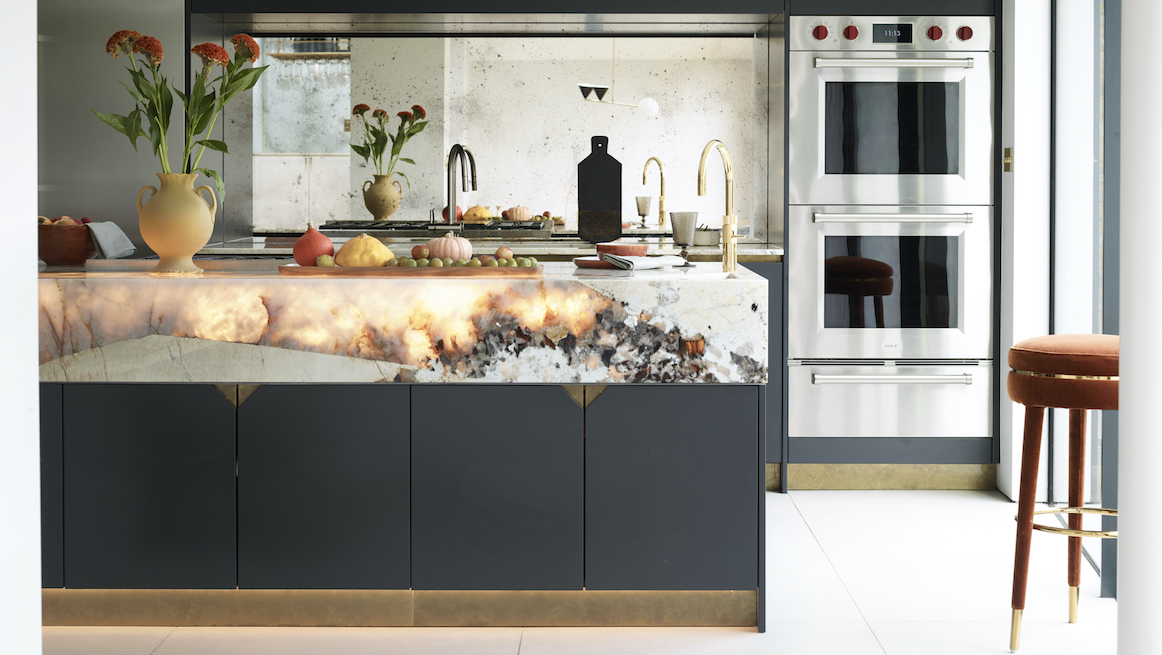
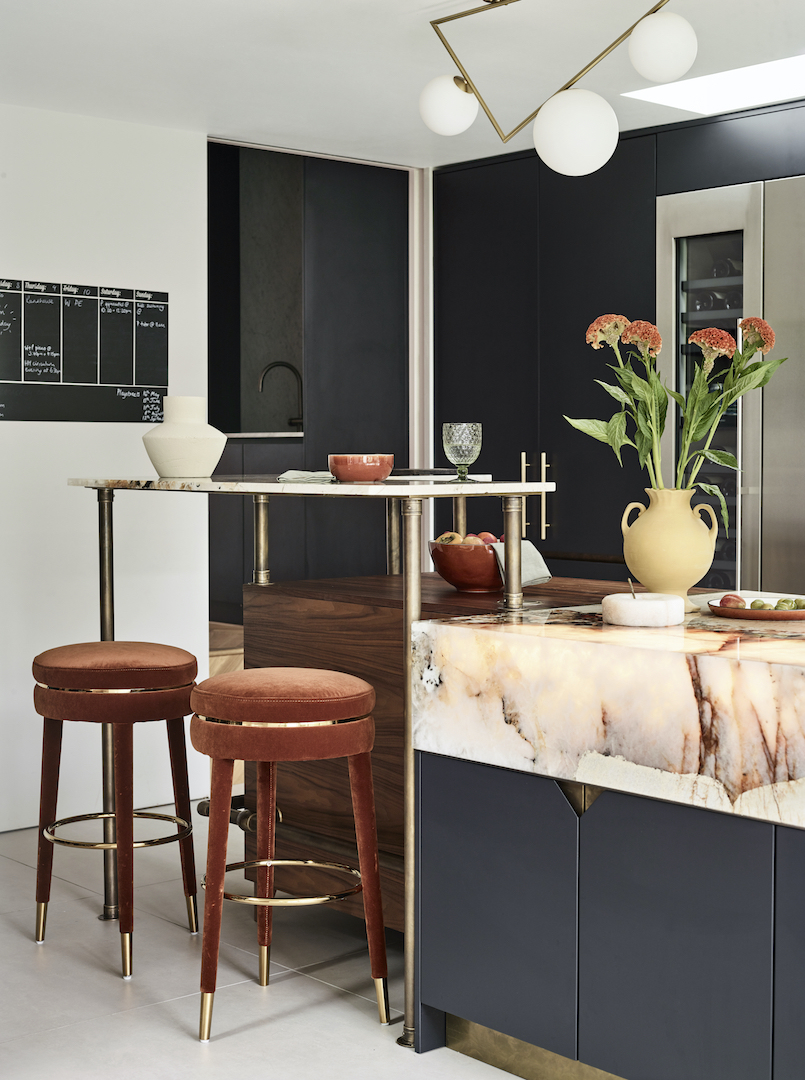
Some of the most exciting kitchen island designs come from pushing materials beyond their expected role. Thinking creatively about how surfaces can be detailed, lit or combined is where bespoke design really shines, and it’s often what turns a beautiful kitchen into a memorable one.
A great example is the backlit Patagonia Natural Quartzite in our Avenue project. Thanks to its crystalline structure, sections of the stone allow light to pass through, creating a soft glow that highlights the natural patterning and adds an unexpected layer of atmosphere. It’s not something you see every day, but that’s exactly the point – it shows how a kitchen island can become a true centrepiece when you’re willing to explore surface ideas a little further.
The power of edge profiles
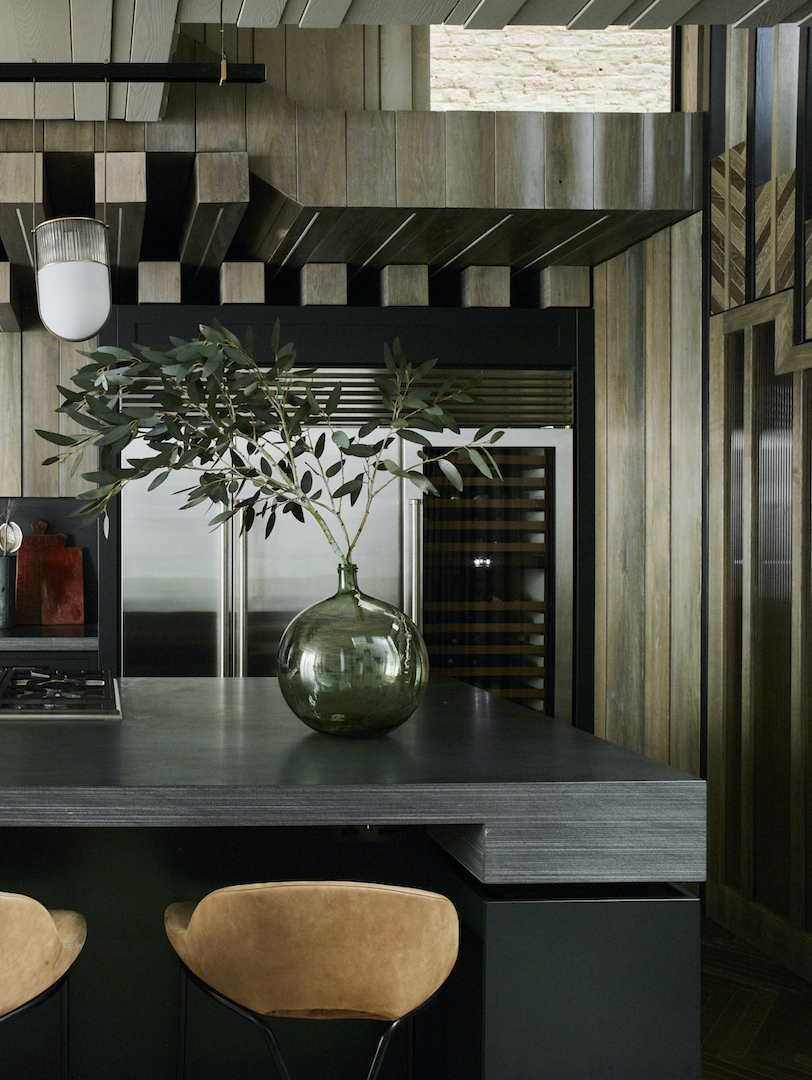
Edge detailing is experiencing quite the revival this year, with designers rediscovering how much character can be introduced through the profile of a worktop. Beyond plain square edges, we’re seeing growing interest in more dynamic treatments, from crisply rounded shark nose details to more elaborate double bullnose and ogee profiles, as well as layered or extra-thick builds that emphasise chunkiness. These details can subtly shift the feel of a kitchen island, adding shadow, shape and tactility without changing the core material.
In our Barnes project, Striatos Honed Black Vermont Granite is crafted with an extra-thick, striated edge profile that adds pattern and texture while emphasising the solidity of the island. This approach is perfect if you prefer quieter materials but still want depth and craftsmanship to shine through.
If you’d like to explore surface materials in person, compare samples and talk through what would work best for your kitchen island, visit your nearest Roundhouse showroom for inspiration and expert guidance.
Frequently Asked Questions – Island surfaces
What is the most durable material for a kitchen island surface?
Quartzite, granite and stainless steel are among the most durable choices. Quartzite offers exceptional hardness and heat resistance, granite is highly resilient to scratches, and stainless steel is ideal for heavy prep zones.
What is a waterfall edge on a kitchen island?
A waterfall edge is where the worktop material continues vertically down the sides of the island to the floor. It creates a seamless, architectural look and works especially well with strongly veined stone, helping to showcase the material while adding visual weight and impact.
Can you mix materials on a kitchen island?
Yes, combining materials is a growing trend for both practicality and design interest. For example, pairing stainless steel for prep with a timber breakfast bar for seating creates zones that support different tasks while adding warmth and contrast to the overall scheme.
Are marble kitchen islands practical for everyday use?
Marble can work beautifully if you’re comfortable with natural patina. It’s ideal for baking and cooler prep tasks, though it is softer and more porous than quartzite or granite. Many homeowners choose marble for its timeless beauty and embrace the character it develops over time.
How do I choose the right surface for a kitchen island with seating?
Think about comfort as well as durability. Softer, warmer materials like timber or leathered stone feel more inviting where people sit, while harder surfaces can be used for prep zones. A bespoke design approach from Roundhouse allows you to combine materials to suit how you live and entertain.