Why bespoke cabinetry matters more than you think in kitchen design
Scroll through any collection of dream kitchens and it’s invariably the cabinetry that first captures the imagination. Perhaps it’s a beautifully figured walnut veneer, a flawless painted Shaker door, reeded detailing or an island with the presence of a beautifully crafted piece of furniture.
But eye-catching cabinetry should do so much more than merely look impressive. Just ask Yotam Ottolenghi, whose Roundhouse kitchen has stood up to well over a decade of enthusiastic family life, entertaining and hardcore cooking. Long-term performance comes down to the details you rarely see or question at first glance.
We’re talking about robust cabinet carcases, solidly constructed doors, quality drawer boxes, precision hinges and materials chosen because they’re right for each job. Take the time to understand what sits beneath the surface and you’ll reap the rewards every day, for many years to come. Here’s what to look for to ensure you choose cabinetry that’s designed to last.
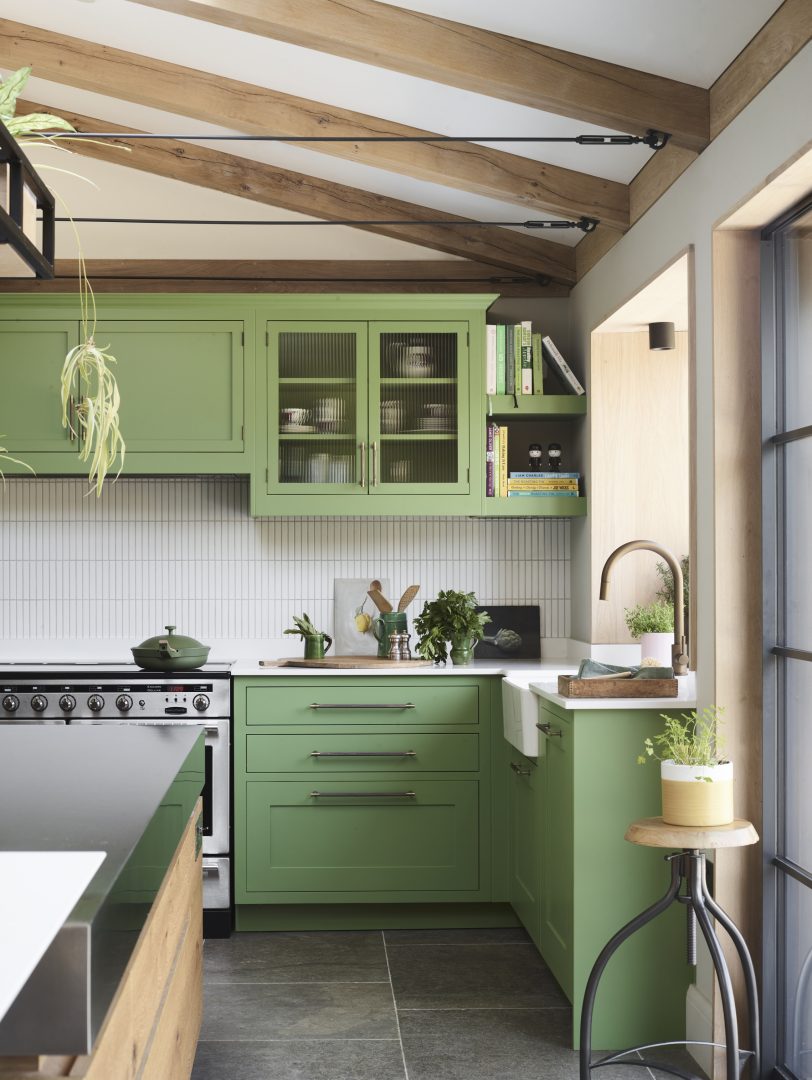
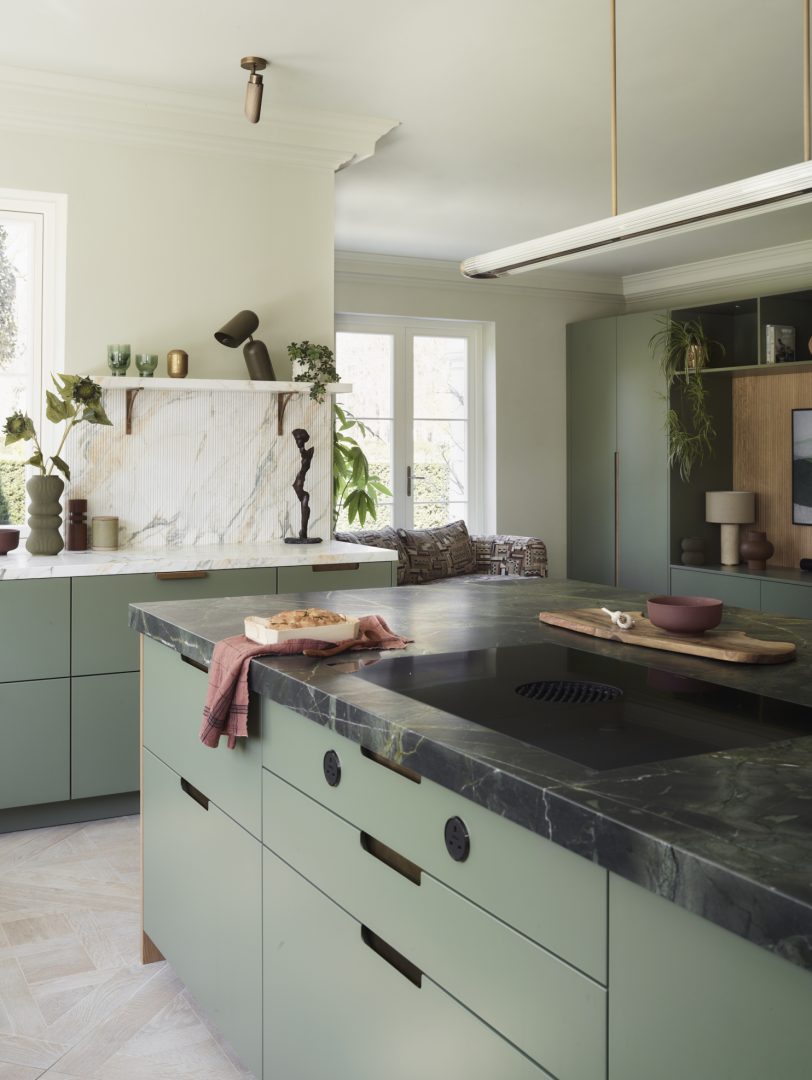
Start with the front construction
Before you choose door styles or finishes, decide how you want the cabinetry to be constructed. In most bespoke kitchens, that means choosing between in-frame and lay-on (also known as overlay) doors.
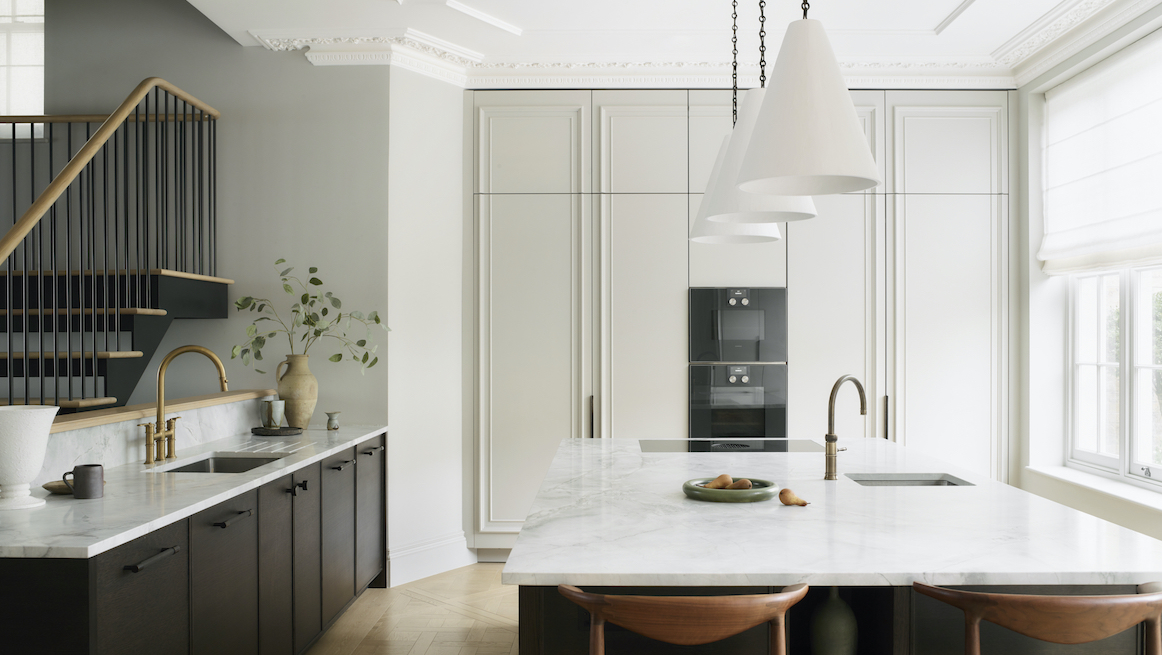
In-frame cabinetry has doors that sit neatly within a visible cabinet frame. It’s a traditional method of construction that showcases fine joinery, creates crisp shadow lines and gives the cabinetry a distinctly furniture-like feel. Because every door must be perfectly fitted within its frame, it’s also more labour-intensive to manufacture and install, which is reflected in the price.
Lay-on doors are mounted directly onto the cabinet carcase, concealing the frame beneath. The result is a cleaner appearance with slightly more usable internal space, making it the preferred choice for many contemporary kitchens. There’s no right or wrong answer. A well-made lay-on kitchen can be every bit as beautifully engineered as an in-frame one; the choice is largely driven by the look you’re trying to achieve and the character of your home.
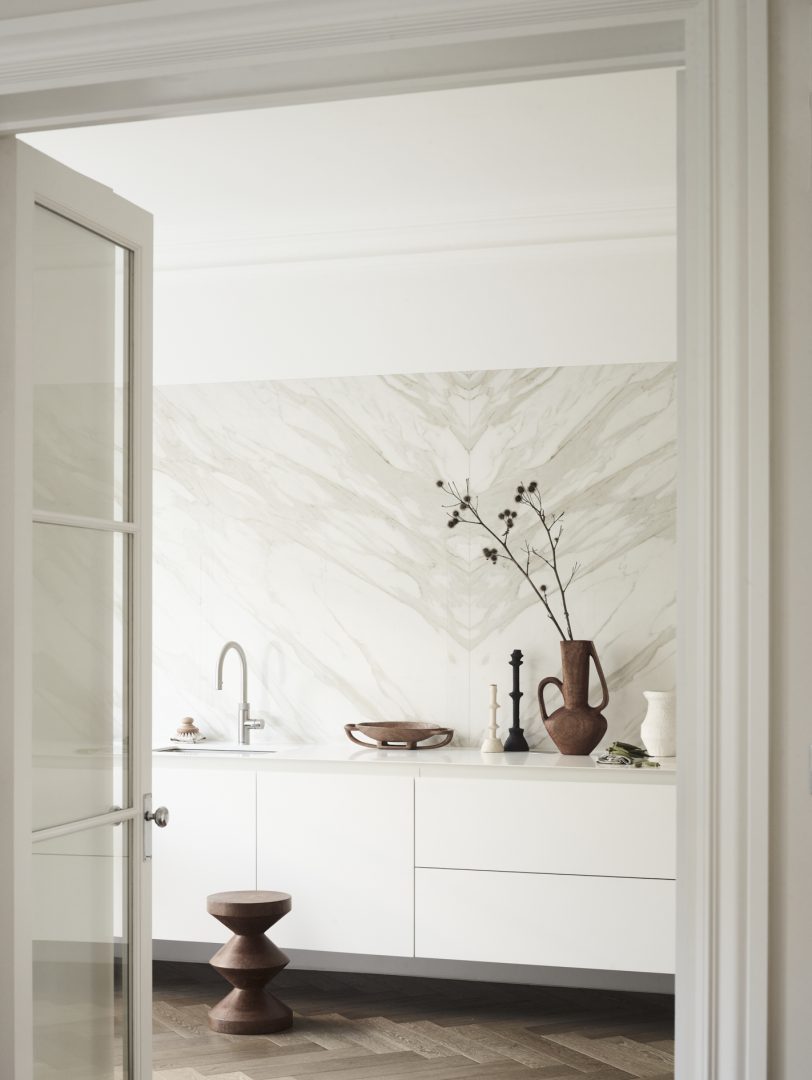
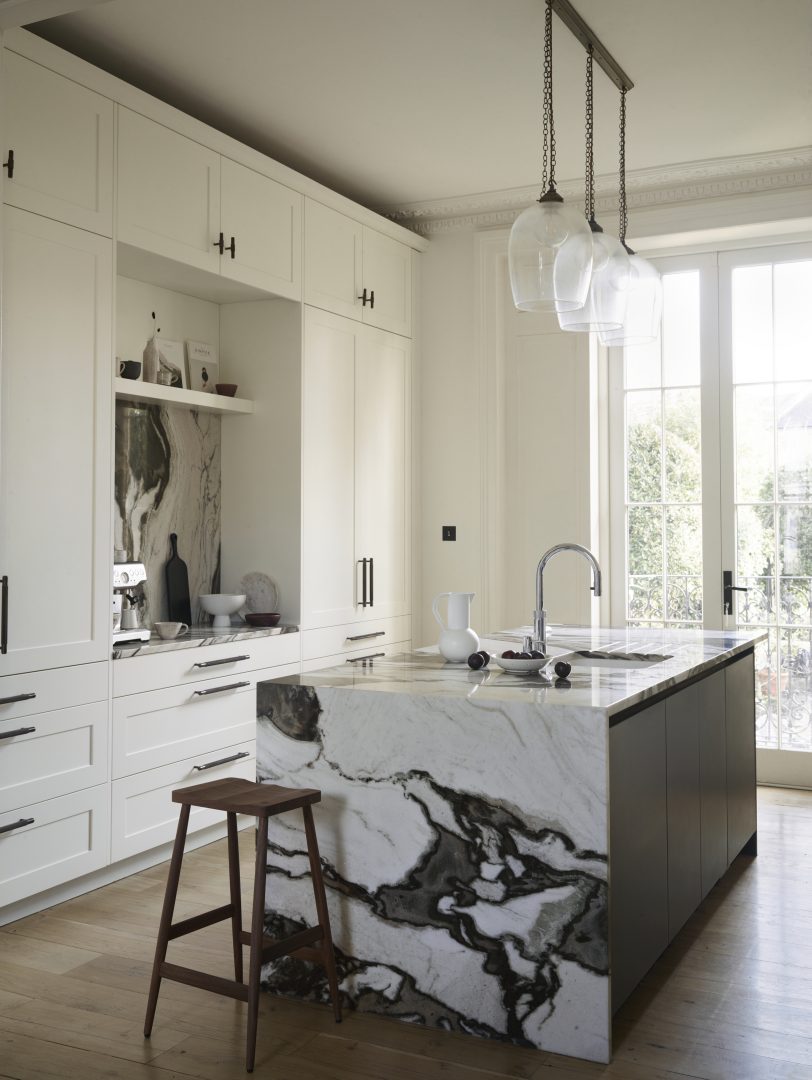
Then choose the doors
With the construction style decided, you can turn your attention to the doors themselves. This is where kitchen cabinet design really begins to influence both aesthetics and performance.
Shaker doors remain enduringly popular because they strike a balance between traditional craftsmanship and modern versatility. Their five-piece construction – a solid frame surrounding a central panel – isn’t simply decorative; it also helps the door remain stable over time. Raised-panel doors share many of the same structural advantages while offering a more classic, detailed appearance. The trade-off is that both styles have corners and crevices that require a little more attention when cleaning (a soft-bristle toothbrush is your friend).
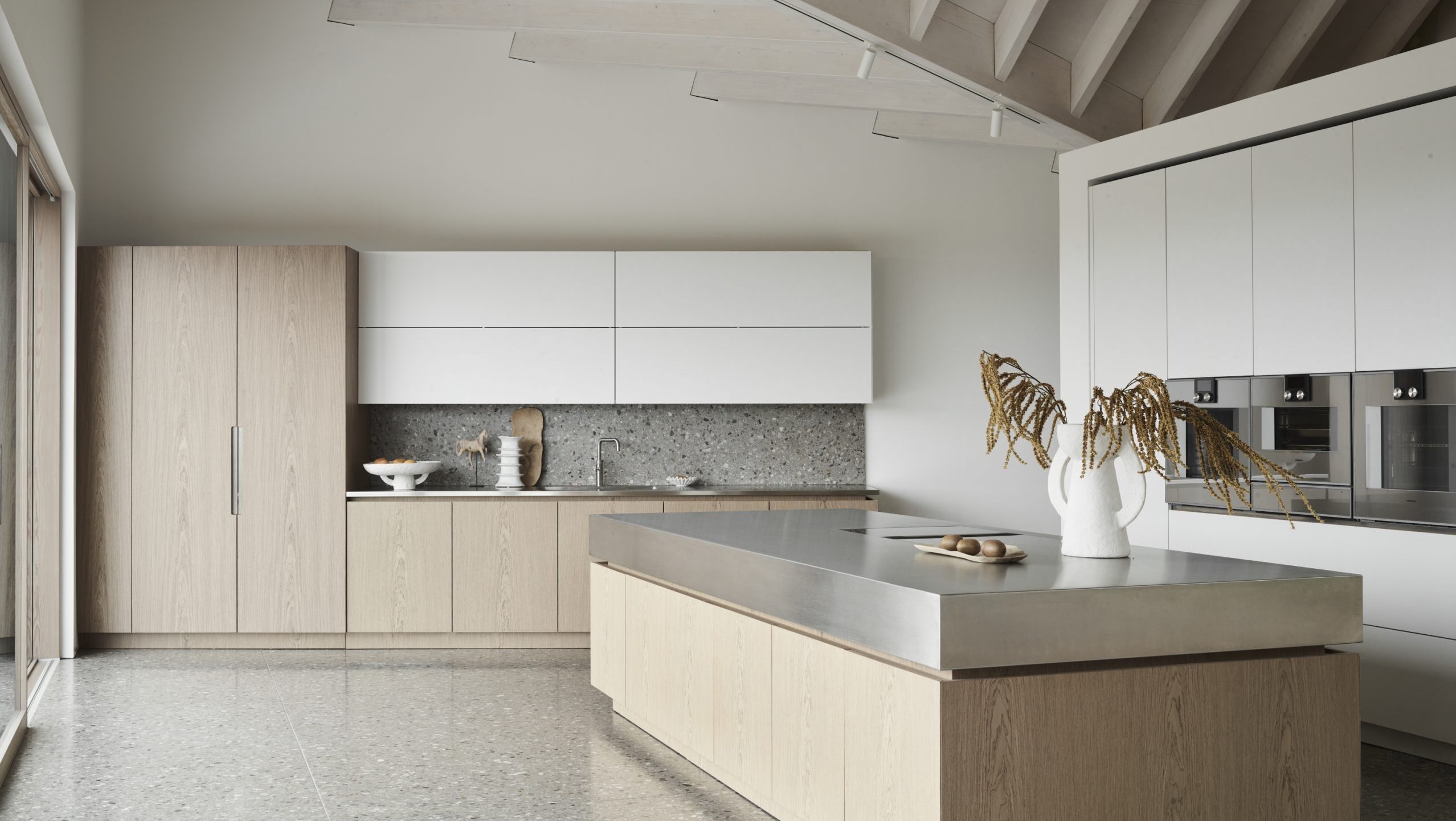
Slab doors offer a completely different proposition. Their uninterrupted surface creates a calm, contemporary look that’s quick to wipe clean and less likely to trap dust around mouldings. A quality slab door should feel reassuringly solid and not flex or wobble when opened. For extra-tall doors, both slab and framed styles often require specialist engineered cores, internal stabilisers or carefully selected materials to prevent bowing over time.
Beyond these core styles, decorative options allow you to tailor the overall character of the kitchen. Reeded or fluted fronts introduce texture and rhythm, glazed cabinets can break up long runs of solid cabinetry and create opportunities for display, while beaded detailing brings a softer, more traditional feel.
Now look behind the doors
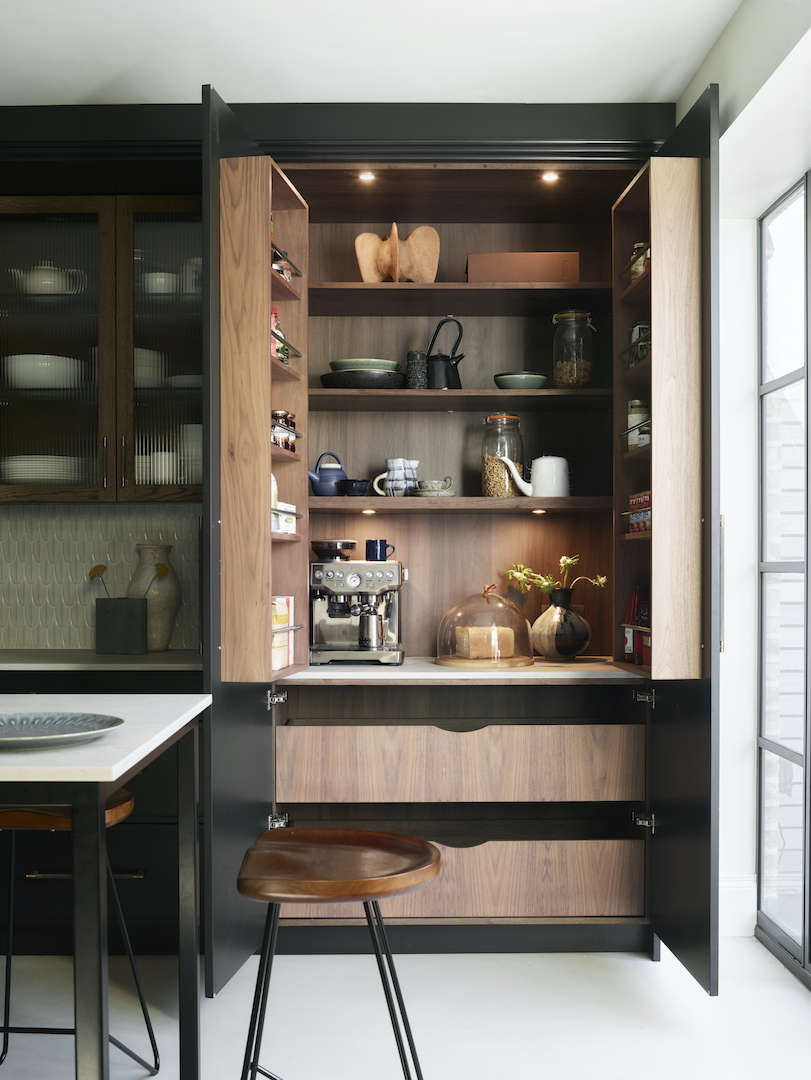
Beautiful doors might catch your eye, but it’s what’s behind them that determines how well your cabinetry performs over years of everyday use. Ask what the cabinet boxes are made from, and don’t overlook the less glamorous components, including the cabinet feet, back panels and tops, where applicable. Look closely at the drawer systems, hinges and internal fittings too, especially those that carry heavy doors like sliding and pocket door mechanisms. Are they from a well-respected specialist manufacturer? At Roundhouse, we recommend German hardware specialist Blum, whose precision-engineered hinges, runners and drawer systems are widely regarded as the industry benchmark for reliability, smooth operation and longevity.
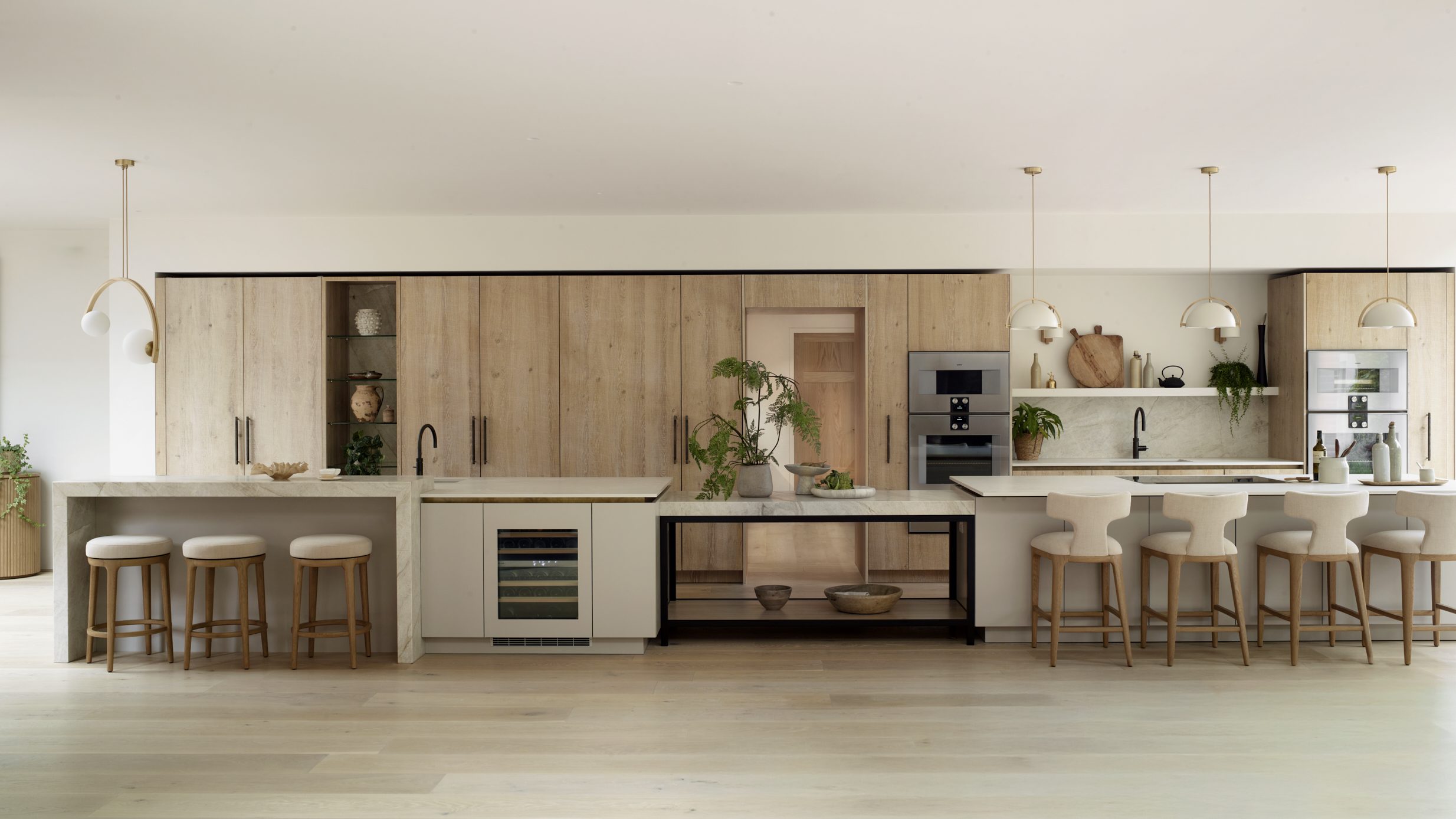
It’s also worth noting that the best kitchen-makers don’t rely on one material throughout; they choose the right material for each job. A timber door might combine solid wood frames with veneered centre panels for greater stability, while robust plywood carcases, moisture-resistant boards and precision-engineered metal drawer boxes provide strength where it’s needed most.
Rather than looking for the longest list of premium materials, look for intelligent specification. Every component should have been selected because it performs best in that role, balancing beauty, durability and longevity.
Next consider finishes
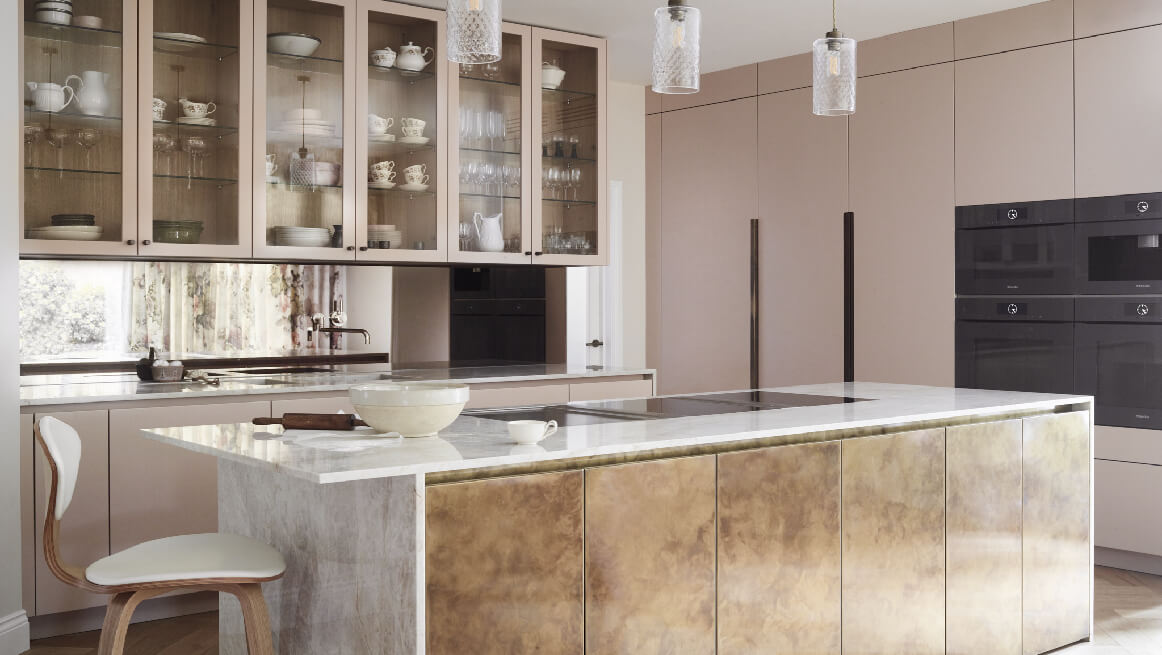
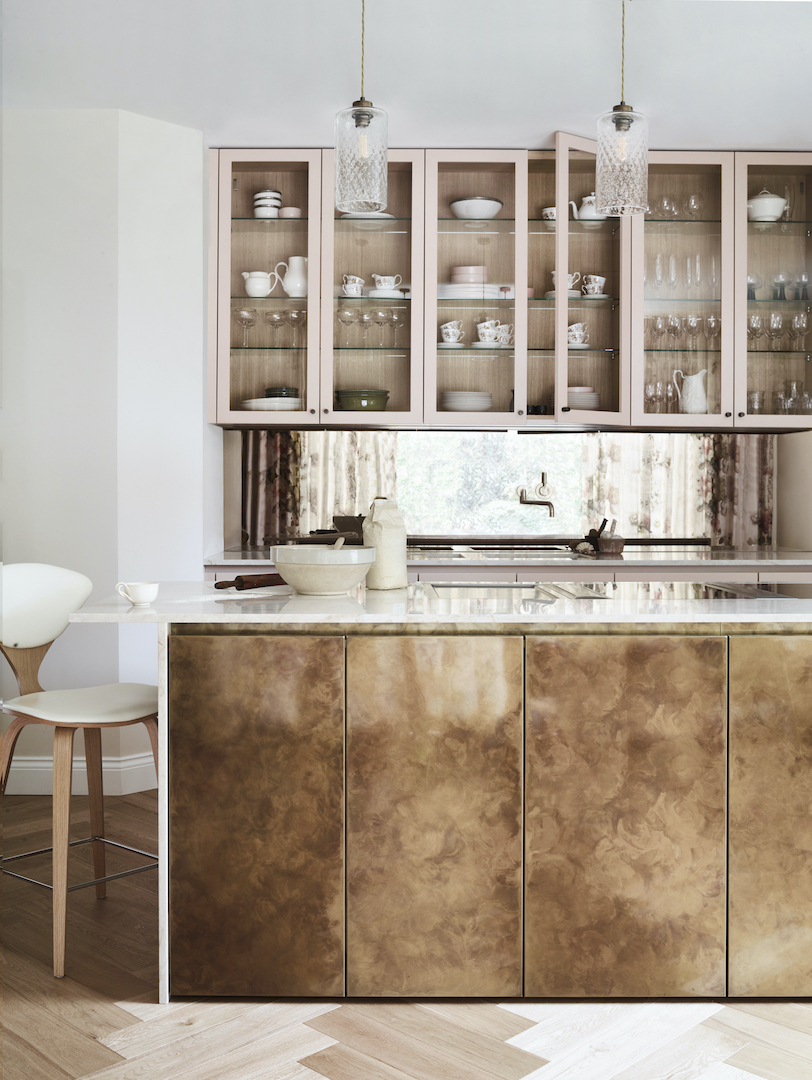
Finish is where appearance meets practicality. Hand-painted cabinetry offers almost unlimited colour choice and small marks or scratches can usually be touched up, while lacquer creates a strong, smoother, more uniform surface in matt, satin or gloss. Timber cabinetry brings warmth, depth and natural grain, and can be stained, smoked, whitened or left close to its natural tone, as desired. For a more contemporary look, metal-wrapped doors and specialist metallic lacquers introduce contrast and reflectivity, although they’re often most effective when used selectively on an island, tall cabinet or feature run rather than throughout the entire kitchen.
Speaking of which, maintenance should be a big part of the decision-making process. High gloss finishes and darker colours reveal fingerprints more readily, while deeply textured doors, such as reeded or beaded designs, naturally take longer to wipe down than smooth slab fronts. Timber should always be properly sealed to resist moisture and stains and make cleaning easier. UV-resistant finishes will also help reduce fading and discolouration over time. Before making your final choice, view full-size samples in the room itself, where both daylight and artificial lighting can dramatically alter the appearance of colour, grain and sheen.
Study the storage
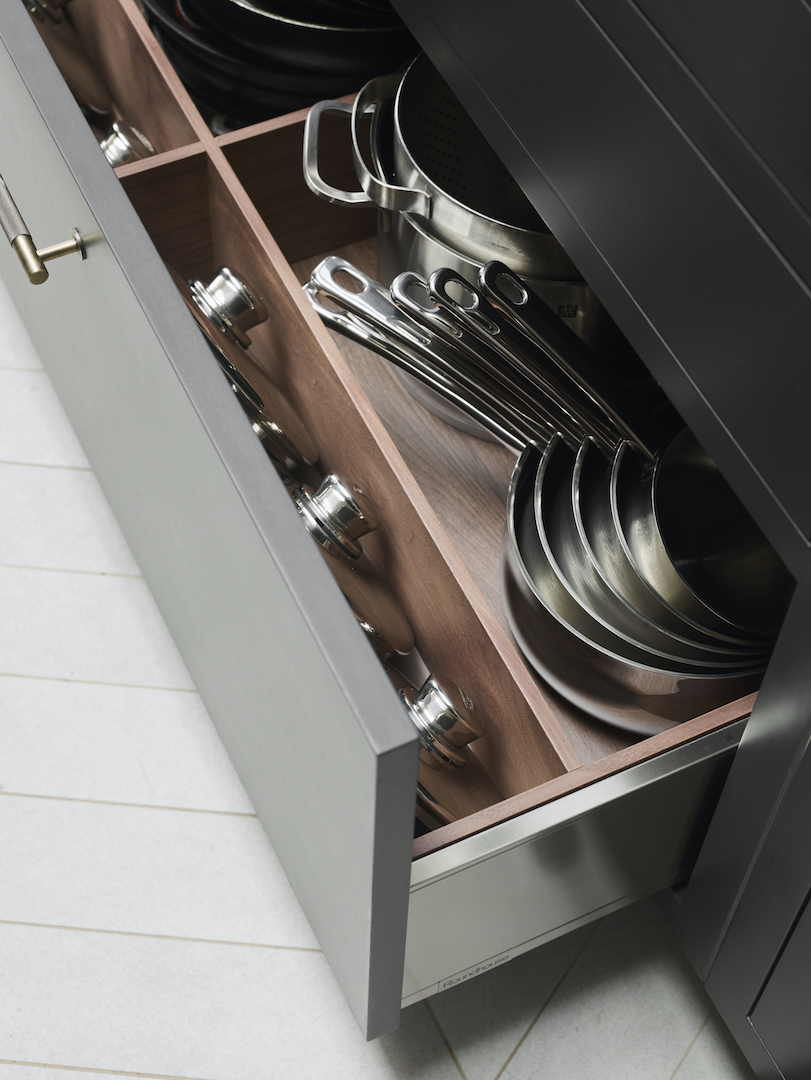
Well-designed storage isn’t just about how much it holds, but how well it is constructed. This is where investing in luxury bespoke cabinetry really pays off. Wide, deep drawers may look impressive in the showroom, but they need to perform just as well when fully loaded with crockery, cast-iron cookware or pantry staples. Ask about the drawer runners’ load capacity and whether they’re designed to support the width and depth of the drawer. A quality system should glide smoothly under a full load, extend fully so nothing is hidden at the back, and close softly without needing to be nudged fully shut.
Then examine the finer details. Are the drawer boxes robust enough to resist twisting? Can internal dividers be repositioned? Do cutlery trays fit securely, without rattling, and are drawer liners removable for easier cleaning? Individually these features seem minor, but together they make the internal storage quieter, cleaner and noticeably more satisfying to use.
Also look for overall rigidity. Shelves should feel firm rather than flexing under pressure, with sufficient thickness and support to prevent bowing over time. Pantry shelving needs to cope with the weight of jars, tins and small appliances, while corner cabinets should make awkward spaces smoothly accessible without banging contents about or buckling under the strain.
Finally, judge the details
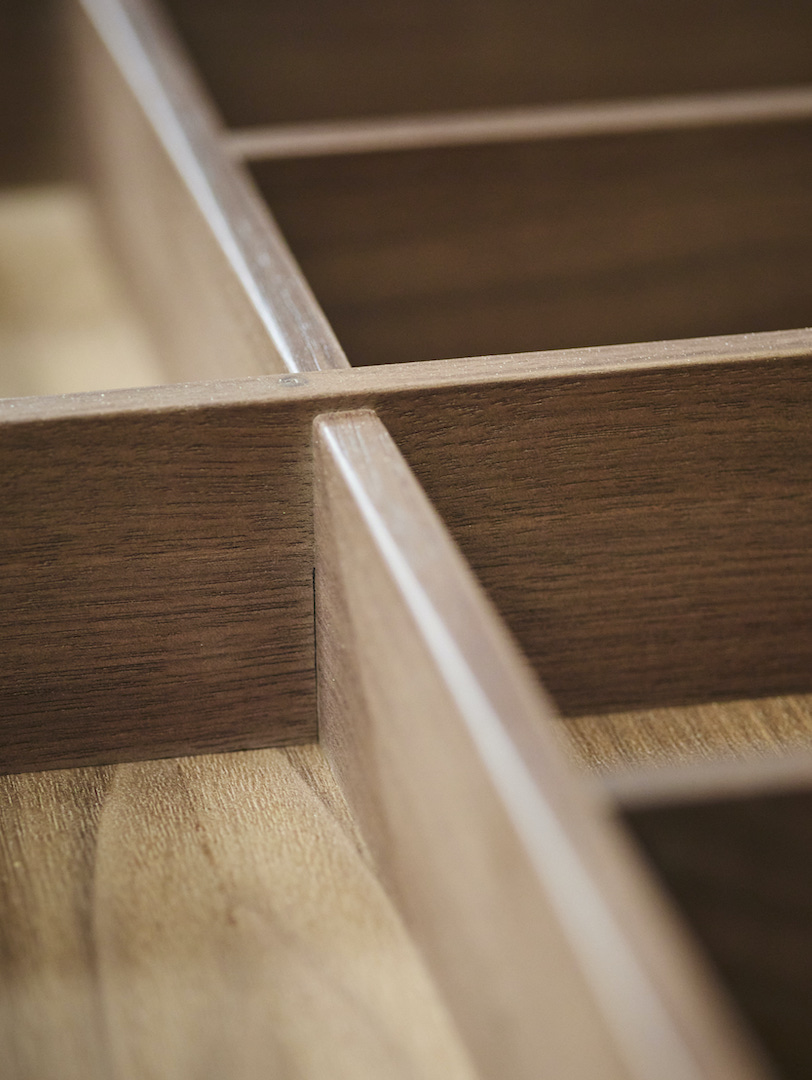
Quality is often most apparent in the junctions between materials. Look for consistent gaps around doors and drawers, precisely aligned handles and clean transitions where cabinetry meets walls, floors and worktops. On timber fronts, grain should be meticulously matched rather than running randomly from one panel to the next.
Open the drawers and cupboards too. Movement should be smooth and controlled, with no rattling, sagging or sideways play, while the interiors should be crisply fitted out and adjustable, where relevant. Well-executed shadow gaps, neatly finished edges and accurately fitted end panels may appear minor, but together they determine whether the cabinetry looks crisp or slightly off.
Learn more by starting a conversation
For Roundhouse, quality cabinetry matters because it is the foundation of a truly sustainable kitchen. One that’s designed for longevity, allowing it to eventually be updated and refreshed instead of being ripped out and replaced. If you’d like to experience the difference for yourself, find a Roundhouse showroom to open the drawers, feel the weight of the doors, and inspect quality craftsmanship first-hand.
FREQUENTLY ASKED QUESTIONS:
WHY CABINETRY MATTERS
It can be particularly valuable in architecturally complex rooms or where highly specific storage is required. The benefit comes from using the available space efficiently, choosing appropriate materials and avoiding compromises imposed by standard unit sizes.
Not necessarily. Changing the finish on an island, pantry or tall cabinet run can help zone the room. The scheme will still feel connected if proportions, handle details or a controlled material palette remain consistent.
Smooth matt lacquers and sealed veneers are generally straightforward to clean. Highly textured surfaces can require more attention, so reeded timber or fluted glass is often best used selectively rather than beside the busiest cooking areas.
In-frame doors sit within a visible cabinet frame and showcase traditional joinery, while lay-on (overlay) doors cover the cabinet edge to create cleaner lines and maximise internal storage. Neither is inherently better; the right choice depends on the look you’re trying to achieve.
Consistent door gaps, accurately aligned grain, substantial drawer construction and neatly finished interiors are more persuasive than conspicuous embellishment. Restraint, precision and materials that feel good in the hand tend to convey quality most convincingly.