Everything you need to know before choosing a kitchen worktop
A beautiful kitchen worktop will catch your eye. A great one will quietly improve the way you live every day.
A kitchen worktop should do far more than simply provide a place to prepare food. It is where morning coffee becomes family breakfast, where children tackle homework while dinner is being prepared, and where friends gather around an island long after the food has been served. It is one of the hardest-working surfaces in the home, yet one of the first things people notice when they walk into a room.
Choosing the right kitchen worktop is therefore about much more than selecting a beautiful material. It is about finding the right balance between practicality, longevity and character, while creating a surface that complements both your home and the way you live.
Whether you are drawn to the timeless elegance of marble, the durability of porcelain or the warmth of timber, understanding how each material performs will help you make a more informed decision.
What is the best kitchen worktop?
There is no single best kitchen worktop material. The right choice depends on how you use your kitchen, the level of maintenance you are comfortable with and the character of your home.
Quartz and porcelain offer durability and easy maintenance, while natural stones such as marble, granite and quartzite bring individuality and character. Stainless steel offers the performance of a professional kitchen, while timber introduces natural warmth and tactility. Often, the most successful solution is a considered combination of materials, chosen for different areas of the kitchen.
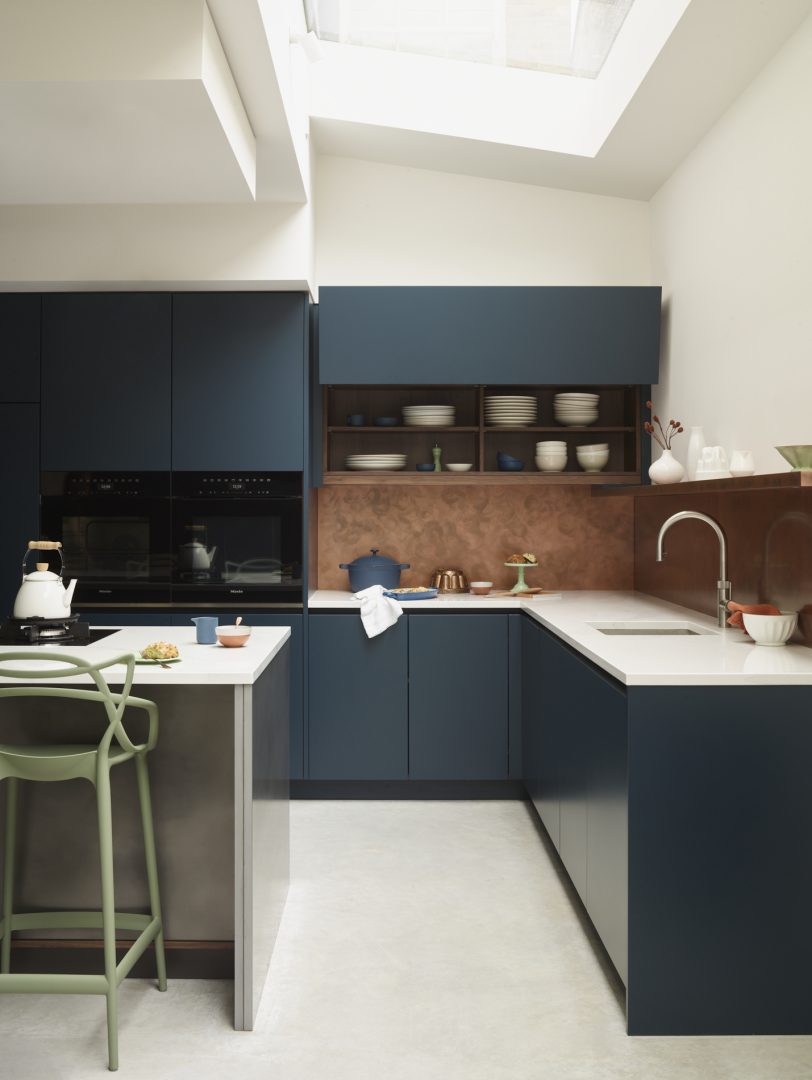
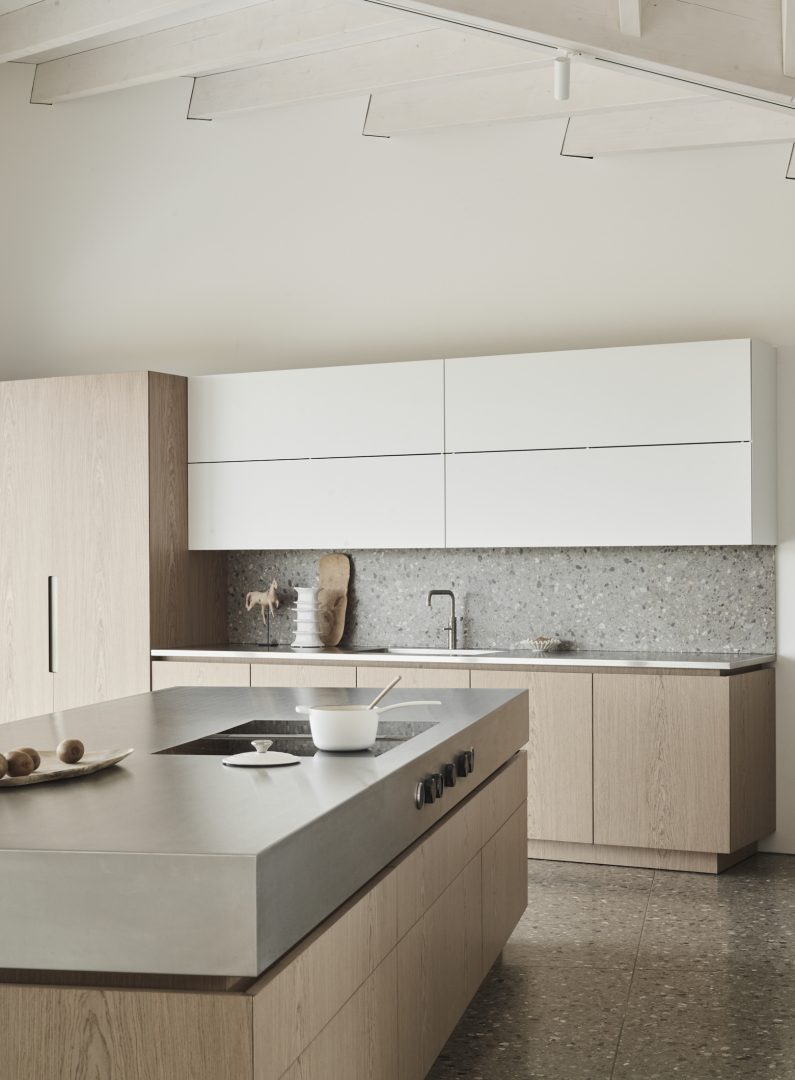
Start with how you live
Before comparing materials, think about how your kitchen will actually be used.
A passionate home cook may prioritise heat resistance and generous preparation space. A busy family might value durability and easy maintenance above all else. If entertaining is at the heart of your home, your worktop may become as much a social surface as a practical one.
The best kitchen worktops are those that reflect the lifestyle they are designed around. Rather than asking, “Which worktop is best?”, ask “Which worktop is best for the way we live?”
Let the architecture lead
Just as cabinetry should respond to the character of a home, so should your worktop.
Large contemporary extensions often suit expansive natural stone slabs with dramatic veining, while period properties may benefit from softer finishes, textured surfaces or the warmth of timber. Stainless steel can introduce an understated professional aesthetic, while porcelain creates exceptionally clean architectural lines.
Our designers rarely choose a worktop in isolation. Instead, they consider how it works alongside cabinetry, flooring, lighting and the architecture of the room itself. The most successful kitchens are those where every material feels connected. Explore our bespoke kitchen gallery to see how different materials are used across completed Roundhouse projects.
Kitchen worktop materials compared
Every kitchen worktop material offers different qualities, so it is worth considering durability, maintenance and appearance alongside how you plan to use the space.
| Material | Key qualities | Durability | Maintenance | Best suited to |
|---|---|---|---|---|
| Marble | Individual, naturally veined and timeless | Good | Higher | Statement islands and characterful kitchens |
| Quartz | Non-porous, consistent and versatile | High | Low | Busy family kitchens |
| Quartzite | Distinctive natural stone with dramatic veining | High | Moderate | Luxury kitchens and statement surfaces |
| Granite | Hard-wearing and naturally individual | High | Moderate | High-use kitchens |
| Porcelain | Highly resistant with slim profiles | High | Low | Contemporary and architectural kitchens |
| Stainless steel | Practical, hygienic and heat resistant | High | Low | Passionate cooks and contemporary spaces |
| Timber | Warm, tactile and naturally characterful | Moderate | Higher | Accents on Islands and breakfast bars |
| Poured Concrete | Textural, architectural and highly individual | High | Moderate | Contemporary and industrial-inspired kitchens |
Performance and maintenance requirements can vary depending on the specific material, finish and fabrication.
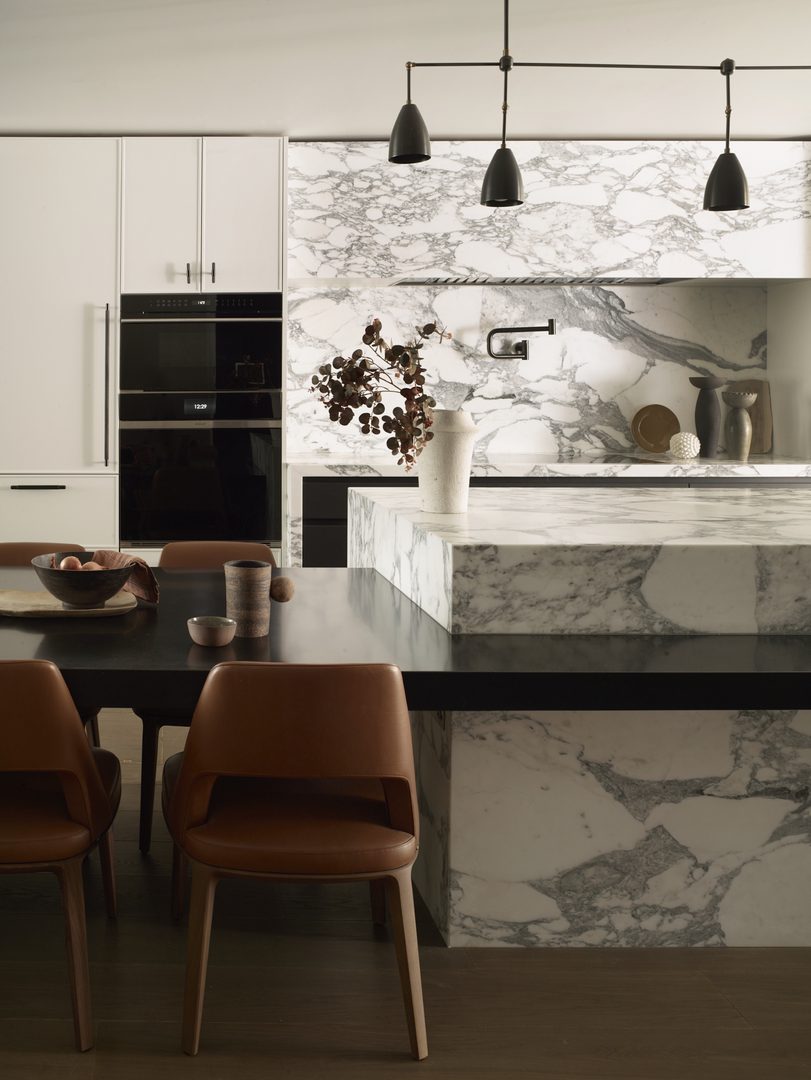
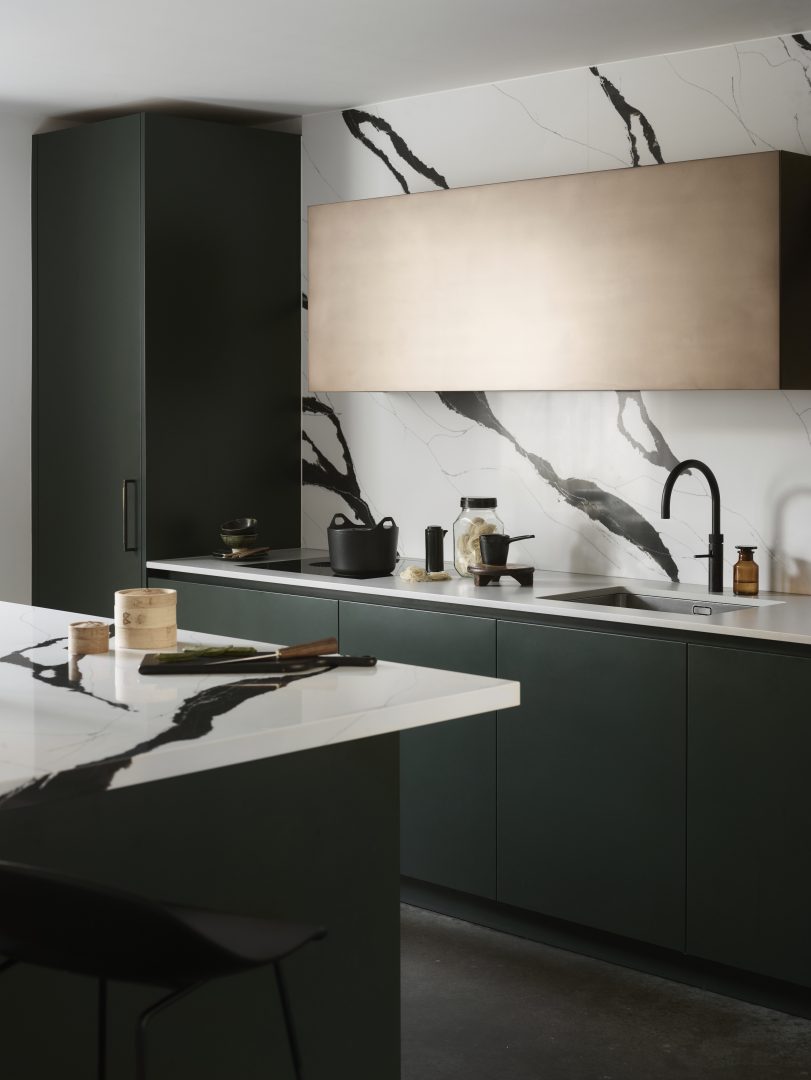
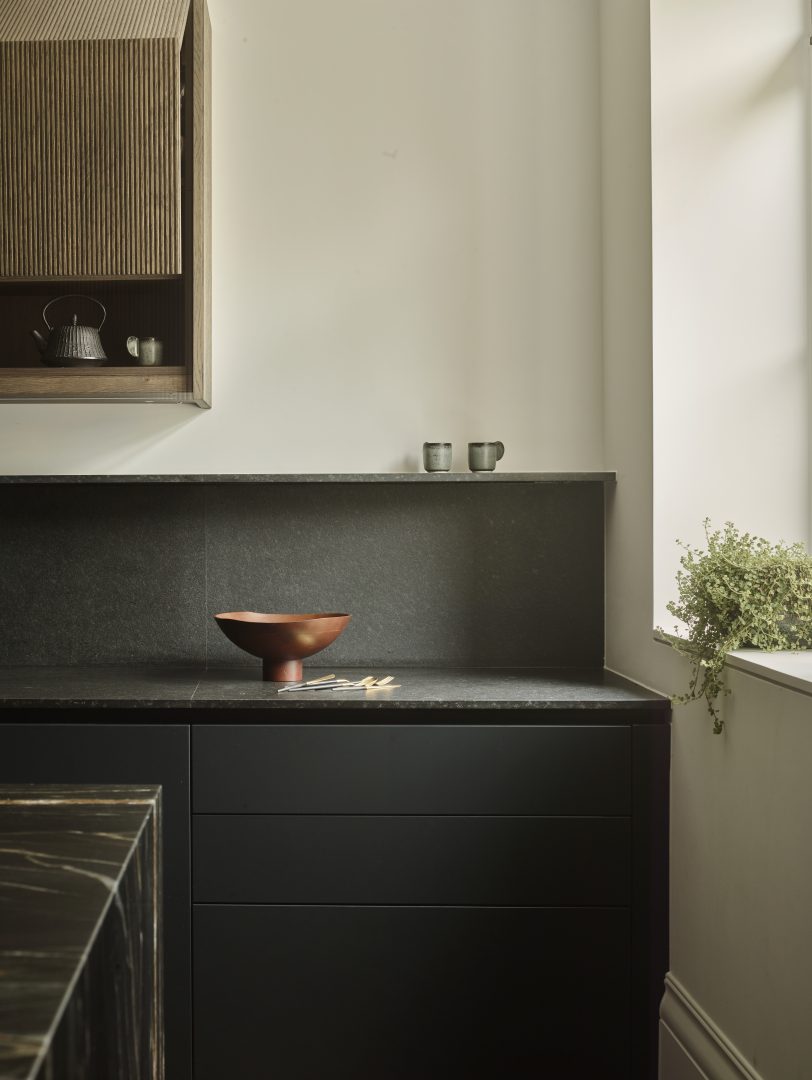
Marble kitchen worktops: timeless beauty
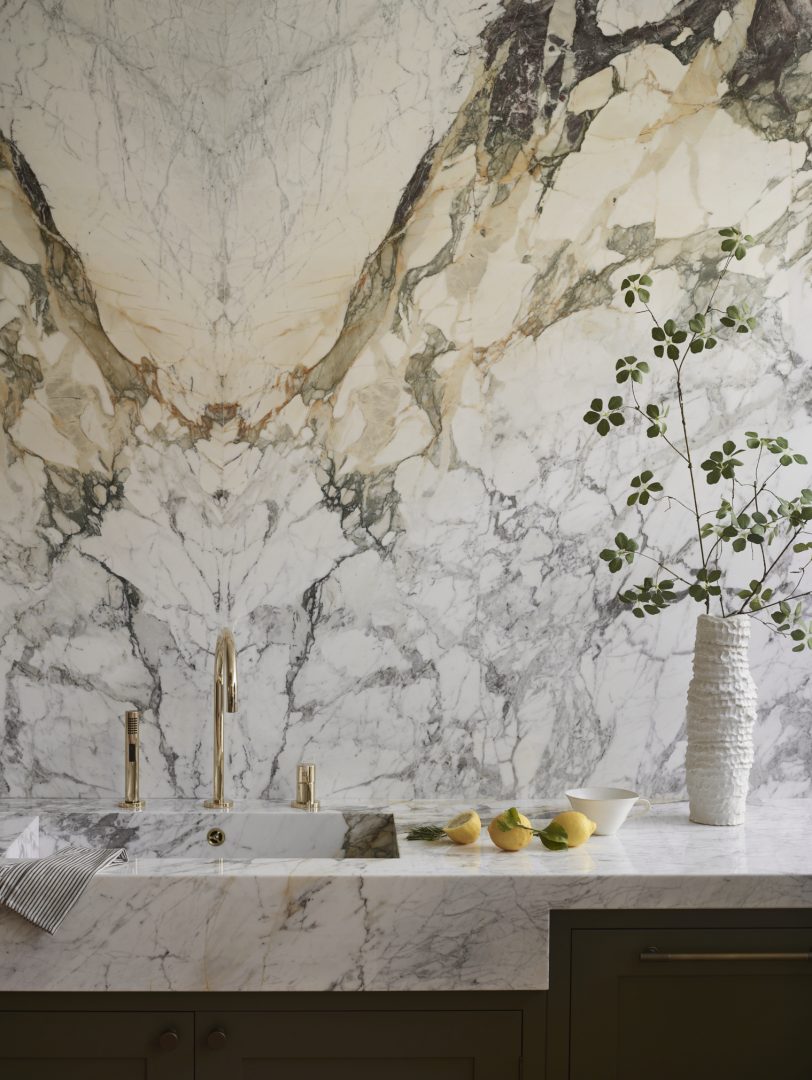
Few materials have the presence of natural marble. Every slab is unique, with distinctive veining and tonal variation that can make a worktop, splashback or statement island a defining feature of the kitchen. Over time, marble develops a natural patina, which many see as part of its enduring appeal.
Things to consider: Marble is softer and more porous than many alternative surfaces and can etch when exposed to acidic foods. Regular sealing helps protect the surface, although its natural ageing is often embraced as part of its character.
Quartz and quartzite kitchen worktops
Although their names are similar, quartz and quartzite are two very different kitchen worktop materials. So, what really is the difference between quartz and quartzite?
Quartz kitchen worktops
Engineered quartz combines natural quartz with resins and pigments to create a durable, non-porous surface. Its consistent appearance and low-maintenance qualities make it particularly suited to kitchens where practicality and clean lines are a priority.
Things to consider: Quartz is easy to maintain and highly resistant to staining, but care should be taken with very high temperatures and appropriate heat protection should be used.
Quartzite kitchen worktops
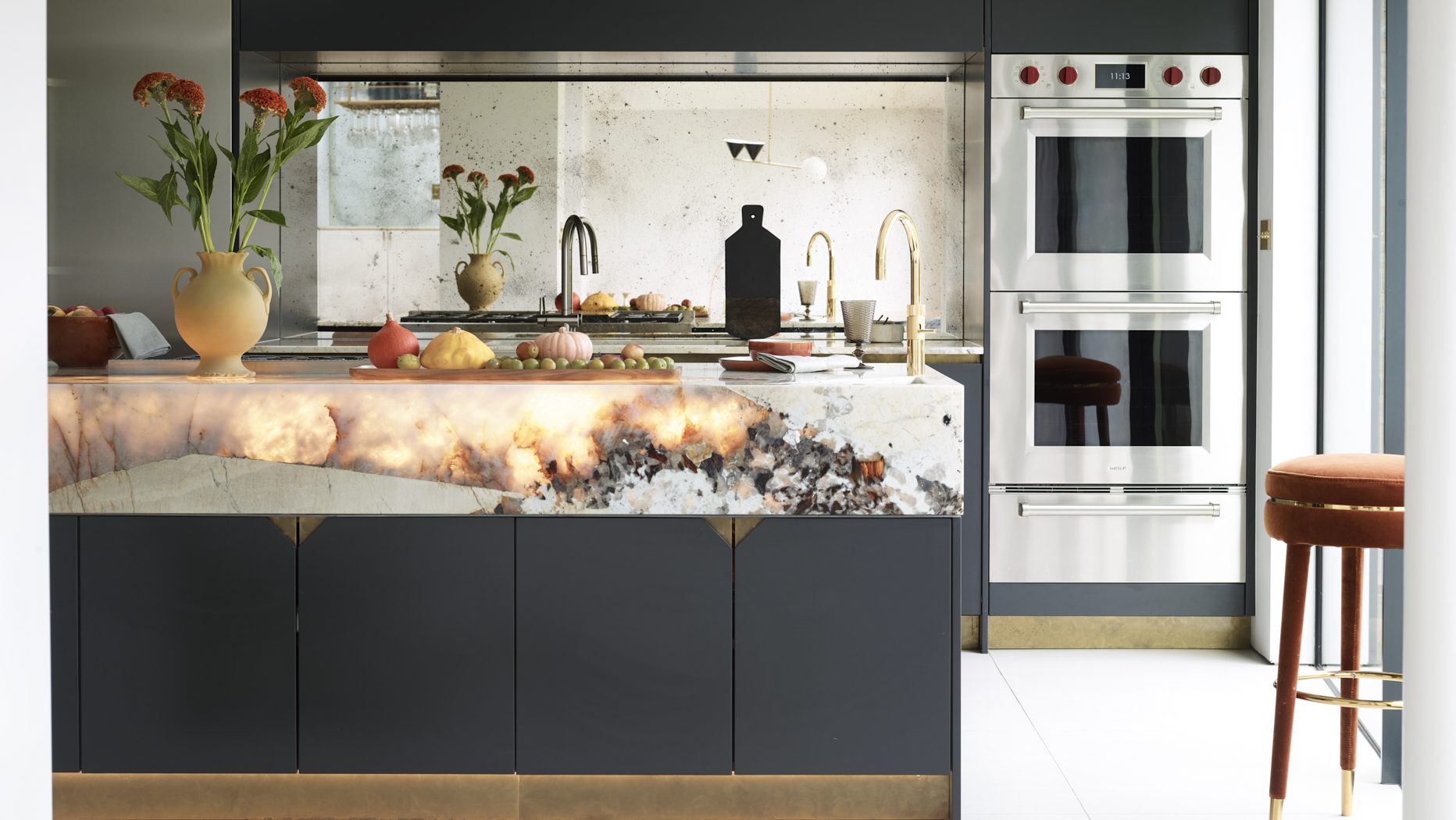
Quartzite is a natural stone formed over millions of years, offering the dramatic veining and individuality often associated with marble alongside impressive durability. Every slab is unique, making it an increasingly popular choice for statement surfaces within luxury kitchen design.
Things to consider: Quartzite typically represents a greater investment than engineered quartz and, like other natural stones, benefits from periodic sealing.
Granite kitchen worktops: naturally durable
Granite is one of the hardest natural stones used for kitchen worktops. Its crystalline structure creates distinctive movement and depth, combining natural character with excellent long-term performance.
Things to consider: Granite benefits from periodic sealing, and every slab varies naturally in colour and pattern. Viewing and selecting the individual slab is therefore an important part of the design process.
Porcelain kitchen worktops: beautifully engineered
Porcelain has become increasingly popular within contemporary kitchen design. Manufactured at extremely high temperatures, it offers excellent resistance to heat, scratches and staining while allowing for impressively slim worktop profiles. It can also recreate the appearance of natural stone with remarkable realism.
Things to consider: Porcelain requires specialist fabrication and installation, making experience particularly important.
Stainless steel kitchen worktops: inspired by professional kitchens
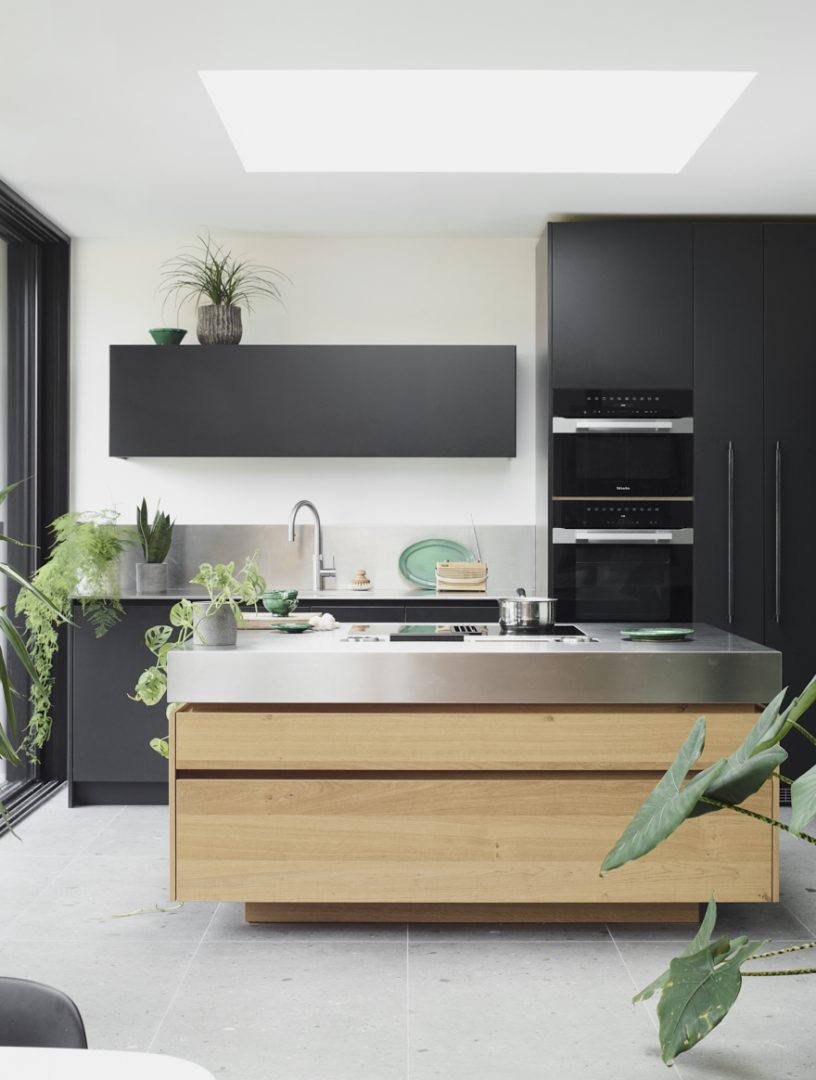
Long associated with professional chefs, stainless steel brings exceptional practicality to residential kitchens while creating a calm, understated aesthetic. Yotam Ottolenghi’s Roundhouse kitchen demonstrates this beautifully, with stainless steel providing a practical backdrop that allows colourful food, ceramics and artwork to take centre stage.
It can also be fabricated to create seamlessly integrated worktops, sinks and splashbacks.
Things to consider: Fine surface scratches develop naturally through use and become part of the material’s character over time, while fingerprints can be more noticeable than on stone.
Timber kitchen worktops: warmth and tactility
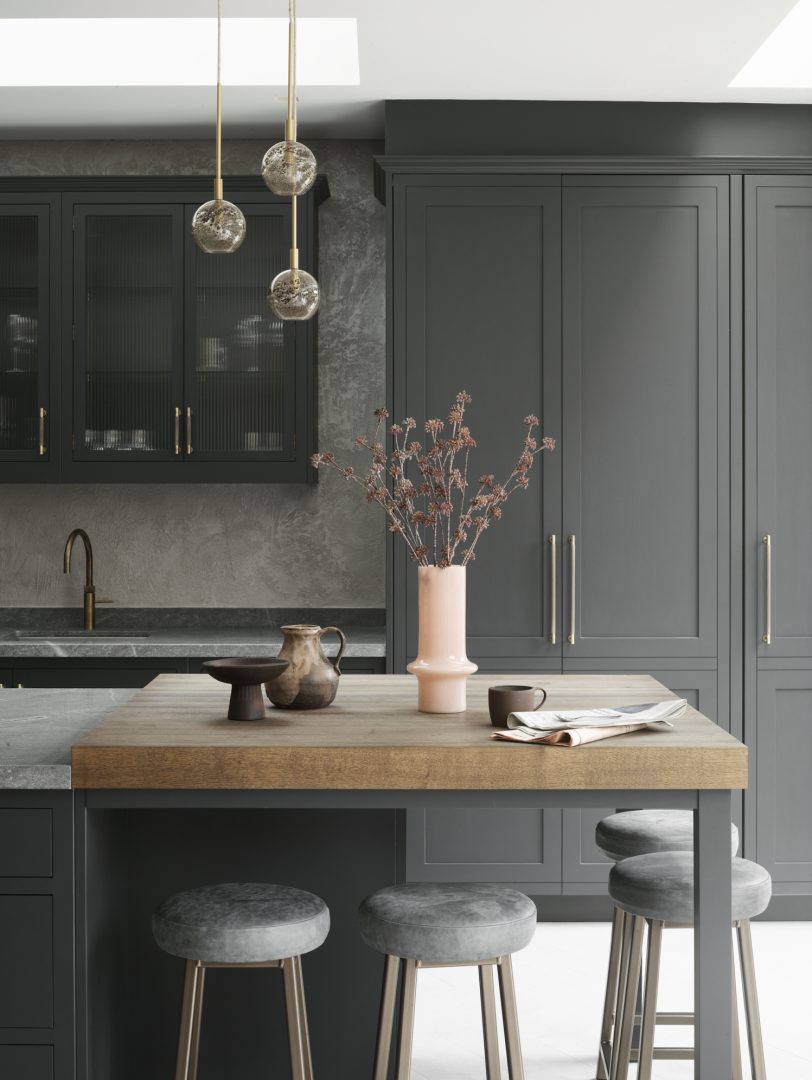
Few materials introduce warmth quite like timber. Whether used across an island, breakfast bar or preparation area, it brings natural texture to a kitchen and creates a softer contrast alongside stone, metal and painted cabinetry.
Things to consider: Timber requires periodic maintenance and should be protected from prolonged moisture and excessive heat. As a natural material, its appearance will also evolve through everyday use.
Poured concrete kitchen worktops: architectural character
Poured concrete brings a distinctive architectural quality to a kitchen, with subtle variations in tone and texture giving every surface an individual character. Particularly suited to contemporary interiors, it can be formed to create substantial worktops, islands and integrated details with a seamless, sculptural feel.
Things to consider: Concrete is naturally porous and requires appropriate sealing to help protect against staining and moisture. Fine hairline cracks and variations in colour can also develop over time and are considered part of the material’s natural character.
Mixing worktop materials
One material does not need to do everything.
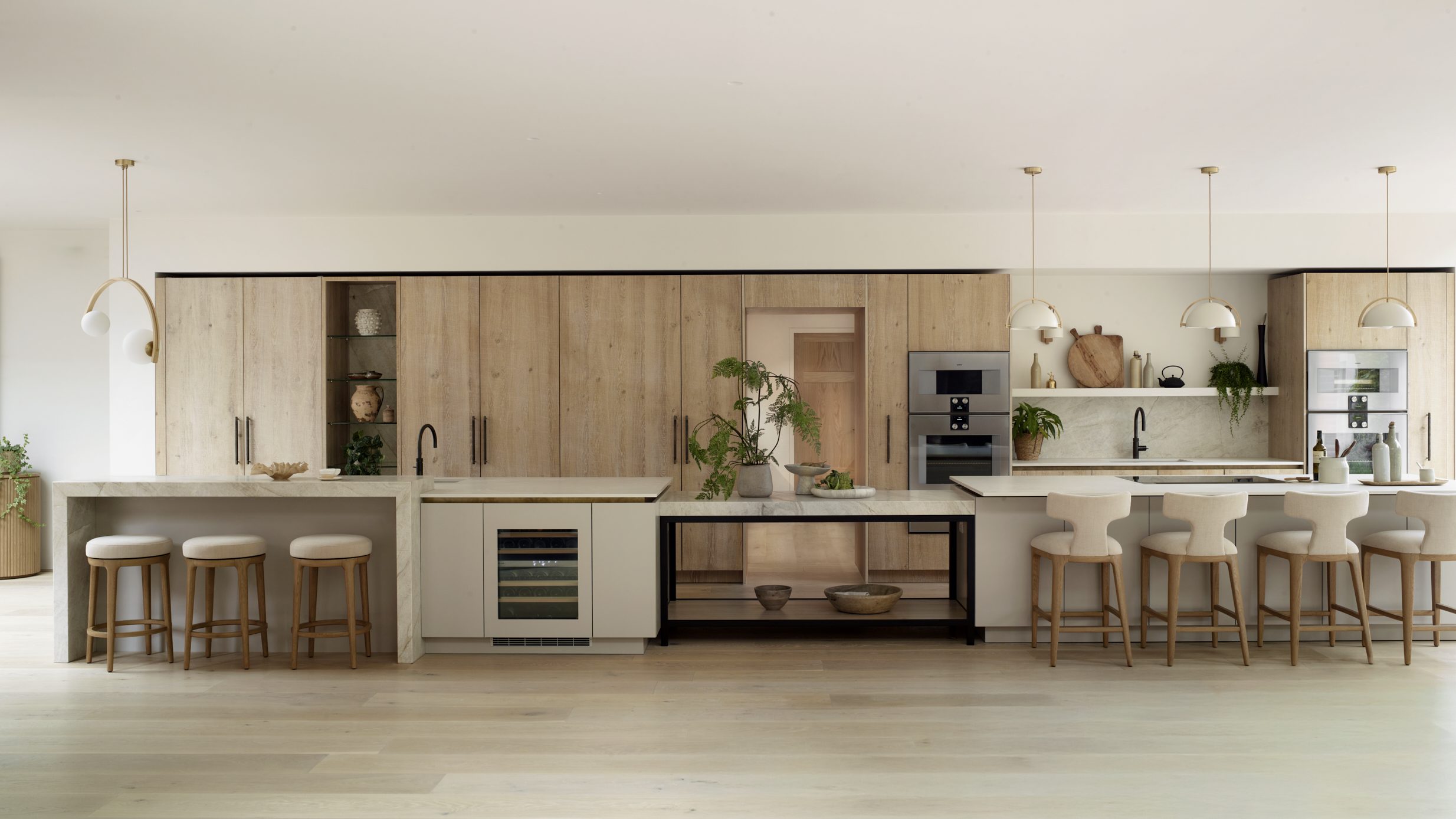
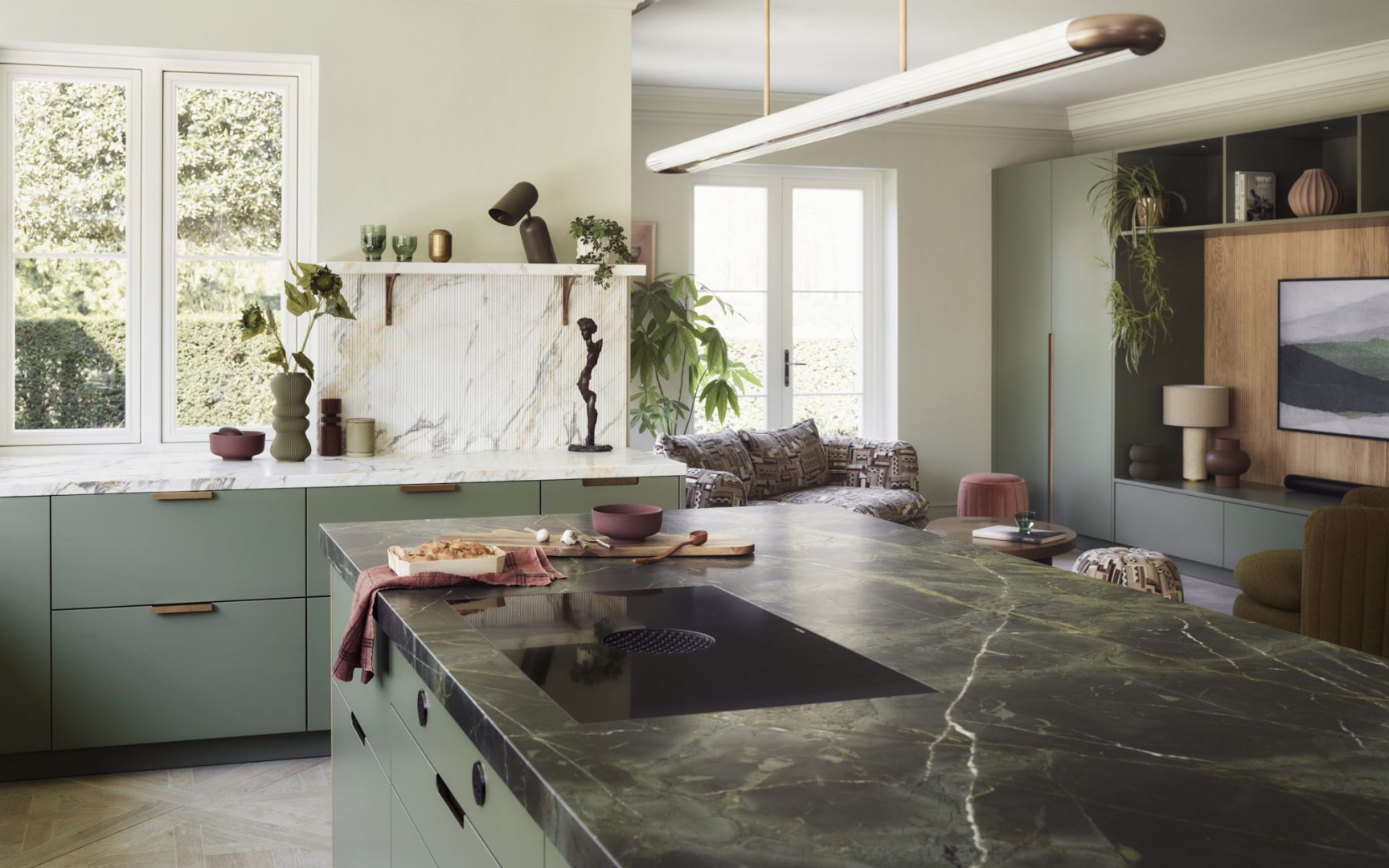
Combining worktop materials can help create distinct zones within a kitchen while adding contrast, texture and character. A marble or quartzite island might become a statement centrepiece, while porcelain or stainless steel provides a hardworking preparation surface. Timber can introduce warmth to a breakfast bar or seating area, while poured concrete brings a more architectural quality.
The material palette can extend beyond the worktop itself. Brass and copper can create striking statement splashbacks, introducing warmth and reflectivity while developing a natural patina over time. Terrazzo can bring colour, pattern and individuality, while microcement offers a more understated, textural finish for contemporary spaces.
At Roundhouse, we often layer contrasting materials rather than relying on a single surface throughout. The result is a kitchen where each material has a purpose, while together they create a space that feels considered, individual and connected to the wider interior.
What about engineered stone and silica?
You may have seen recent media coverage surrounding engineered stone and crystalline silica. Importantly, these discussions relate to the safe fabrication of certain stone products rather than the everyday use of completed worktops in the home.
At Roundhouse, we work exclusively with trusted specialist fabrication partners who follow rigorous health and safety procedures throughout the manufacturing process. To learn more about our approach to safe stone fabrication, read our article here.
Invest in the right foundation
Worktops are among the most permanent elements of any kitchen. While accessories, lighting and paint colours may evolve over time, the work surface is something you’ll interact with every single day.
Choosing well is not simply about selecting the most expensive material. It is about finding the surface that feels right for your home, your lifestyle and the way you want your kitchen to perform for decades to come.
At Roundhouse, our designers guide every client through this process, helping balance beauty, durability and practicality to create bespoke kitchens that are designed to be lived in, not simply admired.
If you want to learn more about finding the perfect worktop for your dream kitchen, then start a conversation with a Roundhouse designer.
FREQUENTLY ASKED QUESTIONS:
HOW TO CHOOSE YOUR KITCHEN WORKTOP
Porcelain, granite and quartz are among the most durable kitchen worktop materials, offering excellent resistance to everyday wear. The right choice depends on how you cook, maintain your kitchen and the overall design of your home.
There is no single answer. Marble and quartzite remain timeless favourites for their natural beauty, while porcelain, granite, stainless steel and timber each bring different qualities. Many luxury kitchens combine two or more materials to balance aesthetics with practicality.
Marble offers unique natural character that develops beautifully over time, while quartz provides excellent durability and lower maintenance. The best choice depends on whether you prioritise natural ageing or everyday practicality.
Absolutely. Mixing materials is becoming increasingly popular, allowing different areas of the kitchen to perform different roles while creating greater visual interest. Stone, timber and stainless steel are often combined within bespoke kitchen design.
Yes. Recent industry discussions relate to how some engineered stone products are fabricated, rather than how they are used in the home. We work exclusively with trusted specialist fabrication partners who follow rigorous health and safety procedures throughout manufacture. Read our article Engineered stone and silica: our commitment to safe stone fabrication to learn more.