Beneath the label: what buying bespoke should really mean
Spend a little time browsing kitchen brochures and you could be forgiven for thinking they’re all bespoke. The word is slapped on everything from cabinets offered in a generous colour palette to furniture developed from the first sketch for one particular home, never to be repeated. When the same word covers so much, it becomes harder to understand what you are really buying, and if the difference will even matter once you are making breakfast in it.
Whether your Google search begins with ‘bespoke kitchens UK’ or ‘bespoke kitchens London’, the useful question is how far a company can respond to your brief. At Roundhouse, bespoke kitchen design brings together the freedom to develop an individual scheme and the manufacturing capability to realise it. That freedom should have tangible benefits: a better relationship with the building, more useful storage, details that feel personal and a clear understanding of where your money goes. Here’s what to look for, and how to spot when ‘bespoke’ is just a label.
1. More than a choice of finishes
A long list of colours can make a kitchen highly personal, but it tells you precious little about how much of the underlying design can change. Broadly, customised kitchens offer choices within an existing system, while made-to-measure kitchens adjust dimensions to fit. Truly bespoke kitchens allow the furniture itself to develop around the brief, including its proportions, construction, internal arrangement and individual details.
Just to make bespoke a bit more baffling, bespoke and made-to-measure often overlap. The most revealing conversation is about the limits of what is being offered. Can cabinet depths change as well as widths? Can a door be developed with a particular frame or beading profile (they’ve not done before)? Can the interiors accommodate the specific things you own? A useful test is to ask about a completed project that required something outside the company’s usual range, then get the designer to explain exactly what they adapted or made from scratch.
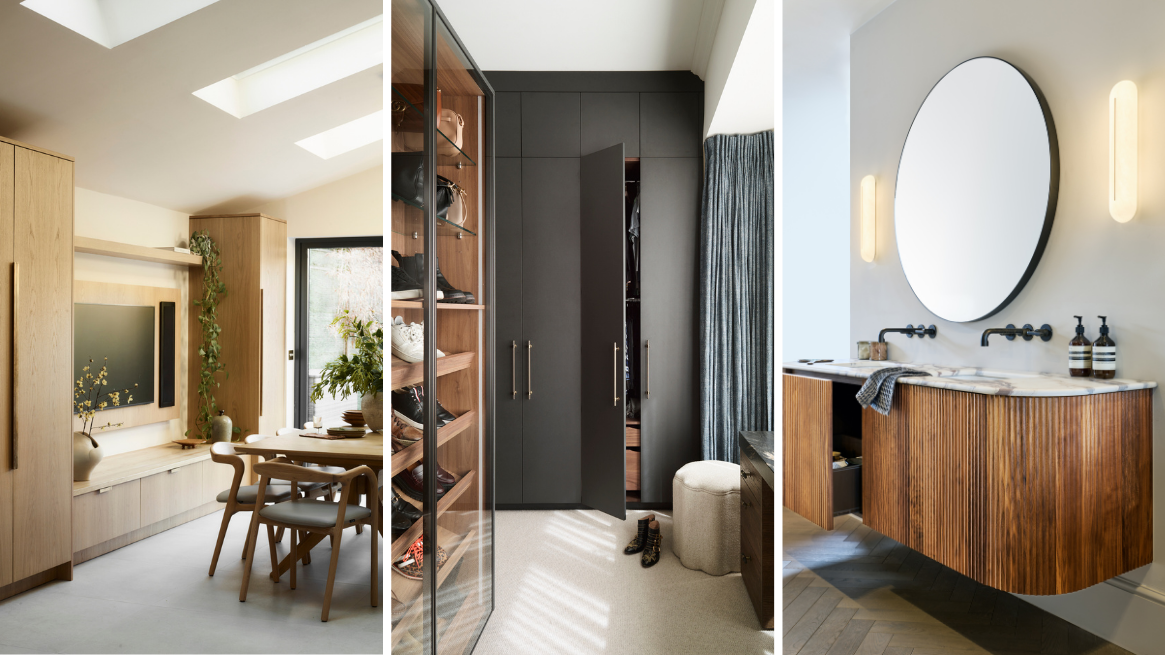
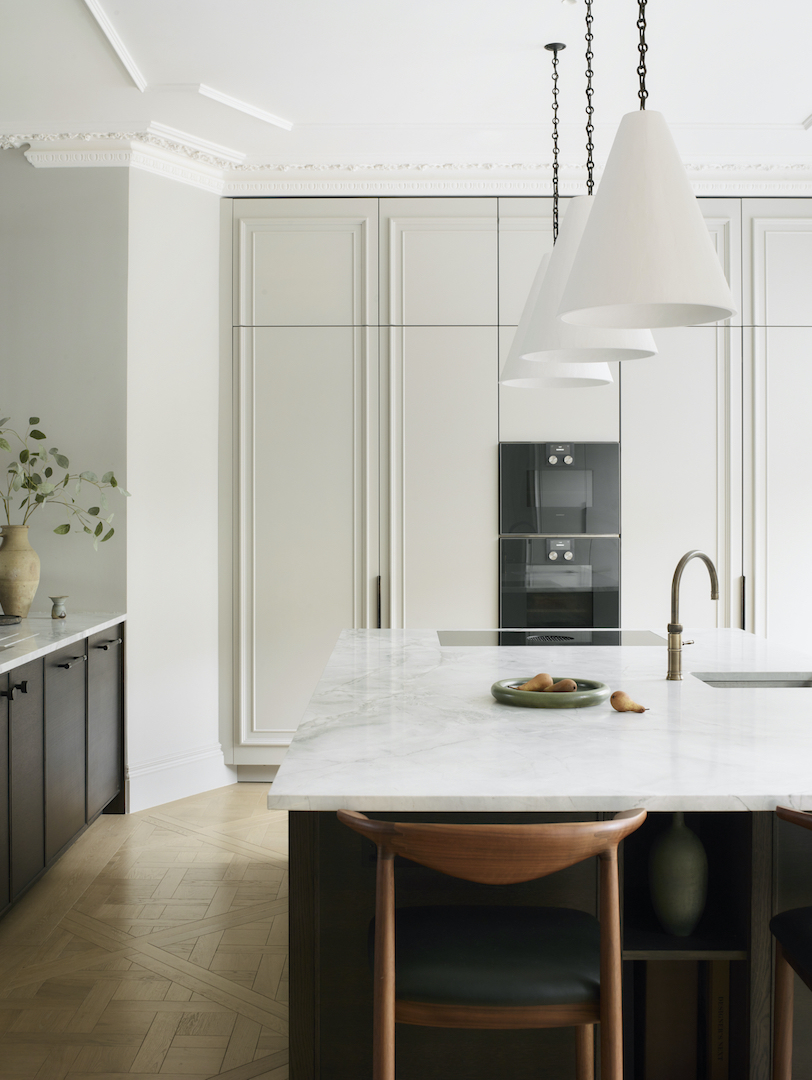
For our Meunière project, we developed bespoke beading so the cabinetry would read as wall panelling. Push-to-open doors preserve the illusion, allowing appliances and storage to disappear into the room. The detail serves a clear intention: this kitchen needed to feel at home within an elegant living space.
The value of custom kitchen design lies in what those individual decisions achieve. A change in proportion, construction or detail should make the kitchen work better, look better or sit more comfortably within the room. Being different is not, on its own, much of a benefit, especially if it comes at a premium.
2. A genuine response to the architecture
Before discussing door styles, a designer should understand the room. Its proportions, daylight, views, entrances and connections to adjoining spaces all influence where the kitchen belongs and how it should work. In a kitchen extension or renovation, involving your kitchen designer while the wider plans are still being developed gives you more opportunity to coordinate these decisions.
Ask to see the proposed layout in the context of the whole room, with dining furniture, door openings and circulation included. A generous island on an otherwise empty plan can become considerably less generous once someone pulls out a chair or opens the dishwasher.
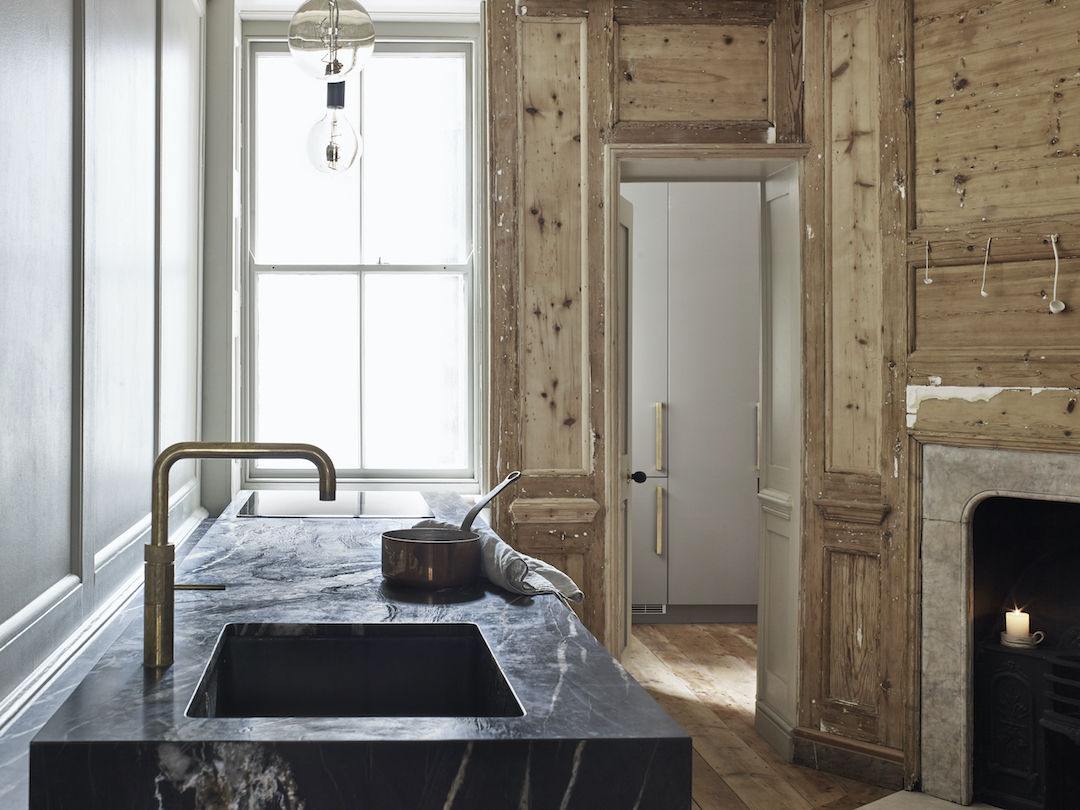
At our Meard Street project, the Grade I listed interior required furniture designed to avoid touching or disturbing protected original architecture. The relationship between the new kitchen and the existing building therefore shaped the scheme from the outset.
This is where bespoke solutions are worth the investment. Sometimes the answer is a carefully controlled gap; elsewhere, it might be a change of height, depth or direction. Your designer should be able to explain those decisions in relation to your home. At Roundhouse, the ability to alter the furniture in every direction gives us more scope to resolve architectural restrictions without compromising on looks or functionality.
3. Ingenuity where it matters
Awkward spaces often reveal the value of bespoke most clearly. A sloping ceiling, wonky walls or unusually shallow recess can be difficult to fully utilise with standard units. Yet filling every available centimetre is only worthwhile if you can comfortably reach what you store there.
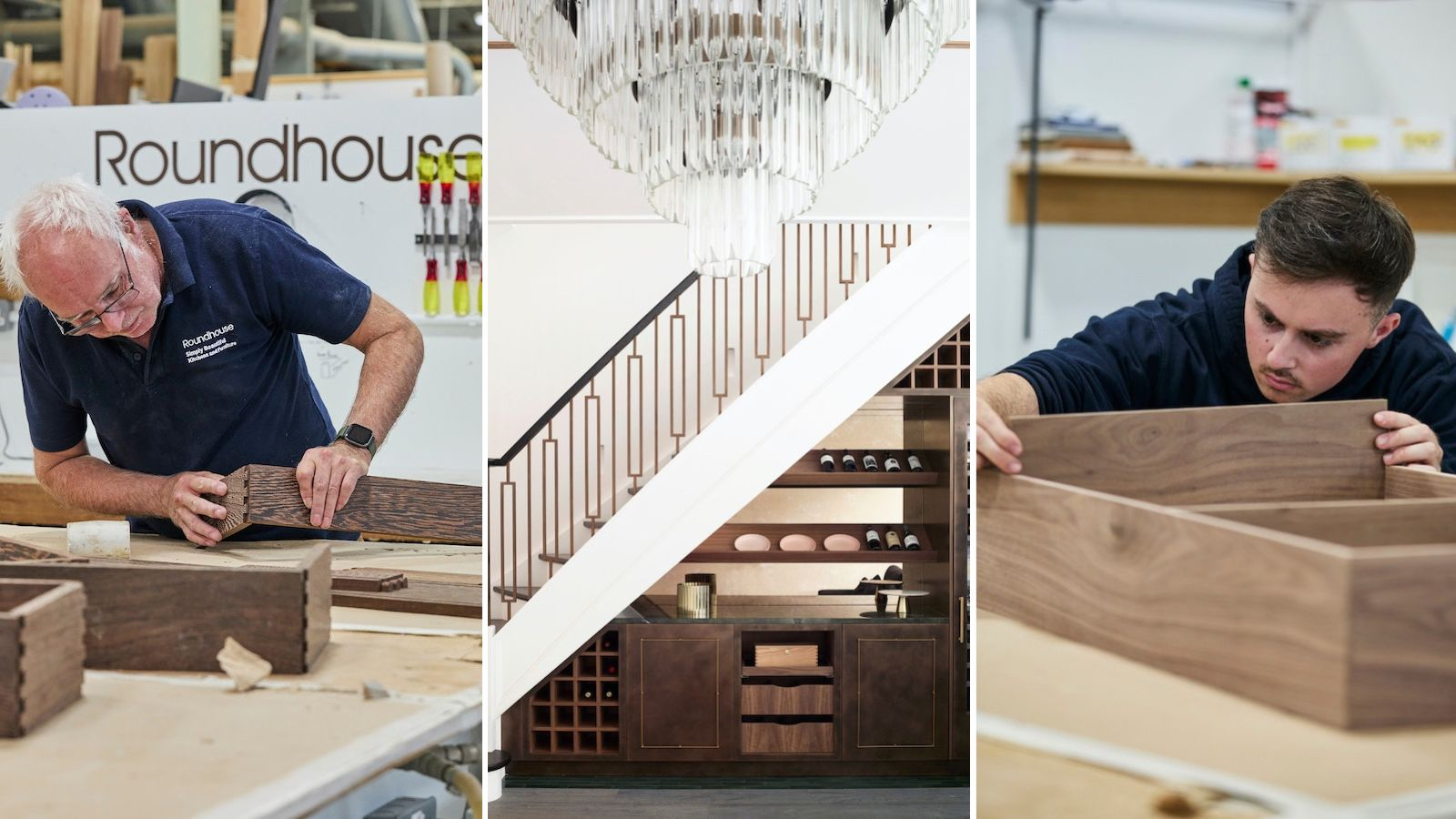
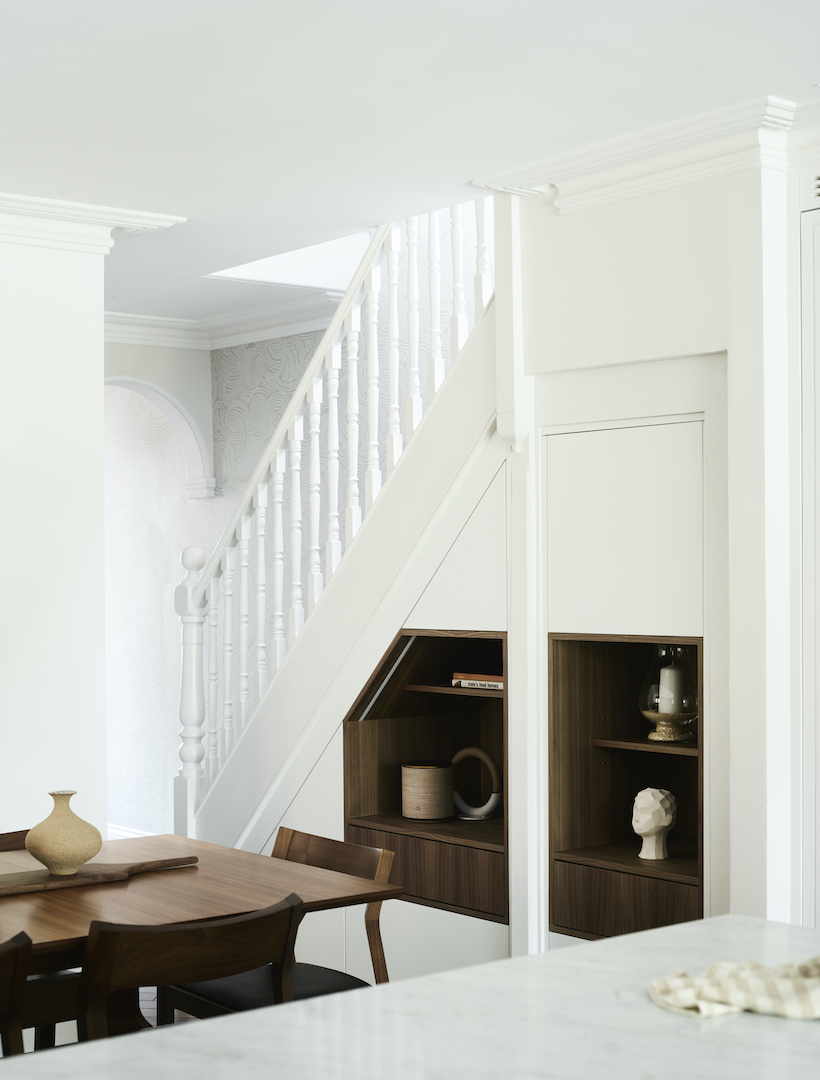
At our Chilvers project, bespoke storage follows the changing height beneath the stairs, turning an easily overlooked area into useful, accessible space. It is a good example of design responding to a specific opportunity within the house.
To get the same level of usefulness from your own kitchen, give your designer more than a request for ‘plenty of storage’. Identify the bulky appliances, tall bottles, serving platters and everyday essentials that need a home. Bring measurements for anything unusual, and explain what frustrates you about your current arrangement. The mixer that is too heavy to lift and the recycling that blocks a doorway are valuable design information.
Another good test of a company’s bespoke claims is to ask how much freedom you have to change the storage inside the cabinets. If the exterior can be tailored but shelf depths, drawer sizes and internal fittings remain fixed, you may still end up arranging your belongings around the limitations of the range. Genuine bespoke should allow the cabinet and its interior to be developed together, so an awkward recess becomes accessible storage and your largest roasting tin fits exactly where you need it.
4. Makers who can realise the idea
The freedom to design a truly individual bespoke kitchen relies on having the skills and facilities to make it happen. An unusual curve, a specialist metal finish or a finely balanced junction needs people who understand how to construct it, allow for its weight and movement, and finish it consistently.
As a UK-based bespoke kitchen manufacturer, we make our Design Collection at our own Malvern factory. That connection between designers and makers matters because individual details can be developed with the people responsible for producing them. Our British-made kitchens combine traditional cabinetmaking with precision engineering, giving the design team scope to explore solutions beyond a fixed set of components.
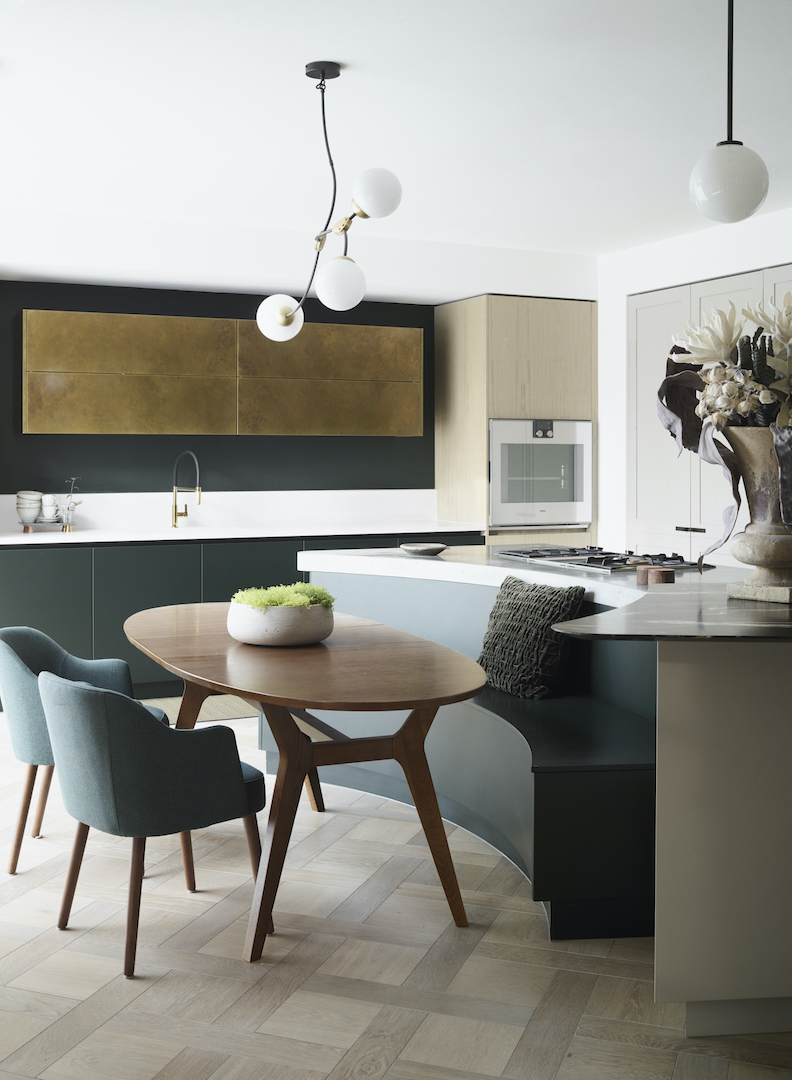
For our Fairgreen project, a sunken curved banquette was integrated into the back of the island, while antique brass-wrapped wall units were hand-burnished to the desired patina. Neither ‘curved’ nor ‘brass’ tells the whole story: the particular geometry, seating arrangement and finish are what make the scheme individual.
When commissioning a kitchen sold as bespoke, ask what happens when your brief calls for a detail the company has never made before. Can its designers work with the makers or other trusted craftspeople to develop it, or must you choose the nearest option in their range? This distinction matters: a broad selection of existing finishes and components can offer plenty of choice but there will still be limits on the design.
5. An honest conversation about cost
The kitchen industry’s reluctance to discuss price is understandable up to a point: an individual specification cannot have a universal price tag. But ‘it depends’ should be the beginning of an explanation. You should be able to establish a realistic starting point and understand which decisions will move the figure.
With luxury bespoke kitchens, the cost includes the thinking and skilled work behind the furniture as well as the materials you see. Scale, complex construction, specialist finishes, internal fittings, worktops and appliances all contribute. Two kitchens of similar size can therefore require very different investments.
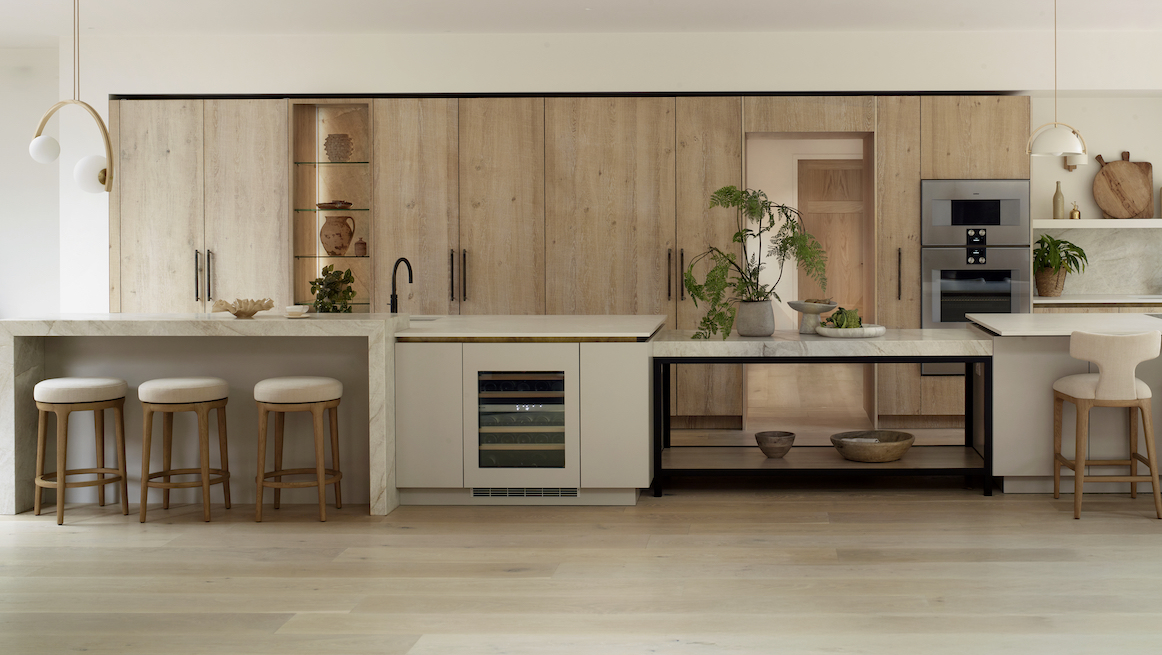
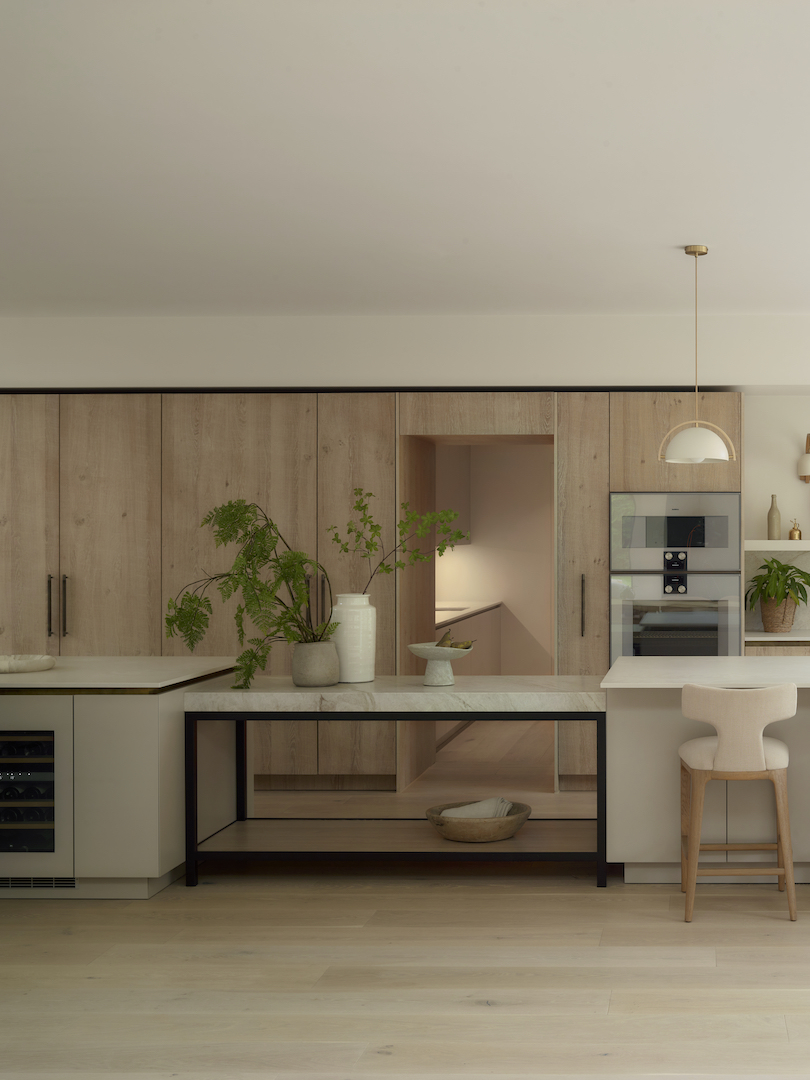
At our Ashbury project, the bespoke brass detailing and steel table frame mid-island provide sculptural contrast. Such details illustrate how particular elements can give a scheme its identity. In your own project, decide which moments matter most: perhaps an exceptional island, a carefully engineered dining arrangement or storage that resolves a persistent problem. A good designer can then explain where a simpler specification elsewhere would release budget for those priorities.
You should be able to establish whether your plans and budget are broadly in step from the outset. To make those early conversations more transparent, we created our pricing calculator which provides a tailored initial estimate based on factors including the size and layout of your space, materials, appliances and the complexity of your project. In just a few minutes, it can give you a clearer indication of the level of investment to expect before you step through a showroom door. It is not a fixed price or a substitute for a detailed quotation, but a useful starting point for understanding what influences the cost of a Roundhouse kitchen and where you may choose to prioritise your budget.
When comparing quotations, check the scope as carefully as the total. Establish whether VAT, installation, worktops, appliances and delivery are included and identify separately priced building works and services. Ask how any changes will be costed before you approve them.
At the end of the day, bespoke needn’t require an unlimited budget, but it does require clear priorities and a designer willing to work intelligently within them. The real measure of a fully bespoke kitchen is how well the finished space answers the brief you started with.
Are you ready to explore what bespoke could mean for your home? Wherever you are in your planning, try our pricing calculator for an initial indication of investment, find your nearest Roundhouse showroom for inspiration, or book a design consultation when you are ready to discuss your project in detail with one of our designers.
FREQUENTLY ASKED QUESTIONS:
BESPOKE DESIGN KITCHEN
Bespoke kitchen design means developing cabinetry around your home and individual requirements, with freedom to adjust proportions, construction, materials and internal layouts. It goes beyond selecting colours and door styles and can work around and with architectural challenges.
Made-to-measure kitchens generally adapt an existing design to your room’s dimensions. You might choose from a defined range of door styles and finishes, with cabinet sizes adjusted to fit your space. Bespoke kitchens offer greater scope to change how the furniture is designed and built, including one-off shapes, detailing and storage arrangements. Companies use these terms differently, so establish exactly what can be altered.
Ask to see completed projects featuring details developed specifically for the client, and have the designer explain how they were made. Find out who manufactures the cabinetry and what happens when a request falls outside the usual range. Specific examples reveal more than a long list of finishes.
There is no single UK price for a bespoke kitchen: size, specification and project scope all affect the total. Roundhouse’s fully bespoke Design Collection projects usually start from £60,000. When comparing quotes, check whether VAT, installation, worktops and appliances are included and discuss snagging, futureproofing and warranties.
Individual design development, technical drawings and skilled manufacturing add time and cost compared with producing standard units. Complex shapes, specialist finishes and tailored interiors can increase the price further. The premium should always deliver tangible benefits, such as resolving an awkward layout or creating a detail that standard cabinetry cannot achieve.