Milan Design Week 2026: The trends shaping your next kitchen
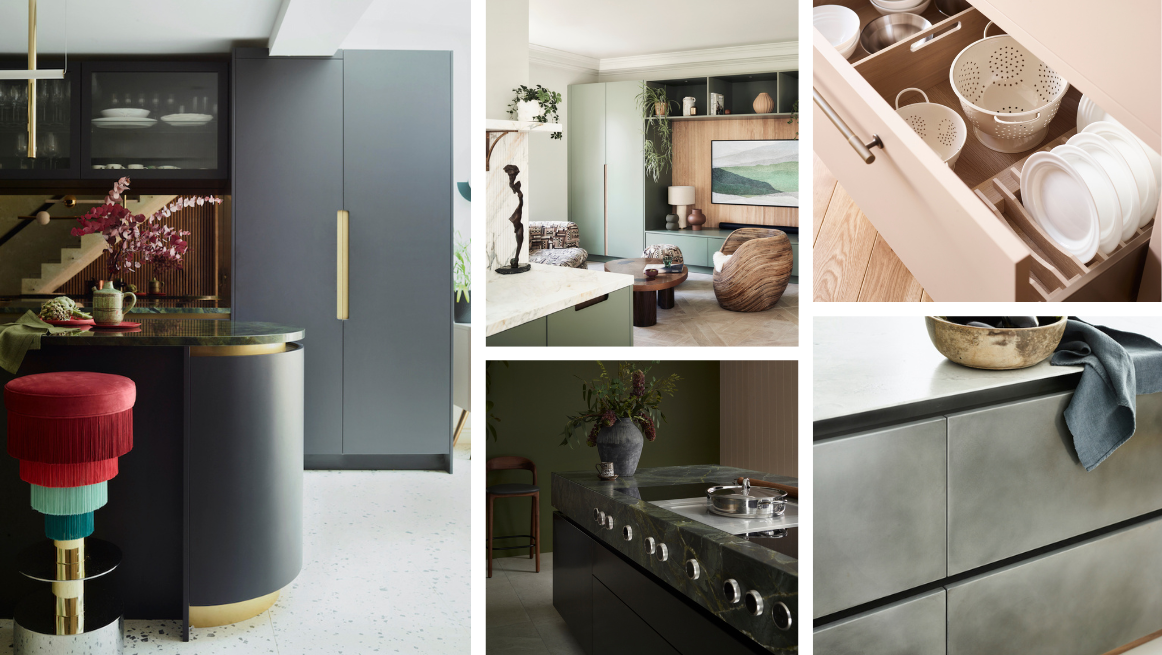
Staying ahead of design trends is an essential part of what makes a great designer, and Milan Design Week remains one of our most valuable research trips. It’s when our designers get to step away from their showrooms and experience global design thinking in the flesh (and maybe one or two Aperol Spritz!). Each year, we explore the events, installations and exhibitions across the city, bringing back fresh inspiration, ideas and, crucially, a clear sense of how they will translate in real homes.
In the current climate, it felt natural that Milan 2026 leaned away from big, showy statements and towards something more refined, with materials pushed further, forms softened and craftsmanship coming to the fore. Across Salone del Mobile and the wider design districts, the focus was firmly on how spaces feel and function, not just how they look. From softer forms and warmer colours to more integrated technology and a renewed focus on craftsmanship, these are the ideas that stood out to us. Here’s how we see them shaping kitchens and interiors in the year ahead.
Organic curves
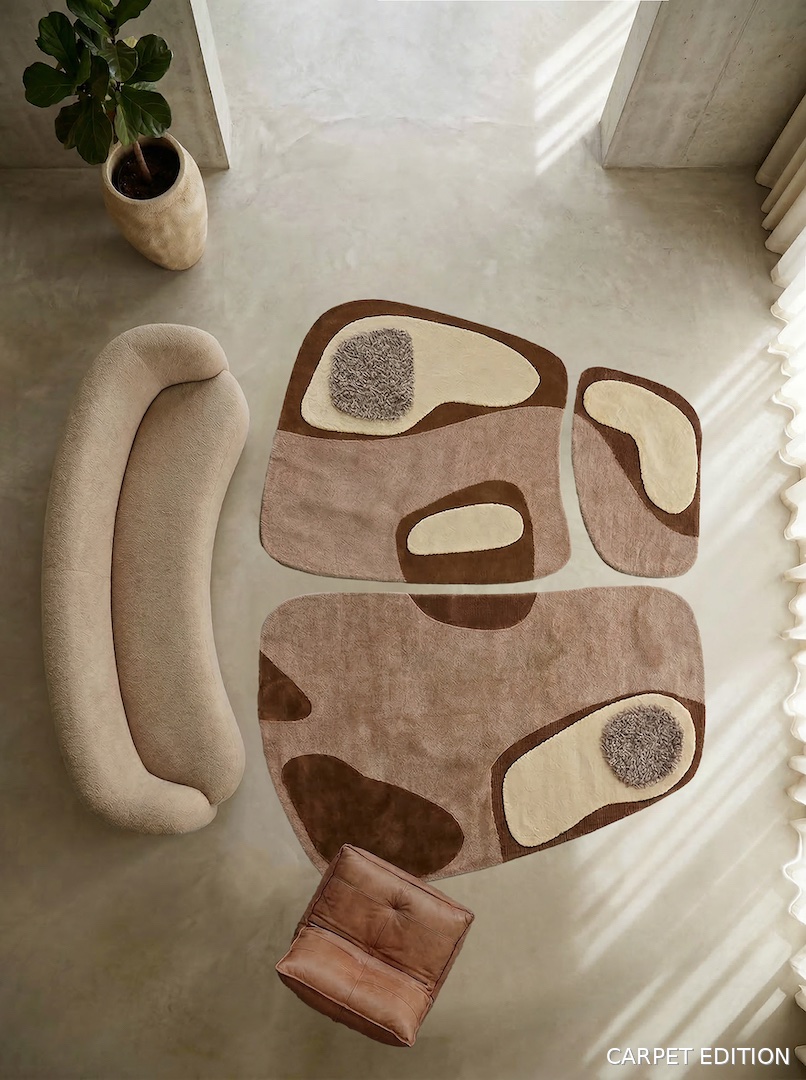
We called it in last years’ Milan Design Week report, and now curves have officially taken over from rigid lines. This year there was a distinct shift towards gentler, organic curves that were more about ergonomics and flow than bold statement silhouettes. We saw it everywhere, from kitchen islands and sanitaryware to furniture and lighting, even rugs – like Marco Zito’s Barene collection for Carpet Edition (above) – all working to create a more relaxed, intuitive flow through a space.
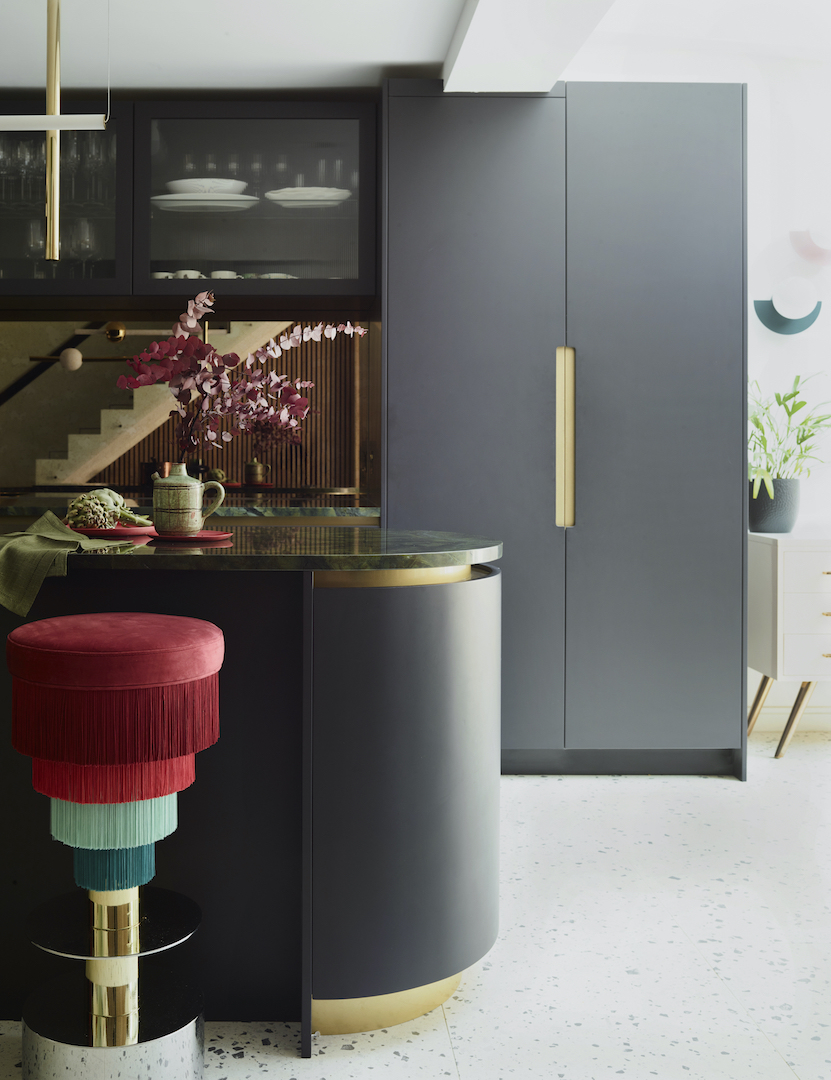
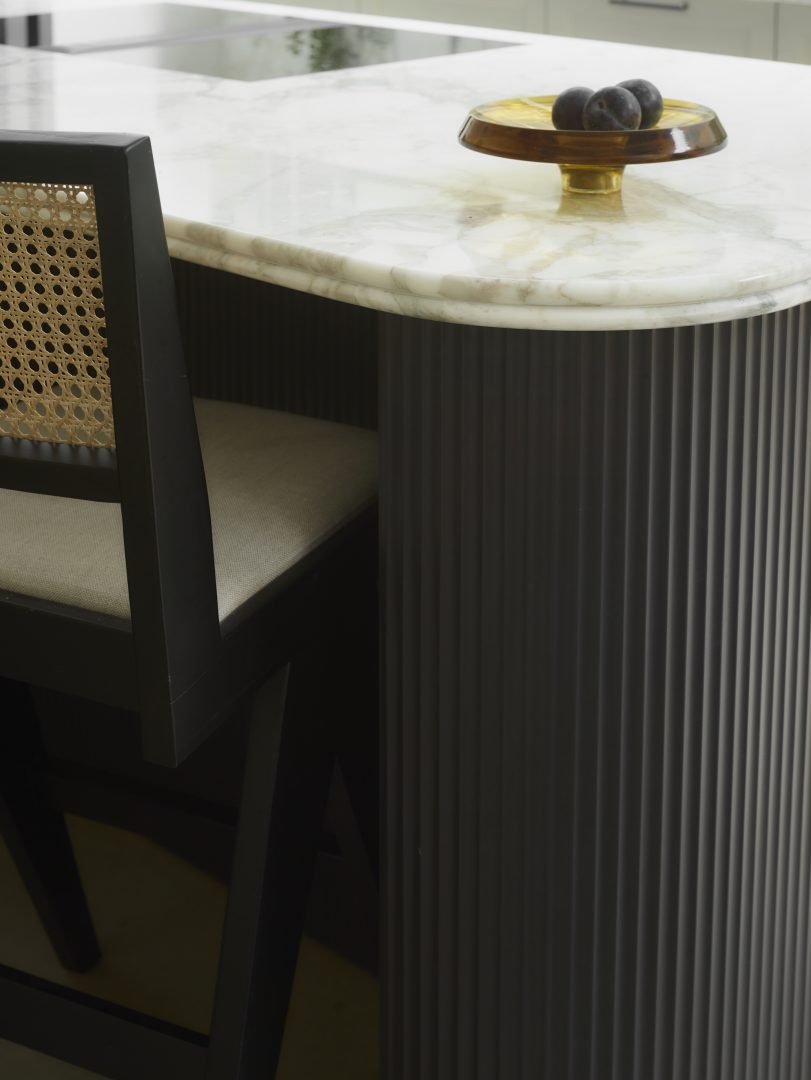
In kitchens, this focus on curves translates into something far more practical than it might first appear. For example, a simple curved island edge, as seen on our Brown project, doesn’t just look softer, it improves circulation, reduces pinch points and makes navigating the space feel more natural, especially in open-plan layouts. At Roundhouse, we often introduce subtle curves exactly for this reason – easing the flow around key working areas and softening the overall visual language of the room.
It’s also where the detail really comes into its own. Curves on tall cabinetry can help large runs feel less imposing, particularly in spaces with high ceilings or uninterrupted walls. Rounded pillow edge profiles on worktops are another small but effective move, taking away the severity of sharp corners while also being more tactile in use. These are the kinds of refinements that subtly make a kitchen feel more comfortable and inviting.
Metal moments
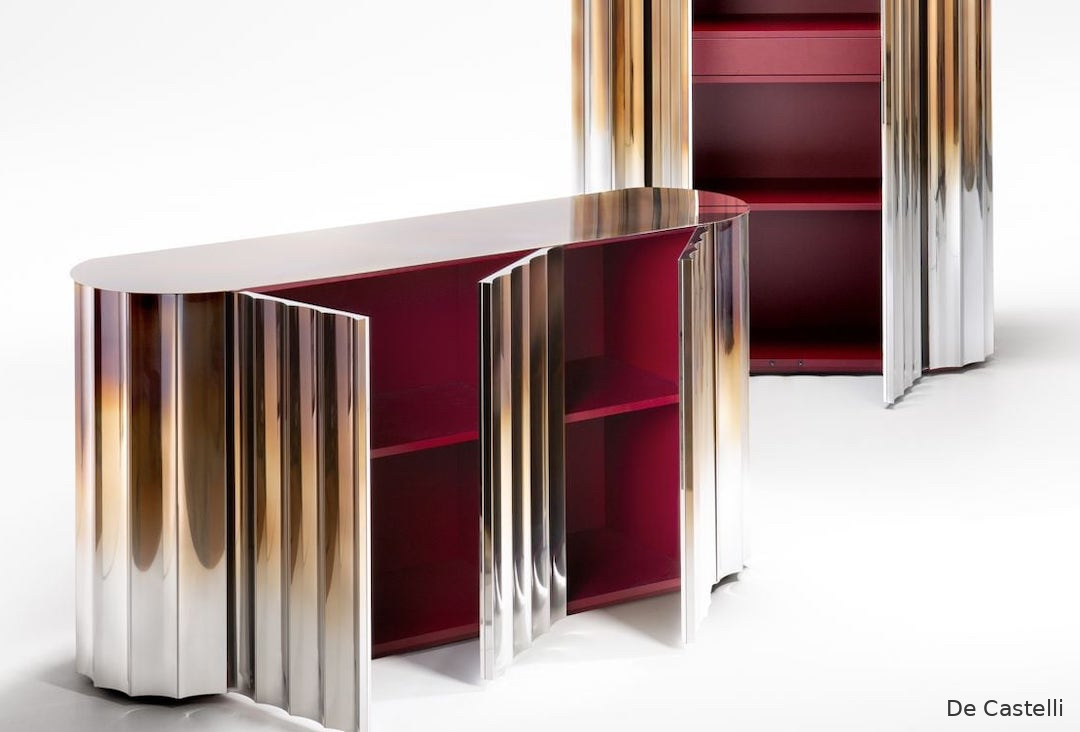
As long-time advocates of metallic finishes, our team were delighted to see a strong metal story running through Milan this year – and not just in the expected forms. Beyond taps, handles and appliances, metals were used far more architecturally, from floor-to-ceiling doors to fully wrapped furniture such as De Castelli’s Dorica cabinets and sideboards in ombré steel (above). It felt confident and immersive, but notably more refined than in previous years.
Stainless steel was everywhere, but softened. Finishes leaned brushed, burnished or satin rather than overtly industrial, often paired with timber, stone or lacquer to temper the harder edge. At the kitchen exhibition, EuroCucina, some brands presented full-height runs of metal cabinetry that felt seamless and elegant, while others used it more sparingly – a worktop here, an island frontage there – to create contrast without dominating their stands.
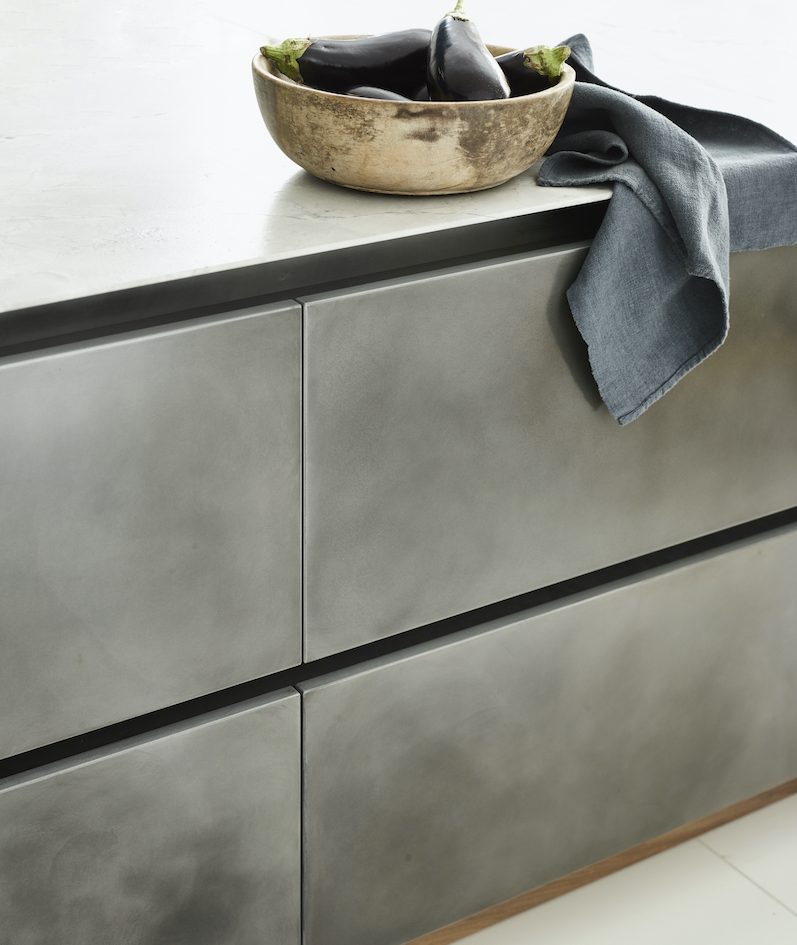
What was particularly interesting was how metal is evolving. Warmer tones, subtle patination and gently varied surfaces brought a depth of materiality that felt closer to furniture than traditional kitchen materials. It’s a direction that aligns closely with our own approach at Roundhouse, where we’ve been developing and refining metallic finishes that feel rich, tactile and inherently bespoke. Our liquid metal finishes, for example, allow us to create cabinetry that carries all the character of solid metal but with a softer, more nuanced appearance. Each surface has slight variation, a depth of tone and a sense of movement that changes with the light in a way that makes it feel crafted and characterful.
Colour directions
One of the clearest takeaways from Milan is always colour. With so many brands showing side by side, it’s easy to see what’s evolving and this year confirmed the continued move towards warmer, more grounded palettes. Earthy tones have been building momentum for some time, and in 2026 they’re feeling more confident and prominent than ever.
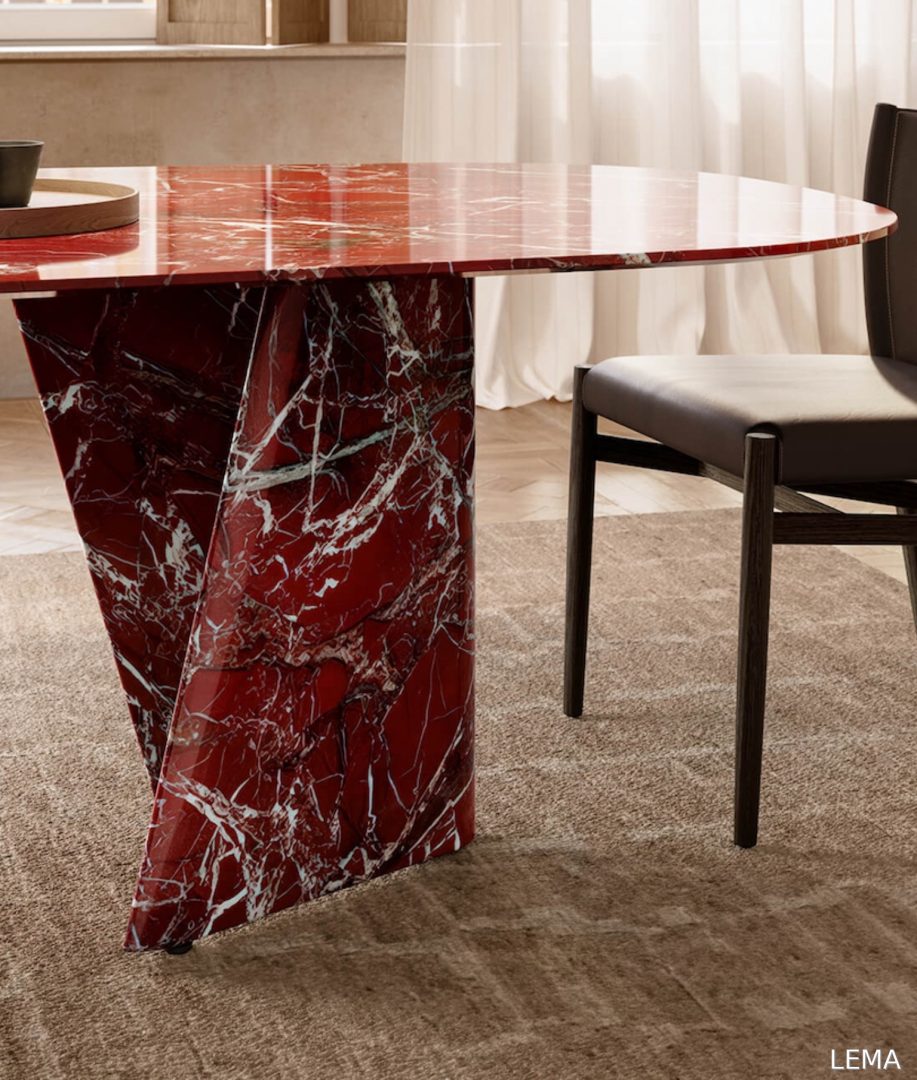
Burgundy and deep red were impossible to ignore, particularly through stones like Levanto Rosso and Lepanto red marble, which appeared repeatedly across kitchen, bathroom and furniture launches. These weren’t used lightly, they anchored schemes, often forming the centrepiece of a stand, whether as a deep red island set against softer cabinetry or a heavily veined dining table, such as Lema’s Traverso Table by Carlo Colombo (above).
That same approach translates well to kitchens at home. Rather than applying rich colour everywhere, it’s about giving it a clear role, anchoring one key element and letting the rest of the space support it. Roundhouse designers recommend pairing red-based tones with warm timber and creamy worktops to keep the balance on the right side of liveable, while opting for honed or matte finishes helps retain that sense of depth. If bold red feels like a step too far, earthy tones like rust, clay and terracotta are also continuing to gain ground. These more organic shades are great for bringing warmth without weight and again sit easily alongside timber, stone and metal.
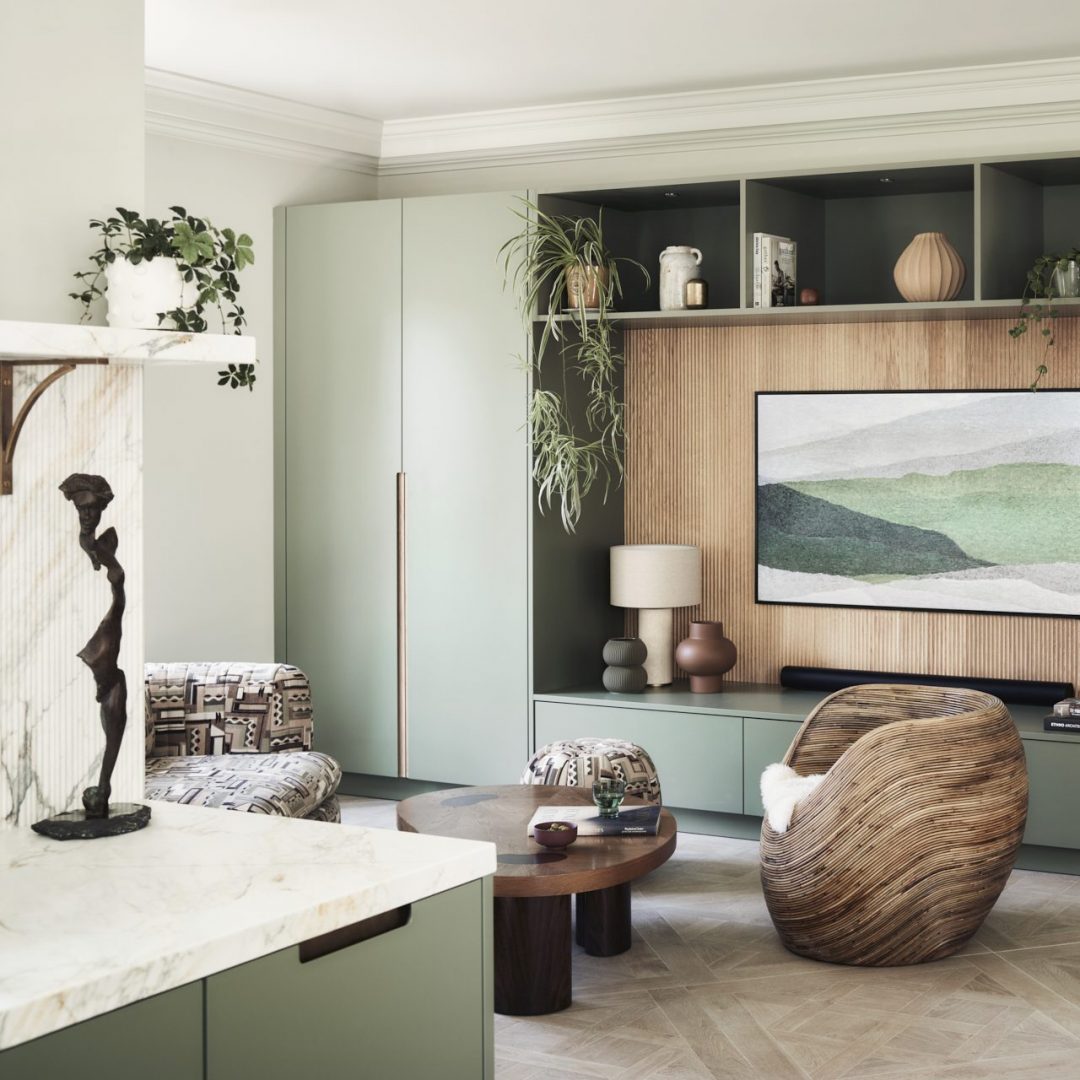
Green is shifting too. In Milan, those deeper, moodier tones stepped back in favour of something lighter and more optimistic. Pistachio, in particular, stood out as the next green to watch. Softer than khaki, less obvious than mint, and with just enough warmth to stop it feeling sharp, what makes this green interesting is its flexibility. It sits comfortably alongside those trending warmer palettes like soft terracotta, rust and honeyed timbers, but it’s just as effective used generously to lift a neutral scheme. On cabinetry, it feels fresh without being overpowering.
Discreet appliances
If EuroCucina sets the tone for kitchen design, the adjacent show FTK, Technology for the Kitchen reveals where appliances are heading. This year, the direction was clear: quieter, more integrated, and far more considered in how they sit within the overall space.
Visually, matt finishes dominated. Brands like Miele, Neff, Falmec, Elica and Beko all showcased appliances in soft-touch matt blacks and muted neutrals, designed to sit seamlessly within cabinetry. There was also a noticeable shift towards softer tones. Falmec presented prototype induction hobs in ultra-matt beige and champagne hues (above), while Miele showcased its sophisticated pearl beige finish, which is already available. It’s a subtle but important move, giving designers more flexibility to integrate appliances into warmer, more layered palettes without the visual interruption of stark black or graphite steel. Performance hasn’t been overlooked either. The majority of matte finishes are now fully fingerprint- and scratch-resistant, making them far more practical for everyday use.
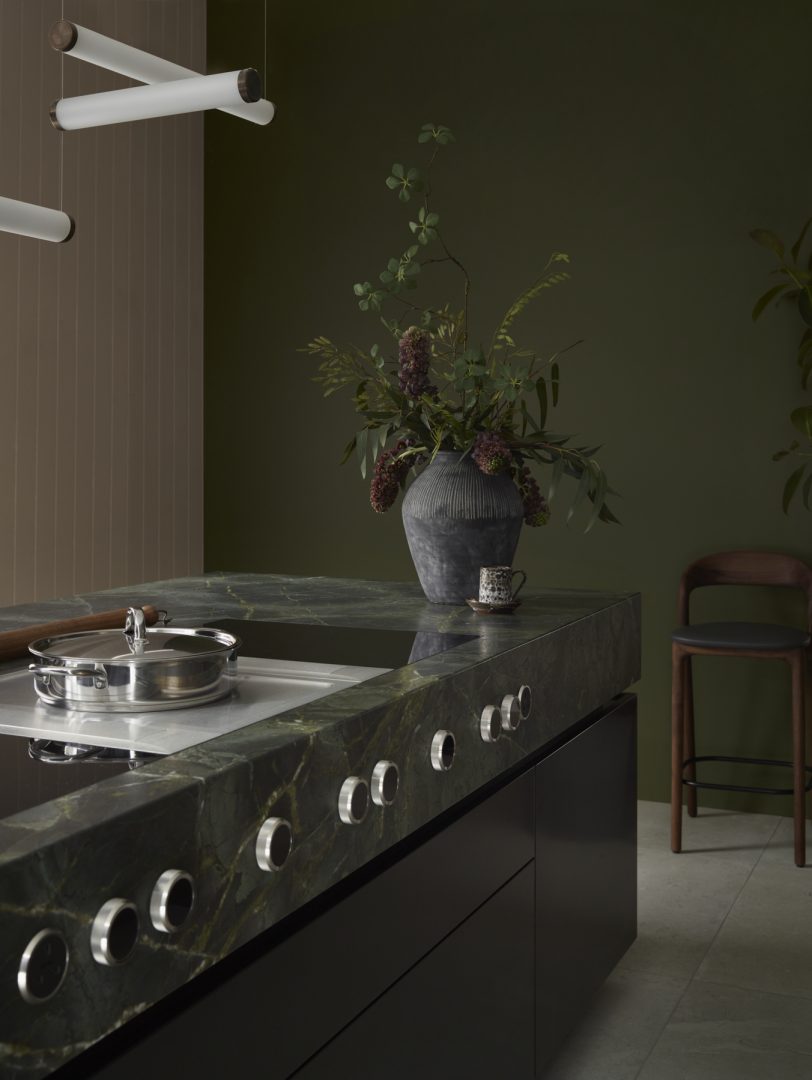
Technology itself is becoming less visible but more capable. AI was everywhere at FTK, embedded to improve performance, from camera-assisted ovens to refrigeration that self-regulates. Beko’s HomeWhiz system, for example, offers real-time insight into energy and water use, shifting the focus from novelty to genuine usefulness.
At Roundhouse, a more integrated approach to tech is always the goal, especially in open-plan kitchens, where anything too visible can disrupt the sense of calm. Appliances are designed in from the outset, sitting flush, aligning with cabinetry and working seamlessly within the space, like the induction hob in our Carpenter Road project. Softer finishes and a broader colour palette will only strengthen that integration moving forwards, allowing technology to support the kitchen without taking over.
Celebrating craft
One of the strongest messages from Milan was that craft is more celebrated than ever before. FuoriSalone’s theme, Be the Project, shifted attention away from the finished object and towards process, provenance and the decisions behind the design. You could see it in installations like Massimiliano Locatelli’s SiMa Townhouse, where hand-cut ceramic fragments were assembled into large-scale mosaic murals in collaboration with artisans in Vietnam. It wasn’t just about the end result, but the time, skill and cultural exchange behind it. A reminder that how something is made matters as much as how it looks.
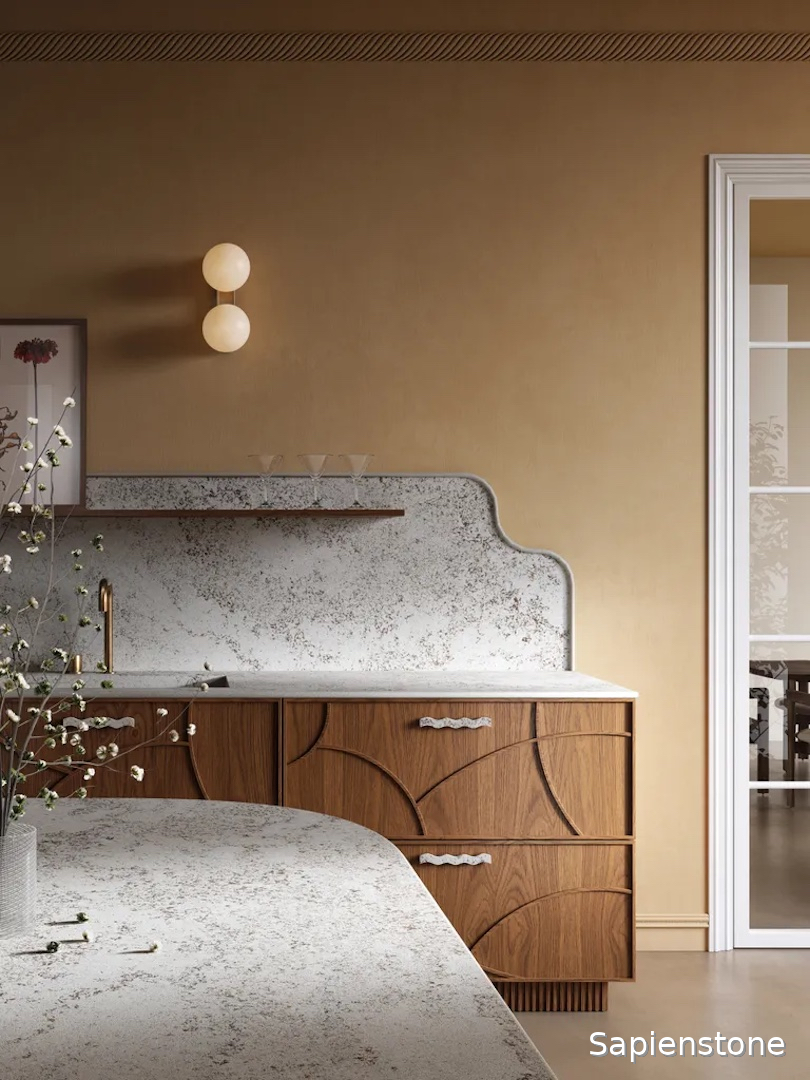
In kitchen terms, this shift brings the focus back to stone and cabinetry, how it’s crafted and about the details you use every day. The way a handle sits in the hand, how a drawer is organised, how storage supports specific routines, from coffee making to wine storage or breakfast prep. Subtle moves like micro-fluted panels or a sculptural splashback, like the example by Sapienstone (above), add depth but it’s the precision and craftsmanship behind them that’s the real mark of design excellence.
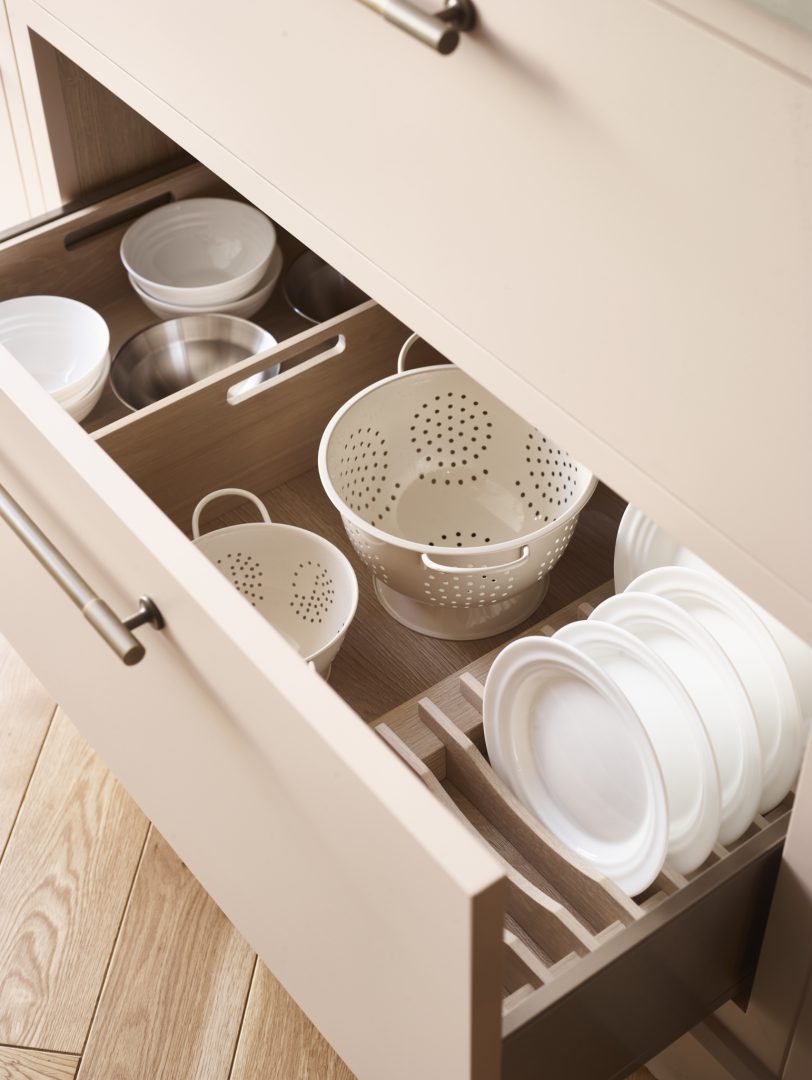
For Roundhouse designers, that thinking is built into the process. Every element is considered in context, from shelf heights and socket positions to how cabinetry aligns and functions as a whole. The aim isn’t just a kitchen that looks right, but one that performs seamlessly, with storage, detailing and layout all beautifully integrated.
Such high level of detail is only possible with control over how it’s made. Our kitchens are crafted by skilled cabinetmakers in our UK factory using FSC-certified timber and other responsibly sourced materials. We also use a biomass heating system powered by timber waste, reducing environmental impact as part of the process, not as an afterthought. That’s what ensures every Roundhouse kitchen not only looks exceptional but stands up to busy family life over time.
If Milan gives us the ideas, our showrooms are where they take shape – from materials and finishes to the finer details that make a kitchen truly work. Book a design consultation to experience it first-hand and start shaping a kitchen built around how you live.
This year’s standout themes centred on refinement rather than statement. Softer, more organic forms replaced rigid lines, materials were used more expressively, particularly metal, and there was a clear focus on how spaces feel and function. Integrated technology, warmer colour palettes and a renewed emphasis on craftsmanship all point towards kitchens that feel more intuitive, tactile and easy to live with.
Not everything seen in Milan is designed for real homes, but the thinking behind it is. It is less about copying a specific look and more about applying the principles, whether that is improving flow, layering materials or using colour with more intention. A good designer filters these ideas to suit the space, the architecture and how you live.
Curved forms are not just aesthetic. In the right space, they improve circulation, reduce sharp corners and make movement through the kitchen feel more natural, especially in open-plan layouts. The key is restraint, with gentle curves or softened edges proving far more usable than exaggerated shapes.
Warmer, more grounded palettes continue to dominate, with earthy tones such as terracotta, rust and clay gaining confidence. Deep reds and burgundy are being used to anchor schemes, often through stone. At the same time, greens are dialling lighter, with tones like pistachio emerging as a fresh, versatile option that works across both neutral and warmer palettes.
Yes, but it’s less about gimmicks and more about the subtle integration of genuinely useful tech. Increasingly, AI is being built into appliances to improve performance at every level. Ovens can adjust settings automatically, refrigeration can better regulate temperature, and there’s a growing emphasis on energy efficiency. The focus is on technology that works in the background, supporting the kitchen without making it over-complicated to use.